10 Best Dog Brushes for Staffordshire Terrier in 2026: Short-Coat Picks
The best dog brush for Staffordshire Terrier owners is the KONG Zoom Groom — its soft rubber fingers lift loose short hair while massaging skin. We evaluated 10 brushes and grooming tools against the Staffordshire’s short, smooth coat, scoring each on Shedding Removal, Skin Comfort, and Ease of Use. Most brushes look alike on paper but scratch or skip hair on short coats — that gap drove every ranking. Whether you need shedding control, a gentle bath tool, or a budget pick, this guide gives you one answer.


Quick Comparison: All 10 Brushes Ranked
| # | Product | Best For | Rating | Badge | |
|---|---|---|---|---|---|
| 1 | KONG Zoom Groom Multi-Use Brush for Dogs | Daily gentle brushing | 4.8/5 | Best Overall | Buy → |
| 2 | Hands On Grooming Gloves | Nervous or skin-sensitive dogs | 4.7/5 | Best for Gentle Use | Buy → |
| 3 | FURminator Curry Comb for Dogs | Bath-day scrubbing | 4.5/5 | Best for Bath Time | Buy → |
| 4 | Bass Brushes Shine and Condition Natural Bristle Dog Brush | Coat shine and finishing | 4.4/5 | Best Premium Finish | Buy → |
| 5 | FURminator Short Hair deShedding Tool for Dogs | Heavy seasonal shedding | 4.3/5 | Best for Heavy Shedding | Buy → |
| 6 | BV Pet Dual-Sided Dog Brush | First-time owners on a budget | 4.2/5 | Best Budget | Buy → |
| 7 | Safari Dual-Sided Shedding Blade for Dogs | Seasonal shedding bursts | 4.2/5 | Best Seasonal Shed | Buy → |
| 8 | Hartz Groomer’s Best Bristle Dog Brush | Smoothing after baths | 4.2/5 | Best Basic Finisher | Buy → |
| 9 | Hertzko Self-Cleaning Slicker Brush | Mixed-coat households | 4.1/5 | Best Self-Cleaning | Buy → |
| 10 | Safari Flea Comb for Dogs | Flea and debris checks | 3.7/5 | Best Specialty Tool | Buy → |
How We Chose These Brushes
What we evaluated
10 products across 5 tool types: rubber curry brushes, grooming gloves, bristle brushes, shedding blades, and combs.
Our 3 scoring criteria
Each product is scored out of 5 on Shedding Removal, Skin Comfort, and Ease of Use. The overall rating is the average of the three.
The coat we judged against
A Staffordshire’s coat is short, smooth, and close to the body, with thin skin that reacts to firm tools. Anything that digs or scratches lost points.
What we cut and why
Long-pin slicker brushes and heavy undercoat rakes were left out. They are built for thick or long coats and risk irritating this breed’s skin.
What to Look for When Buying a Dog Brush for a Staffordshire Terrier
Staffordshire Terriers are low-maintenance, which tempts owners to grab whatever brush is cheapest. A little knowledge about this coat saves you from tools that scratch or simply do not work.
1. Coat and Skin Fit
The Staffordshire coat is short and smooth, and the skin underneath is thin and often allergy-prone. That means soft rubber, soft bristles, or textured gloves are the safe starting point. Our guide to brushing a short dog coat explains how strokes and pressure change when hair is this short. Firm metal tools can help in small doses but should never be the daily default.
2. Brush Type and Purpose
Different tools do different jobs. Rubber curry brushes lift loose hair and scrub in the bath, bristle brushes polish, and blades or deshedding tools strip heavy shedding. Read what a rubber curry brush is used for before deciding, because it is the best single choice for most Staffies. Pick one main tool and one specialty tool rather than five overlapping ones.
3. Grip and Hand Comfort
Short coats shed in small, constant amounts, so you will brush often and in short sessions. A tool that is awkward to hold gets skipped. Look for a handle or finger loop that stays secure when your hands are wet, because bath-day grooming is where most hair comes off. Gloves suit people who want fingertip control instead of a handle.
4. Cleaning and Long-Term Durability
Rubber tools rinse clean in seconds, while bristle brushes need hair pulled from them by hand. Self-cleaning buttons are convenient but add moving parts that can wear out. Check that rubber nubs, teeth, or bristles are firmly attached, because pieces that loosen and fall off are a safety concern for dogs who chew. Cleaner tools also stay more hygienic for skin-sensitive dogs.
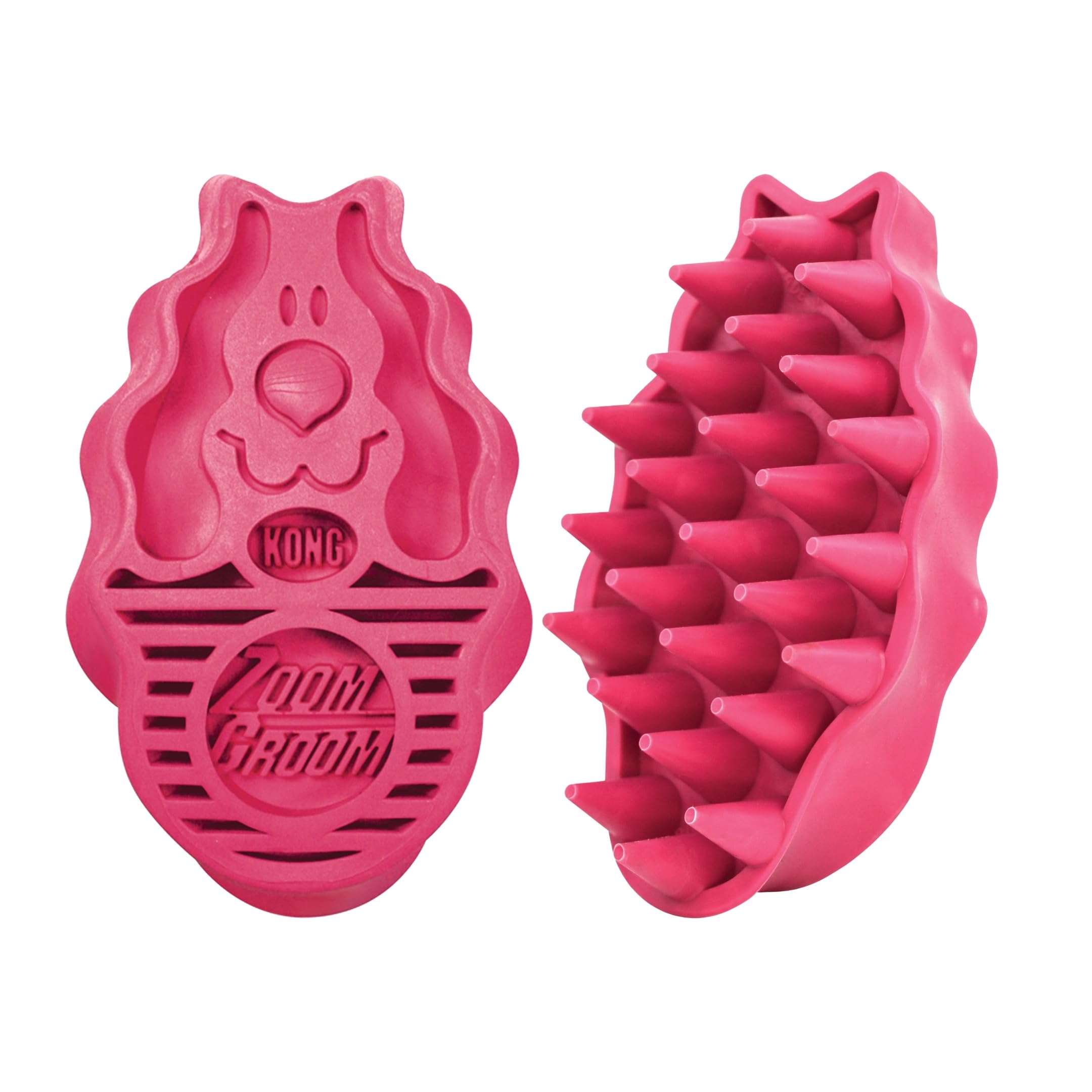
KONG Zoom Groom Multi-Use Brush for Dogs — Gentle rubber that handles everything
Best for: Weekly brushing and bath scrubbing
Staffordshire Terriers carry a short, smooth coat that sheds all year, so the right tool lifts loose hair without scratching skin. The KONG Zoom Groom does that with soft, flexible rubber fingers that grab dead hair on dry coats and work shampoo into a lather in the bath. Many brush-shy dogs accept it because it feels like a massage rather than a chore. It will not dig out heavy undercoat, which most Staffies do not carry anyway. For weekly brushing, bath scrubbing, and steady shedding control, this single tool covers nearly everything most owners need.
- Rubber fingers lift loose hair gently
- Works on wet or dry coats
- Massaging feel calms brush-shy dogs
- Skips deep undercoat in heavy shed
- Loose hair needs rinsing off
4.7/5
4.9/5
4.8/5

Hands On Grooming Gloves — Fingertip control for sensitive dogs
Best for: Skin-sensitive or nervous dogs
Some Staffies tense up the moment a brush appears, and a glove solves that by turning grooming into petting. You wear it like a normal glove, so your fingertips feel every sensitive spot and you can ease off instantly. The textured surface collects loose hair from the back, chest, and legs, and it works well in the bath for scrubbing. Capacity is limited, so you will stop to peel hair off during heavy shedding weeks. Choose it if comfort and calm matter more to you than removing the maximum amount of hair per stroke.
- Feels like petting, not brushing
- Fingertips sense sore or itchy spots
- Doubles as a bath scrubber
- Hair clings and needs frequent clearing
- Fit depends on your hand size
4.5/5
4.8/5
4.8/5

FURminator Curry Comb for Dogs — Scrubs shampoo in, pulls loose hair out
Best for: Bath day and light shedding
Bath day is where many Staffy owners lose the most time, because short hair sticks to everything. This curry comb uses rounded rubber teeth that work shampoo through the coat down to the skin, then lift loose hair as you scrub. The rounded teeth stay comfortable on thin-skinned areas like the belly and chest. It is not designed to replace a deshedding tool during heavy seasonal shedding, and dry-coat results are modest. Pair it with a bristle brush for finishing and you have a simple, skin-friendly routine that costs little and works every week.
- Rounded rubber teeth stay skin-friendly
- Spreads shampoo evenly through short coats
- Easy to rinse and reuse
- Modest hair removal on dry coats
- Not built for heavy seasonal shedding
4.3/5
4.7/5
4.5/5
 Save
Bass Brushes Shine and Condition Natural Bristle Dog Brush — Polished coat, little hair removal
Best for: Shine and coat conditioning
If your Staffordshire already sheds lightly and you want a glossy, healthy-looking coat, a quality natural bristle brush earns its place. The boar bristles spread skin oils along each hair, which adds visible shine on smooth coats. Strokes feel soft against the skin, so even dogs with allergy-prone skin usually accept it. The trade-off is hair removal: it moves surface hair around but will not pull out much loose undercoat. Treat it as a finishing brush after a curry tool or glove, and expect a premium feel and long service life.
- Boar bristles add visible coat shine
- Very gentle on allergy-prone skin
- Solid build should last for years
- Removes little loose hair
- Costs more than a basic bristle brush
3.9/5
4.9/5
4.4/5

FURminator Short Hair deShedding Tool for Dogs — Powerful, but use sparingly
Best for: Seasonal heavy shedding
When shedding season hits and hair blankets your couch, this is the strongest tool on our list. Its stainless steel edge reaches loose hair that rubber tools leave behind, and the ejector button clears the head quickly. Staffordshire coats are thin and the skin is sensitive, so light pressure matters; go too hard or too often and you risk irritation. Limit sessions to short passes on a dry coat, once every week or two during heavy shedding only. Used carefully, it cuts shedding noticeably, but it should not be your everyday brush.
- Strongest loose hair removal here
- Ejector button clears hair fast
- Handle gives a secure, comfortable grip
- Overuse can irritate thin short coats
- Needs light pressure and short sessions
4.8/5
3.9/5
4.2/5

BV Pet Dual-Sided Dog Brush — Cheap, simple, and good enough
Best for: Tight budgets and first-time owners
New Staffy owners often want one inexpensive brush that does a little of everything. This dual-sided design pairs bristles for smoothing and pins for light loosening, and the bristle side suits a short coat well. It is comfortable to hold, quick to use, and easy to clean by hand. Be realistic about the pin side, though: it adds little on a coat this short and should be used gently. As a budget-friendly starter, it handles weekly maintenance, but serious shedding weeks will push you toward a rubber or blade tool.
- Budget-friendly dual-purpose design
- Bristle side suits short coats
- Light and easy to hold
- Pin side adds little on short coats
- Handle feels basic compared with pricier brushes
3.8/5
4.3/5
4.5/5

Safari Dual-Sided Shedding Blade for Dogs — Fast shed cleanup, handle gently
Best for: Spring and fall shedding bursts
A shedding blade is a different style of tool, and it earns a spot for owners who want fast results in short bursts. You drag the flexible loop along the coat and it sweeps out loose hair, and the two sides let you choose a finer or coarser edge. It also works on a damp coat after a bath. Because the edge is firm, a light touch is essential on a Staffordshire, especially over bony areas. Keep it for seasonal clean-ups instead of daily use, and your couch and clothing will thank you.
- Sweeps loose hair quickly
- Two edges for different coats
- Usable on damp coats too
- Firm edge needs a very light touch
- Awkward around bony legs and ribs
4.4/5
3.9/5
4.3/5

Hartz Groomer’s Best Bristle Dog Brush — Plain bristle brush that smooths coats
Best for: Smoothing and light daily upkeep
Sometimes the simple option is the right one. A plain bristle brush removes dust, dander, and surface hair from a Staffordshire’s smooth coat, and it spreads natural oils for a cleaner look. The soft bristles are kind to skin, so it suits dogs who dislike firmer tools. Do not expect it to control shedding by itself, because it leaves most loose undercoat behind. It works best as a quick daily finishing pass after a curry brush or glove, giving you a tidy coat without much effort or expense.
- Soft bristles suit sensitive skin
- Quick daily upkeep pass
- Simple tool with no learning curve
- Leaves most loose undercoat behind
- Bristles may bend with heavy use
3.8/5
4.5/5
4.3/5

Hertzko Self-Cleaning Slicker Brush — Convenient, but wrong coat for most
Best for: Mixed-coat households
Slicker brushes are popular, and the push-button release makes cleanup effortless. They are built for longer, denser coats, though, and a Staffordshire’s thin, smooth coat does not need fine bent pins. On this breed it can scratch if you press even moderately, and sensitive skin makes that risk worse. We include it for households with mixed coats, where one slicker serves a fluffy dog while the Staffy gets a lighter tool. Use it only with minimal pressure, rarely, and consider a rubber brush your main choice instead.
- Retractable pins clear hair instantly
- Useful for mixed-coat households
- Comfortable, non-slip handle
- Fine pins can scratch thin skin
- Poor fit for smooth short coats
4.0/5
3.6/5
4.6/5
 Save
Safari Flea Comb for Dogs — Not for brushing, useful for checks
Best for: Checking for fleas and debris
Staffordshire Terriers are prone to skin allergies, and flea bites are a common trigger, which is why a fine-toothed comb belongs in your kit. It will not manage shedding, and nobody should buy it as their main brush. Its job is detection: a few passes along the neck, tail base, and belly show fleas, flea dirt, and debris that a brush glides over. Keep it for monthly checks or after outdoor adventures. Because the teeth are fine, use gentle strokes, and see your vet if you find signs of an infestation.
- Reveals fleas and flea dirt quickly
- Fine teeth catch debris brushes miss
- Small, cheap, and easy to store
- Does almost nothing for shedding
- Fine teeth need gentle strokes
2.8/5
4.2/5
4.1/5
Top 3 Head-to-Head: KONG Zoom Groom vs Hands On Gloves vs FURminator deShedding
These three are the finalists most Staffy owners weigh: a rubber brush, a glove, and a deshedding tool. They solve the same problem in very different ways.
| Feature | #1 KONG Zoom Groom | #2 Hands On Gloves | #5 FURminator deShedding |
|---|---|---|---|
| Shedding Removal | 4.7/5 | 4.5/5 | 4.8/5 — Best |
| Skin Comfort | 4.9/5 — Best | 4.8/5 | 3.9/5 |
| Ease of Use | 4.8/5 — Best | 4.8/5 — Best | 4.2/5 |
| Choose if… | Pick this if you want one tool for brushing and baths. | Pick this if your dog hates brushes or has touchy skin. | Pick this if hair is taking over your house in shed season. |
Who These Brushes Are NOT For
This list is built around the short, smooth Staffordshire coat, so some owners should look elsewhere.
If your dog has red, inflamed, or scabbed skin, skip brushing tools and see your vet first. Brushing irritated skin can make things worse, and the cause may be allergies or parasites that need treatment.
Common Mistakes to Avoid
Short coats look foolproof, but these four errors cause most grooming problems for Staffordshire owners.
Frequently Asked Questions About Brushing a Staffordshire Terrier
What type of brush is best for a Staffordshire Bull Terrier?
A rubber curry brush or soft grooming glove is best for a Staffordshire Bull Terrier. Both lift loose hair from the short, smooth coat without scratching thin skin. A soft bristle brush works well as a finishing step to add shine. Avoid long-pin slicker brushes and use deshedding tools only occasionally, because firm tools can irritate this breed’s sensitive skin.
How often should I brush my Staffordshire Bull Terrier?
Brushing your Staffordshire Bull Terrier once or twice a week is enough for most dogs. The short coat does not tangle, so the goal is removing loose hair and spotting skin problems early. During heavier shedding periods, a few extra short sessions help. Daily brushing is fine if you use a soft tool and light pressure.
Do Staffordshire Bull Terriers shed a lot?
Staffordshire Bull Terriers shed a moderate amount year-round, with noticeable increases in some seasons. Their hairs are short and fine, so they stick to clothes and furniture more than they pile up like double-coated breeds. Regular brushing with a rubber tool or glove removes loose hair before it lands on your floors and keeps shedding manageable.
Do Staffordshire Bull Terriers have sensitive skin?
Many Staffordshire Bull Terriers do have sensitive, allergy-prone skin, which is why gentle grooming tools matter. Redness, itching, or recurring hot spots can point to food, environmental, or flea allergies. Use soft rubber or bristle tools, avoid pressing hard, and check the skin during each session. See your vet if irritation keeps returning or looks worse.
Is a grooming glove better than a brush for a Staffordshire Bull Terrier?
A grooming glove is better for nervous or skin-sensitive dogs, while a rubber brush is better for removing more hair. The glove feels like petting and gives fingertip control, but it holds less hair per stroke. Many owners use a glove for daily touch-ups and a rubber brush or curry comb on bath days.
How often should I bathe my Staffordshire Bull Terrier?
Bathe your Staffordshire Bull Terrier about every six to eight weeks, or sooner when the dog gets muddy or smelly. Over-bathing strips natural oils and can dry out sensitive skin. Use a dog-specific shampoo, never human shampoo, and brush before the bath. A rubber curry comb helps spread shampoo and lift loose hair.
Can I use a deshedding tool on a Staffordshire Bull Terrier?
Yes, but only occasionally and with very light pressure. Staffordshire Bull Terriers have thin, short coats, so a deshedding tool can irritate skin if used too often or too firmly. Limit it to short sessions on a dry coat during heavy shedding. If you see redness or thinning hair, stop and switch back to a rubber brush.
Our Final Verdict
Most Staffordshire Terriers need a gentle, simple routine, not a heavy-duty toolkit. A soft rubber brush handles shedding and baths, while a glove suits sensitive dogs. Browse our best brushes for short dog coats for more options, and keep deshedding tools for occasional use.

Thomas Cutter is a lifelong dog owner and the founder of FindOutAboutDogs.com. With over 10 years of hands-on experience owning multiple breeds, Thomas created this site to provide honest, research-based dog advice that real owners can actually trust.
