Can You Shave a Double-Coated Dog? Grooming Guide
Quick Answer
You generally should not shave a double-coated dog because its outer coat and soft undercoat help protect the skin and regulate temperature. Shaving can increase sun exposure, damage the coat’s natural structure, and cause uneven regrowth. Instead, use a suitable dog brush, remove loose undercoat gently, and consult a professional groomer if the coat is severely matted.
What should you do instead of shaving?
- Brush regularly: Use a coat-appropriate slicker brush or undercoat rake to remove loose hair.
- Check the undercoat: Use a metal comb to find tangles hiding beneath the outer fur.
- Prevent overheating: Provide shade, fresh water, ventilation, and cooler times for exercise.
- Trim selectively: Ask a groomer about appropriate sanitary, paw, or feathering trims for your dog’s breed.
- Get professional help: Seek a groomer or veterinarian’s advice when tight mats prevent comfortable brushing.
One important exception
- Severe matting or medical needs: Clipping may sometimes be necessary for welfare or veterinary treatment, but a professional should assess the safest approach.
If you’re dealing with fur covering the sofa, a thick summer coat, or a dog that seems impossible to brush, shaving can look like the easiest solution. However, the better approach is to understand what your dog’s double coat does and how the right dog brush can help maintain it.
In this guide, I’ll explain why shaving is usually discouraged, which grooming tools are worth considering, and how to manage shedding without stripping away your dog’s natural protection. I’ll also cover the situations where professional clipping may be necessary.


What Is a Double-Coated Dog?
 Save
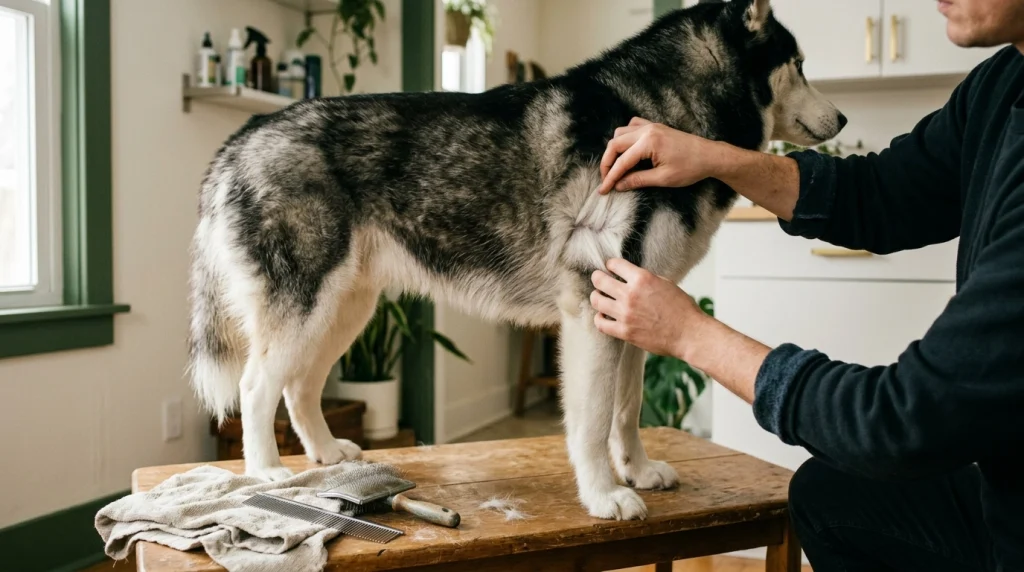
SaveA double-coated dog has two distinct layers of fur: a protective outer coat and a softer, denser undercoat. These layers work together to protect the skin, manage moisture, and provide insulation in changing weather.
The outer hairs are often called guard hairs, while the softer hairs underneath form the undercoat. Each layer has a different structure and growth pattern.
- Outer coat: Helps protect against dirt, moisture, insects, and direct sunlight.
- Undercoat: Traps air and contributes to insulation and temperature regulation.
- Natural shedding: Releases older hairs as the coat renews itself, sometimes in large seasonal amounts.
Common double-coated breeds include Siberian Huskies, German Shepherds, Golden Retrievers, Labrador Retrievers, Border Collies, Australian Shepherds, and Pomeranians.
The thickness and length of the coat vary considerably. A short-coated Labrador needs a different grooming routine from a fluffy Samoyed, even though both have double coats.
Can You Shave a Double-Coated Dog?
You generally should not shave a healthy double-coated dog down to the skin simply to reduce shedding or make summer more comfortable. Routine shaving removes protective guard hairs along with the undercoat and can interfere with the coat’s normal function.
The American Kennel Club explains that a double coat helps protect dogs from environmental conditions, including heat and sunlight. Its grooming guidance recommends maintaining the coat rather than routinely shaving it.
That doesn’t mean a double-coated dog can never receive a haircut. Appropriate trimming around the paws, sanitary areas, or breed-specific feathering differs from shaving the entire body.
Why shaving can cause problems
- Sun exposure: Removing protective fur leaves more skin exposed to ultraviolet radiation and possible sunburn.
- Coat regrowth: The undercoat and guard hairs may grow back at different rates, creating an uneven appearance.
- Texture changes: Some dogs develop a softer, patchier, or altered coat texture after clipping.
- Skin irritation: Close clipping can irritate sensitive skin, particularly when the coat is already tangled or inflamed.
- Persistent shedding: Shaving doesn’t stop the natural hair-growth cycle, so loose hair can return as the coat grows.
Coat regrowth varies by breed, individual dog, and the condition of the skin and hair follicles. Some dogs recover their normal coat appearance, while others experience prolonged or uneven regrowth.
For additional guidance, consult the American Kennel Club’s double-coat grooming advice before deciding on a major haircut.
Does Shaving a Double-Coated Dog Keep It Cooler in Summer?
 Save
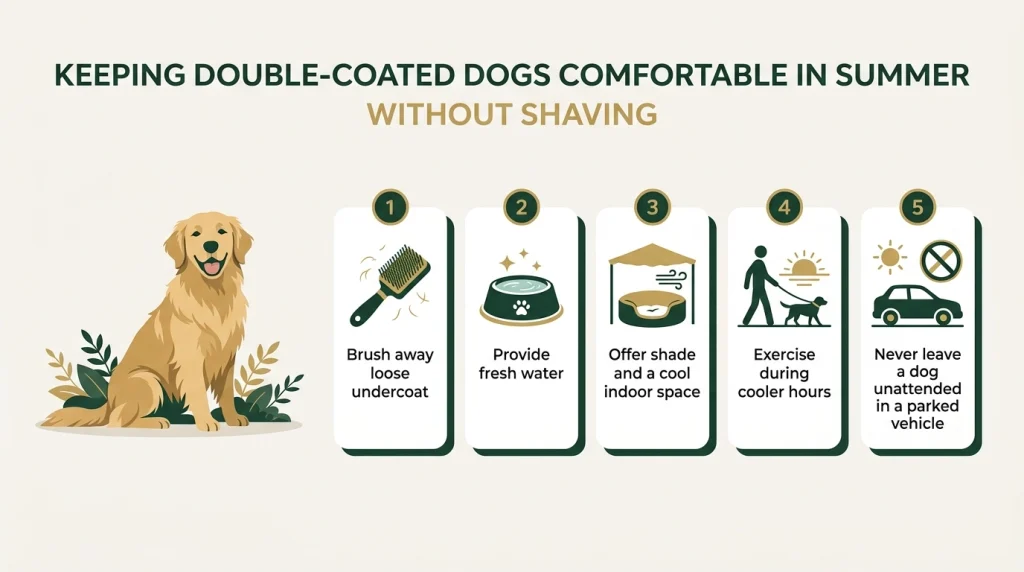
SaveUsually, shaving isn’t the best way to help a double-coated dog cope with hot weather. The coat provides insulation and helps shield the skin, while dogs rely mainly on panting to regulate their body temperature.
A thick, poorly maintained undercoat can trap shed hair and contribute to discomfort. Removing loose hair through careful brushing helps maintain the coat without automatically removing its protective outer layer.
Here’s what I would prioritize during hot weather:
- Brush away loose undercoat without scraping the skin.
- Keep fresh, cool drinking water available throughout the day.
- Provide shade and access to a cool indoor space.
- Schedule walks and exercise during cooler hours.
- Never leave your dog unattended in a parked vehicle.
- Watch for heavy panting, weakness, vomiting, or unusual distress.
Heatstroke can become life-threatening. If your dog shows signs of overheating, move it to a cooler place and seek urgent veterinary advice rather than relying on a haircut.
What Should You Do Instead of Shaving a Double-Coated Dog?
The best alternative is a grooming routine that removes loose hair, prevents tangles, and preserves healthy coat. A suitable dog brush is usually the most useful starting point.
1. Choose the right dog brush
Different grooming tools serve different purposes, so you don’t need the most aggressive deshedding product on the shelf. Match the tool to your dog’s coat length, density, and sensitivity.
- Slicker brush: Helps collect loose hair and loosen small tangles in suitable coats.
- Undercoat rake: Reaches beneath the outer coat to remove loose undercoat.
- Metal comb: Checks for hidden knots that surface brushing can miss.
- Rubber grooming brush: Works well on many short coats but usually cannot reach deeply into a thick double coat.
For a fuller explanation of brush selection, see this guide to what a slicker brush does.
2. Brush in small sections
Working in sections makes it easier to reach loose hair beneath the surface. It also helps you notice tangles, irritated skin, or areas that need a gentler approach.
- Inspect the coat for mats, sores, redness, and sensitive areas.
- Separate a small section of fur with your fingers.
- Use a suitable brush with short, gentle strokes in the direction of hair growth.
- Work through loose undercoat without repeatedly scraping the same spot.
- Check the finished section with a metal comb where the coat allows.
If the comb catches, stop and investigate rather than forcing it through. Return to gentle brushing or ask a professional to handle a tight mat.
3. Adjust grooming frequency to shedding
Many double-coated dogs benefit from brushing several times a week, with more frequent sessions when loose undercoat builds up. The ideal schedule depends on coat length, density, lifestyle, and the dog’s individual shedding pattern.
A short-coated Labrador may need less time per session than a long-coated Collie. A heavily shedding Husky may benefit from shorter, more frequent grooming sessions during a seasonal coat change.
Use the dog brushing schedule by coat type as a starting point, then adjust it to your dog’s needs.
4. Bathe and dry the coat carefully
A bath can help loosen dirt and prepare a coat for brushing, but it won’t replace regular undercoat maintenance. Use a dog-safe shampoo suited to your pet and rinse thoroughly.
Dry the coat completely according to your dog’s needs and your groomer’s advice. Dense undercoats can retain moisture, so pay attention to areas where the fur is especially thick or tangled.
Never use excessive heat or direct hot airflow against the skin. If you use a high-velocity pet dryer, introduce it gradually and follow its safety instructions.
5. Ask a groomer about selective trimming
Some double-coated dogs benefit from limited trimming around the feet, sanitary areas, or specific feathering. A groomer familiar with the breed can explain which areas can be tidied without removing the protective coat unnecessarily.
If your dog has severe matting, clipping may sometimes be the kindest option. Tight mats can pull painfully on the skin, and attempting to cut them out at home can cause serious injuries.
Which Dog Brush Is Best for a Double-Coated Dog?
The best dog brush depends on what you need to accomplish. For routine maintenance, a suitable slicker brush and metal comb can be useful, while an undercoat rake may be more effective when loose undercoat builds up.
| Grooming tool | Best use | Main caution |
|---|---|---|
| Slicker brush | Loose hair and small tangles | Light pressure prevents skin irritation. |
| Undercoat rake | Loose undercoat in dense coats | Choose tooth length for the coat. |
| Metal comb | Checking for hidden tangles | Never pull through resistance. |
| Rubber grooming brush | Surface hair on many short coats | May not reach a dense undercoat. |
| Professional pet dryer | Helping loosen and dry dense coat | Use appropriate airflow and safe technique. |
For most owners, buying several specialized tools immediately isn’t necessary. Start with one suitable brush and a comb, then add an undercoat tool if your dog’s coat needs it.
Shaving vs. Brushing: Which Is Better?
Brushing is generally the better routine choice for a healthy double-coated dog because it removes loose hair while retaining the coat’s protective structure. Shaving is a different intervention that may be justified for medical treatment or severe matting.
| Factor | Regular brushing | Full-body shaving |
|---|---|---|
| Loose hair | Removes loose undercoat gradually | Does not stop future shedding |
| Skin protection | Preserves healthy coat when done correctly | Can increase sun exposure |
| Summer comfort | Helps remove trapped loose hair | Doesn’t reliably prevent overheating |
| Coat regrowth | Maintains the existing coat | May produce uneven regrowth |
| Best role | Routine coat maintenance | Selected medical or severe-matting cases |
There is no single grooming schedule or tool that suits every breed. If you’re unsure whether your dog’s coat is double-layered or needs clipping, a qualified groomer or veterinarian can help you make the distinction.
Which Dog Brush Should You Buy?
 Save
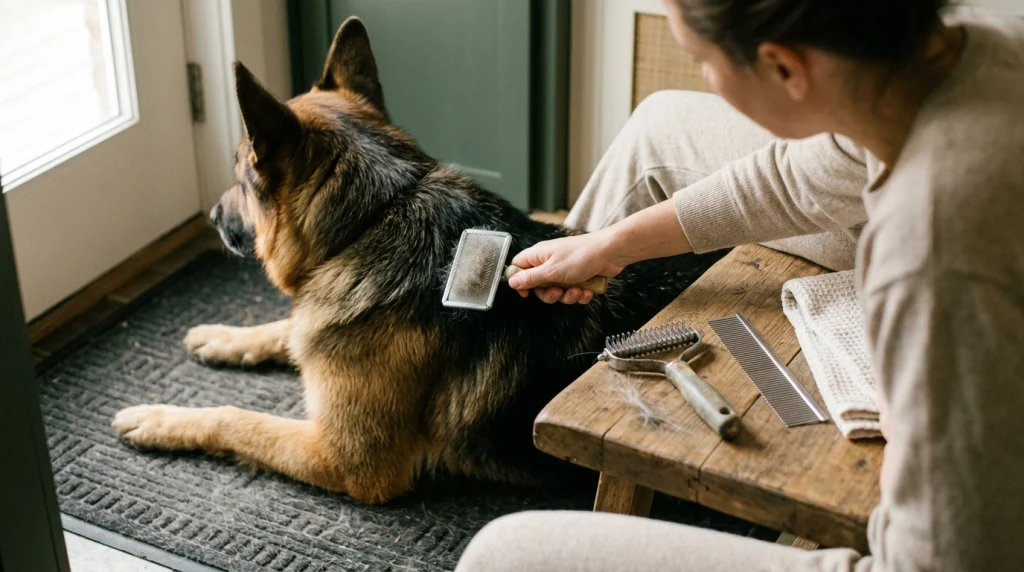
SaveIf you’re ready to improve your grooming routine, I’d start with a tool that solves your dog’s biggest problem instead of buying a large grooming kit. These options cover three common needs: undercoat removal, everyday brushing, and checking for tangles.
BEST FOR LOOSE UNDERCOAT
FURminator Undercoat deShedding Tool
Editor’s fit: 4.5/5
Designed to remove loose undercoat from compatible coats. I’d consider it for a heavy shedder, provided the model suits the dog’s size and coat length and the tool is used gently.
BEST FOR ROUTINE BRUSHING
Safari Self-Cleaning Slicker Brush
Editor’s fit: 4.3/5
A slicker brush is useful for collecting loose hair and working through minor tangles on suitable coats. I’d prioritize a comfortable grip and gentle pin pressure over aggressive brushing.
BEST FOR TANGLE CHECKS
Andis Steel Pet Comb
Editor’s fit: 4.2/5
A metal comb helps reveal knots that a brush can miss, especially around the legs, collar, and feathering. I’d use it as a gentle finishing check, never as a tool to force apart tight mats.
These editor-fit scores describe how closely each tool matches the stated grooming purpose; they are not verified customer ratings or laboratory test results. Check the current product specifications and choose the correct size before purchasing.
Frequently Asked Questions
Will a double-coated dog’s hair grow back normally after shaving?
Sometimes, but normal regrowth isn’t guaranteed. The undercoat and guard hairs may grow at different rates, and the coat can return with altered texture, patchiness, or uneven density. If shaving has already happened, protect exposed skin from excessive sunlight and ask your veterinarian about unusual or delayed regrowth.
Can I trim my double-coated dog with scissors?
Limited trimming may be appropriate around certain areas, depending on the breed and coat. However, ordinary scissors can cut skin hidden beneath thick fur or tight mats. Leave severe tangles to a qualified groomer, and ask about breed-appropriate trimming before cutting substantial amounts of coat.
Does brushing a double-coated dog reduce shedding?
Regular brushing helps collect loose undercoat before it spreads around your home. It won’t stop natural shedding, but an appropriate brush or rake can make loose hair more manageable. Increase grooming when shedding becomes heavier, and avoid excessive pressure that could irritate the skin or damage healthy hair.
How often should I brush a double-coated dog?
Several sessions per week provide a useful starting point for many double-coated dogs. Long, dense coats and heavy seasonal shedders may need more frequent attention, while some short double coats need less time. Adjust the routine to your dog’s coat condition and consult a groomer if tangles keep returning.
Should I shave my double-coated dog if it has severe mats?
Sometimes clipping is necessary when mats become too tight to remove safely. Mats can pull on the skin, trap moisture, and cause discomfort. A professional groomer or veterinarian should assess the coat and decide whether careful dematting or clipping offers the safest and most comfortable solution.
Final Takeaway: Brush the Coat Instead of Shaving It
For most healthy double-coated dogs, regular brushing is a better choice than a full-body shave. It removes loose undercoat, helps prevent mats, and maintains the protective outer coat.
Start with a suitable dog brush, use gentle section-by-section techniques, and finish with a comb check where appropriate. If your dog struggles with heat, severe matting, or skin problems, seek professional advice instead of assuming a close shave will solve everything.
Your goal isn’t to remove every hair. It’s to keep your dog’s coat clean, comfortable, and healthy throughout the year.
For further reading, consult the American Kennel Club’s guidance on shaving dogs and its broader dog brush selection guide.

Thomas Cutter is a lifelong dog owner and the founder of FindOutAboutDogs.com. With over 10 years of hands-on experience owning multiple breeds, Thomas created this site to provide honest, research-based dog advice that real owners can actually trust.
