How Long Should You Brush a Dog? A Simple Guide for Every Coat Type
Quick Answer
Most dogs only need about 5 to 10 minutes of brushing per session, but thick, long, curly, or double coats can take longer. The better rule is to brush until you have worked through the coat without rushing, pulling, or irritating the skin; regular coat grooming is usually more useful than one long session.
A practical time guide
- Short coats: Around 5 minutes is often enough for a routine brush.
- Medium coats: Plan for roughly 5 to 10 minutes, depending on shedding and density.
- Long or curly coats: Expect 10 minutes or more when you need to work carefully through tangles.
- Heavy shedders: Several shorter sessions each week can work better than one exhausting session.
- Nervous dogs: Stop while the experience is still positive and build brushing time gradually.
The best rule
- Don’t chase a timer: Focus on gentle, thorough brushing with the right tool for your dog’s coat.
When people ask me how long they should brush a dog, they’re often looking for one exact number.
The honest answer is that a five-minute brush can be perfect for one dog and nowhere near enough for another. Coat type, shedding, tangles, brush choice, and your dog’s tolerance all change the answer.
My rule is simple: brush for as long as it takes to comfortably work through the coat, not as long as it takes to satisfy a stopwatch.
For most routine sessions, that means roughly 5 to 10 minutes. Dogs with dense undercoats, longer hair, or developing tangles may need more time and more frequent attention.


How Long Should You Brush a Dog During One Session?
 Save
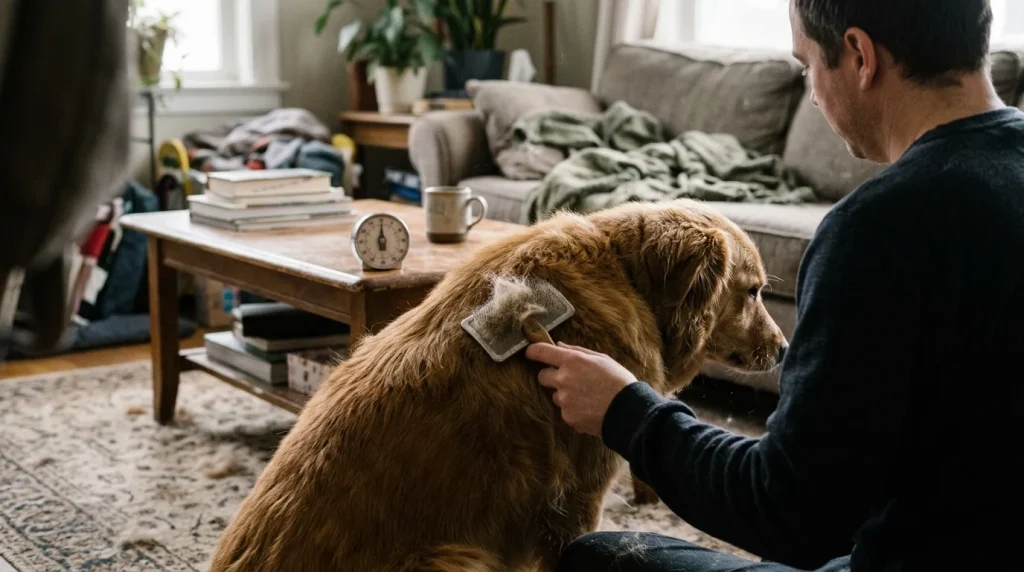
For a healthy dog with a manageable coat, 5 to 10 minutes is a useful starting point. A short-haired dog may be finished in less time, while a long-haired dog may need 10 to 20 minutes or longer.
The important distinction is between a routine brush and a major grooming job. If the coat has been neglected or contains mats, forcing everything into one session can make the experience unpleasant.
A simple brushing-time guide
| Coat type | Typical session time | General brushing pattern |
|---|---|---|
| Short and smooth | About 3–5 minutes | Often weekly |
| Short and dense | About 5–10 minutes | Weekly or more during shedding |
| Medium length | About 5–15 minutes | Several times per week |
| Long, silky, or curly | 10–20+ minutes | Often daily or near-daily |
| Double coat | 5–20 minutes | Regularly, with extra work during shedding |
These are practical ranges, not strict rules. Your dog’s individual coat condition matters more than the clock.
Why Is Brushing Time Different for Every Dog?
Dog brushing is the process of removing loose hair, dirt, and tangles while checking the condition of the coat and skin. The amount of work involved depends heavily on what that coat is like.
A short, smooth coat gives you easy access to the skin and doesn’t usually trap deep tangles. A dense or curly coat can hide loose hair and knots underneath the visible surface.
Coat length changes the job
Long hair takes longer because you need to work carefully through more material. Brushing only the top layer can leave tangles underneath, especially around friction areas.
- Short coats: Usually need a quick pass to remove loose hair and dirt.
- Medium coats: May need extra attention around the neck, chest, and rear.
- Long coats: Need slower brushing so the tool reaches through the hair.
- Curly coats: Can knot close to the skin, making regular maintenance especially important.
Coat density matters too
A dog can have short hair and still take time to brush. Dense coats and double coats can hold a surprising amount of loose undercoat.
During seasonal shedding, the amount of loose hair can increase dramatically. That’s one reason a dog that normally takes five minutes may temporarily need longer or more frequent sessions.
Is It Better to Brush Your Dog Longer or More Often?
More frequent, shorter sessions are usually easier on both you and your dog. You don’t need to turn routine grooming into a long endurance event.
Regular brushing prevents loose hair from building up and lets you catch small tangles before they become difficult mats.
I prefer a routine that feels easy enough to repeat. A calm five-minute session several times a week is often more realistic than a stressful half-hour session once in a while.
A useful grooming mindset:
If your dog becomes uncomfortable before the coat needs more work, stop and continue later. Regular positive sessions help build tolerance better than forcing a long session.
How Do You Know When You’ve Brushed Enough?
You don’t need to remove every loose hair from your dog’s body. Instead, look for a coat that has been gently worked through without obvious loose clumps, tangles, or neglected areas.
For longer coats, run your fingers through sections of hair after brushing. If you repeatedly hit hidden knots, the coat probably needs more careful work.
Signs the session is probably complete
- The brush moves smoothly: It isn’t repeatedly catching in the same areas.
- Loose hair is reduced: You aren’t still pulling out large amounts with every stroke.
- Common trouble spots were checked: Pay attention to the collar area, behind the ears, chest, belly, legs, and tail.
- The coat looks separated: Longer hair shouldn’t be hiding obvious tangles underneath.
- Your dog remains comfortable: Calm grooming is more important than squeezing in extra minutes.
A thorough session doesn’t mean aggressive brushing. If you’re pulling, scratching, or repeatedly fighting through a knot, change your approach.
What Is the Best Way to Brush a Dog Without Hurting Them?
 Save
Use gentle strokes and the right tool, then work in manageable sections. Pulling a brush through a large tangle can hurt the skin and teach your dog to dislike grooming.
Start in an area your dog generally accepts, such as the back or shoulder. Save more sensitive areas until your dog is relaxed.
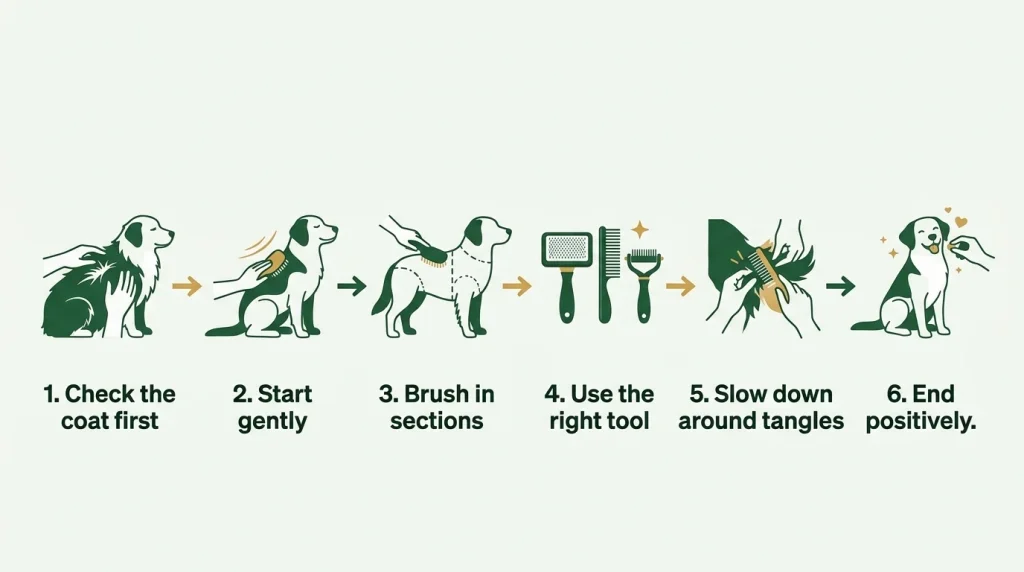
My basic brushing routine
- Check the coat first. Look for tangles, debris, irritated skin, or unusual lumps.
- Start gently. Let your dog settle before making longer strokes.
- Brush in sections. Work through one manageable area before moving on.
- Use the right tool. A brush that works beautifully on one coat can be wrong for another.
- Slow down around tangles. Hold the hair near the skin when appropriate to reduce pulling.
- End positively. Praise, treats, or a short break can help your dog associate grooming with something pleasant.
Never assume a dog needs harder brushing because loose hair remains. Sometimes the problem is simply that you’re using the wrong type of brush.
Which Dog Brush Helps You Finish the Job Faster?
The right brush can make a five-minute grooming session genuinely effective. The wrong one can make you brush longer while still missing loose hair or tangles.
Rubber brushes
Rubber grooming tools are often useful for short, smooth coats. They can help loosen surface hair while providing a gentler grooming experience.
Bristle brushes
Bristle brushes work well for smoothing coats and removing loose surface hair. Bristle length and stiffness should match the dog’s coat type.
Slicker brushes
Slicker brushes are commonly used for coats that need more work with loose hair and tangles. Their fine pins require a gentle technique because pressing too hard can irritate the skin.
Combs
A comb can help check whether longer hair has actually been worked through. If the comb catches repeatedly, you may have missed a tangle underneath the outer layer.
As of 2026, my advice hasn’t changed: choose the tool for the coat instead of buying one brush and expecting it to solve every grooming problem.
Should You Brush a Dog Every Day?
Some dogs benefit from daily brushing, while others don’t need it. Long, silky, curly, or easily matted coats often require much more frequent maintenance than short, smooth coats.
For many short-haired dogs, weekly brushing can be enough. Medium and longer coats often need brushing several times a week or daily, depending on how quickly they tangle.
Use your dog’s coat as the schedule
- Brush more often if tangles appear quickly.
- Brush more often during heavy shedding periods.
- Brush less intensely when the coat is already clean and easy to work through.
- Ask a groomer or veterinarian if you’re unsure about your breed’s coat requirements.
Frequency and session length work together. Daily grooming doesn’t mean every session needs to last 20 minutes.
What If Your Dog Hates Being Brushed?
If your dog hates brushing, making the session longer usually makes the problem worse. Start with a few gentle strokes and stop before your dog becomes seriously stressed.
Build up gradually. A dog that tolerates one minute calmly today may accept several minutes after repeated positive experiences.
Watch for discomfort
Stop and reassess if your dog suddenly cries, snaps, repeatedly tries to escape, or reacts strongly when one area is touched. Painful mats, irritated skin, parasites, or another health problem may be involved.
Don’t punish a dog for being uncomfortable. Your goal is to make grooming predictable, gentle, and safe.
Can You Brush a Dog for Too Long?
Yes. A long session can become a problem if the brushing irritates the skin or overwhelms the dog.
Too much pressure, repeated passes over the same area, and unsuitable tools can cause discomfort even during a relatively short session.
Quality matters more than duration. If your dog needs a major grooming job, breaking it into shorter sessions can be the better choice.
Common Brushing Mistakes That Make Sessions Take Longer
 Save
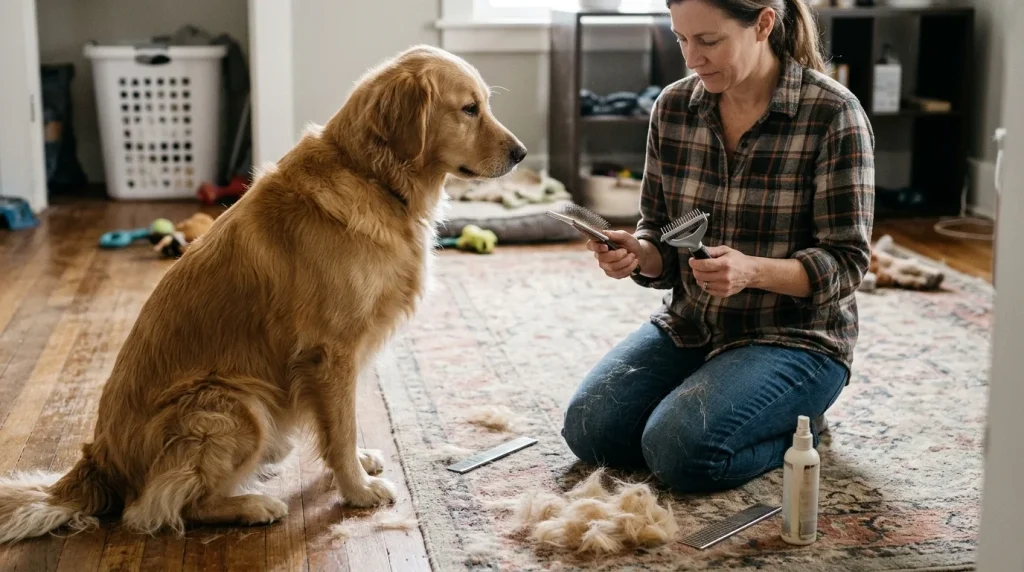
A few simple mistakes can turn routine grooming into an unnecessarily long task. Fixing them often saves more time than brushing faster.
- Using the wrong brush: The tool may skim over the coat without reaching the hair that needs attention.
- Brushing only the surface: Longer coats can hide tangles underneath.
- Waiting too long: Small tangles are easier to handle than established mats.
- Rushing through knots: Pulling causes discomfort and makes future sessions harder.
- Ignoring shedding season: Some dogs temporarily need extra grooming when loose undercoat increases.
- Making sessions stressful: A dog that learns to fear the brush will become harder to groom.
The fastest grooming routine is usually the most consistent one. Little and often beats neglect followed by an exhausting catch-up session.
If you’re ready to pick a tool that suits your dog’s routine, these are the kinds of options I’d look at first:
🏆 BEST FOR SHORT COATS
KONG ZoomGroom
★★★★☆
A flexible rubber grooming brush designed to help loosen hair from shorter coats. I’d consider this type of tool when you want quick, gentle sessions rather than deep detangling.
🧶 BEST FOR LONGER COATS
Hertzko Self Cleaning Slicker Brush
★★★★☆
A slicker-style option for dogs that need help with loose hair and routine coat maintenance. I would use gentle pressure and work in small sections instead of dragging it through tangles.
🔍 BEST FOR CHECKING TANGLES
Andis Steel Pet Comb
★★★★☆
A metal comb can help check whether longer hair has been brushed through properly. I like this type of finishing tool because it reveals hidden catches that a surface brush may miss.
Frequently Asked Questions
How long should I brush my dog every day?
If your dog’s coat needs daily brushing, many routine sessions can take only 5 to 10 minutes. Long, curly, dense, or tangled coats may need longer, but you can divide the work into shorter sessions if your dog becomes restless.
Is 5 minutes of brushing enough for a dog?
Five minutes can be enough for a short-haired dog or a quick maintenance session. It may not be enough for a long-haired or double-coated dog, especially when loose hair or tangles have built up.
How often should I brush a short-haired dog?
Many short-haired dogs do well with weekly brushing, although shedding season can create a need for more frequent sessions. A gentle rubber or suitable bristle brush can make these short sessions easier.
Should I brush my dog until no more hair comes out?
No. Dogs naturally shed, and you don’t need to chase every loose hair. Brush gently until the coat has been reasonably worked through, then avoid repeatedly irritating the same area just to remove the last few hairs.
What should I do if I find a mat while brushing?
Don’t yank a brush through it. Work carefully around the tangle, use an appropriate grooming tool, and consider professional help for severe or tight mats. Cutting mats with scissors near the skin can be risky.
The Bottom Line: Brush for the Coat, Not the Clock
For most dogs, 5 to 10 minutes is a good everyday answer to how long you should brush a dog. The real target, though, is a comfortable and thorough session suited to your dog’s coat.
Short-haired dogs may need only a few minutes, while long-haired and dense-coated dogs can need considerably more time. Stay gentle, use the right brush, and brush often enough that grooming never becomes a painful catch-up job.
If you build a consistent routine, you’ll spend less time fighting tangles and more time giving your dog a calm, useful grooming session.

Thomas Cutter is a lifelong dog owner and the founder of FindOutAboutDogs.com. With over 10 years of hands-on experience owning multiple breeds, Thomas created this site to provide honest, research-based dog advice that real owners can actually trust.
