Single-Sided vs Double-Sided Dog Brushes: Which Is Better?
Quick Answer
A double-sided dog brush is usually the more versatile choice for medium- to long-haired dogs because it combines two grooming surfaces, often pins on one side and bristles on the other. A single-sided brush is better when you want one dedicated tool for a specific task, such as removing tangles, lifting loose undercoat, or smoothing a short coat. The best choice depends on your dog’s coat type, grooming needs, and skin sensitivity.
How to Choose Between Them
- Everyday grooming: Choose a double-sided pin-and-bristle brush if your dog benefits from both detangling and surface finishing.
- Targeted grooming: Choose a single-sided slicker, pin brush, or bristle brush for a specific coat-care task.
- Short, smooth coats: A suitable bristle or rubber brush may work better than a two-sided combination tool.
- Long, silky coats: A pin-and-bristle combination can help with loose tangles and finishing, provided the pins suit the coat.
- Thick double coats: A dedicated undercoat rake or suitable slicker may be more useful than a basic combination brush.
- Sensitive skin: Prioritize smooth, appropriately spaced pins, gentle pressure, and a brush that doesn’t scratch or pull.
One Important Tip
- Check the coat with a suitable comb after brushing; a smooth surface doesn’t always mean you’ve removed tangles closer to the skin.
Choosing between single-sided vs double-sided dog brushes seems simple until you see how many shapes, pin styles, and bristle types are available. The right design can make routine grooming easier, while the wrong one may leave tangles behind or irritate your dog’s skin.
When comparing these brushes, I focus on what each side can actually do rather than how many features appear on the packaging. This guide explains the differences, the coat types each design suits, and when a dedicated brush is worth choosing over a combination tool.


What Is the Difference Between Single-Sided and Double-Sided Dog Brushes?
A single-sided dog brush has one grooming surface designed for a particular task, while a double-sided dog brush has two usable grooming surfaces, often with different bristle or pin designs. Neither style is automatically better; the important difference is whether your dog benefits from one specialized surface or two complementary ones.
For example, a single-sided slicker brush can help loosen small tangles in suitable coats, while a double-sided pin-and-bristle brush can separate longer hair and then smooth the outer coat. The second surface adds flexibility, but it doesn’t necessarily improve the brush’s ability to reach a dense undercoat.
- Single-sided brush: One working surface for a defined grooming purpose.
- Double-sided brush: Two working surfaces that may perform different tasks.
- Combination brush: Another common name for a double-sided brush with two different grooming surfaces.
The term “double-sided” describes the brush’s construction, not its performance level. A well-matched single-sided brush can outperform a combination brush when your dog needs a particular type of grooming.
How Does a Single-Sided Dog Brush Work?
A single-sided dog brush concentrates its design on one surface, allowing you to choose a tool for your dog’s main grooming need. Depending on its construction, it may remove loose hair, separate longer strands, smooth a short coat, or help manage tangles.
Before buying one, identify the brush type rather than relying on the number of sides alone.
Common Types of Single-Sided Brushes
- Slicker brush: Uses many fine, closely spaced wires to remove loose hair and work through manageable tangles in suitable coats.
- Pin brush: Uses longer, more widely spaced pins to separate and groom medium- or long-haired coats.
- Bristle brush: Uses soft or firm bristles to collect surface debris, remove some loose hair, and smooth the coat.
- Rubber brush: Uses flexible rubber nubs to loosen surface hair and massage short, smooth coats.
- Undercoat rake: Uses longer teeth to remove loose undercoat from suitable double-coated dogs.
These tools are not interchangeable. A soft bristle brush, for example, generally won’t reach through a dense coat as effectively as a properly sized undercoat rake.
When Is a Single-Sided Brush the Better Choice?
A single-sided brush makes sense when you know which grooming task needs attention and want a tool built around that job. It can also be easier to handle when you regularly groom only one coat type.
- Short-haired dogs: A suitable bristle or rubber brush can remove surface hair without unnecessary pin work.
- Curly-coated dogs: A suitable slicker can help manage tangles, with a comb used to check the coat afterward.
- Heavy-shedding double coats: A coat-appropriate undercoat rake can target loose undercoat more effectively than a basic combination brush.
- Small grooming areas: A small, dedicated brush can offer better control around the legs and other limited spaces.
The trade-off is that one brush may not cover every stage of grooming. You might still need a comb or a separate finishing brush to complete the job.
How Does a Double-Sided Dog Brush Work?
A double-sided dog brush combines two grooming surfaces in one tool, often pairing metal pins with softer bristles. You can use the pin side for suitable tangles and coat separation, then turn the brush over to smooth the surface and collect some loose hair.
Not every double-sided brush uses the same combination. Some models pair two different pin styles, while others combine bristles with rubber tips or other grooming surfaces.
What Are the Benefits of a Double-Sided Brush?
- Fewer tool changes: You can switch grooming surfaces without reaching for another brush.
- Flexible grooming: Different sides can help with coat separation and surface finishing.
- Convenient storage: One handle can replace two separate brushes for basic grooming routines.
- Useful for mixed needs: Some medium- and long-haired dogs benefit from both pin brushing and bristle finishing.
Convenience is the main advantage. If both sides suit your dog’s coat, one combination brush may cover much of your regular grooming routine.
However, the second side isn’t always useful. A brush with soft bristles and widely spaced pins may be a poor substitute for a dedicated slicker or undercoat rake when your dog has dense fur or recurring tangles.
Single-Sided vs Double-Sided Dog Brushes: Key Differences
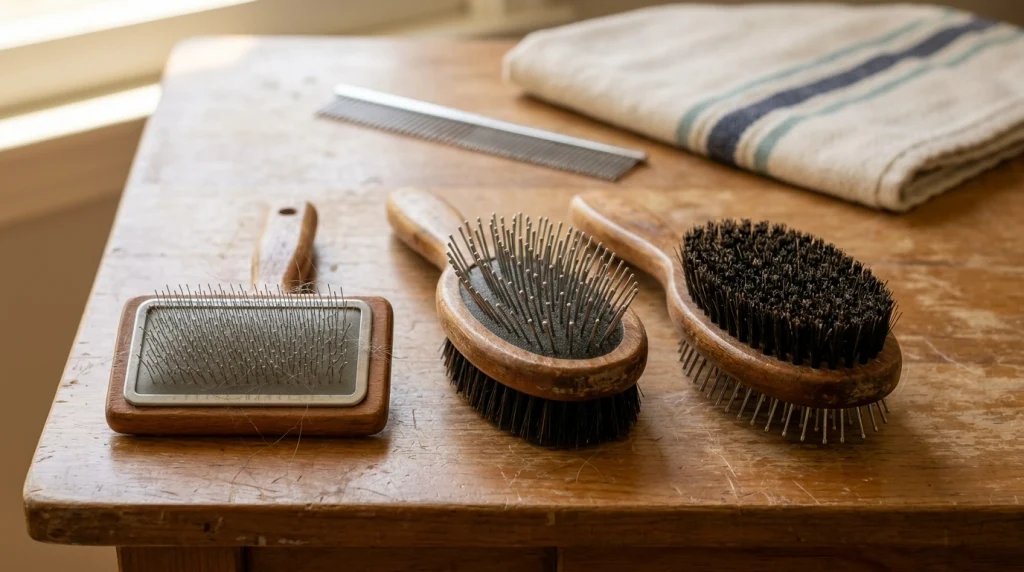 Save
The main difference is specialization versus versatility. A single-sided brush focuses on one grooming surface, while a double-sided brush gives you two surfaces that may complement each other.
The following comparison covers typical designs; exact performance depends on the model, pin length, bristle stiffness, and your dog’s coat.
| Feature | Single-Sided Brush | Double-Sided Brush |
|---|---|---|
| Grooming surfaces | One | Two |
| Main advantage | Focused performance for a chosen task | Versatility and fewer tool changes |
| Typical example | Dedicated slicker, bristle brush, or rake | Pin-and-bristle combination brush |
| Best suited to | A specific coat or grooming need | Dogs that benefit from two complementary surfaces |
| Learning curve | Often straightforward when the purpose is clear | Requires knowing when to use each side |
| Undercoat removal | Can be effective with a suitable dedicated rake | Depends on the design; a basic combo brush may not reach deeply |
| Storage | May require extra tools for different tasks | Can reduce the number of tools needed for routine care |
| Potential drawback | May not cover every grooming task | One or both sides may be unsuitable for the coat |
There’s no universal winner in this comparison. Choose the brush that performs your most important grooming task safely, rather than assuming more features always mean better results.
Which Brush Is Better for Different Dog Coat Types?
The best brush depends more on your dog’s coat than on whether the brush has one or two sides. A double-sided brush is a useful general-purpose option for some dogs, but others need a dedicated grooming tool.
Use this guide to narrow your options before buying.
| Dog coat type | Practical choice | Why it helps |
|---|---|---|
| Short and smooth | Single-sided rubber or bristle brush | Removes surface hair without needing long pins |
| Medium-length coat | Double-sided pin-and-bristle brush | Combines separation and finishing |
| Long and silky | Gentle pin brush or suitable combination brush | Helps separate strands and manage light tangles |
| Curly or woolly | Suitable slicker plus a metal comb | Helps work through tangles and check the coat |
| Thick double coat | Coat-appropriate undercoat rake or slicker | Targets loose undercoat or tangles, depending on the tool |
| Wire coat | Suitable pin brush or slicker, depending on coat care | Helps maintain the coat without relying on one brush for everything |
These are starting points, not rigid breed rules. Coat texture, length, density, and skin sensitivity can vary even among dogs of the same breed.
What About Border Collies and Other Double-Coated Dogs?
For a Border Collie with a dense double coat, a double-sided pin-and-bristle brush can help with surface grooming, but it may not be enough during heavy shedding. A suitable undercoat rake or slicker can serve a different purpose when loose undercoat or tangles need attention.
Work gently in small sections and avoid repeatedly dragging a brush over the same area. If you find tight mats close to the skin, painful knots, or irritated skin, stop and seek help from a professional groomer or veterinarian as appropriate.
Is a Double-Sided Dog Brush Better for Beginners?
A double-sided brush can be convenient for beginners because it offers two grooming surfaces in one handle. It’s a sensible starting point when both sides suit the dog’s coat and the owner understands their different purposes.
Still, simplicity doesn’t automatically make a brush suitable. A beginner grooming a short-coated dog may find a single-sided rubber brush easier to use, while a dog with a dense undercoat may need a more specialized tool.
Advantages for New Dog Owners
- Less equipment: One brush may handle basic detangling and finishing.
- Easy switching: You can turn the brush over instead of searching for another tool.
- Flexible routines: Different surfaces may help with different stages of the same session.
What Beginners Should Watch For
- Pin pressure: Pressing too firmly can scratch or irritate skin.
- Wrong surface: Soft bristles won’t replace a rake when deep undercoat removal is needed.
- Missed tangles: Brushing the top layer can leave knots underneath.
- Overbrushing: Repeated strokes over one small area can cause discomfort or brush irritation.
My practical rule is to start with short, gentle sessions and watch the dog’s response. Relaxed body language is encouraging, while pulling away, repeated licking, flinching, or growling means you should pause and reassess.
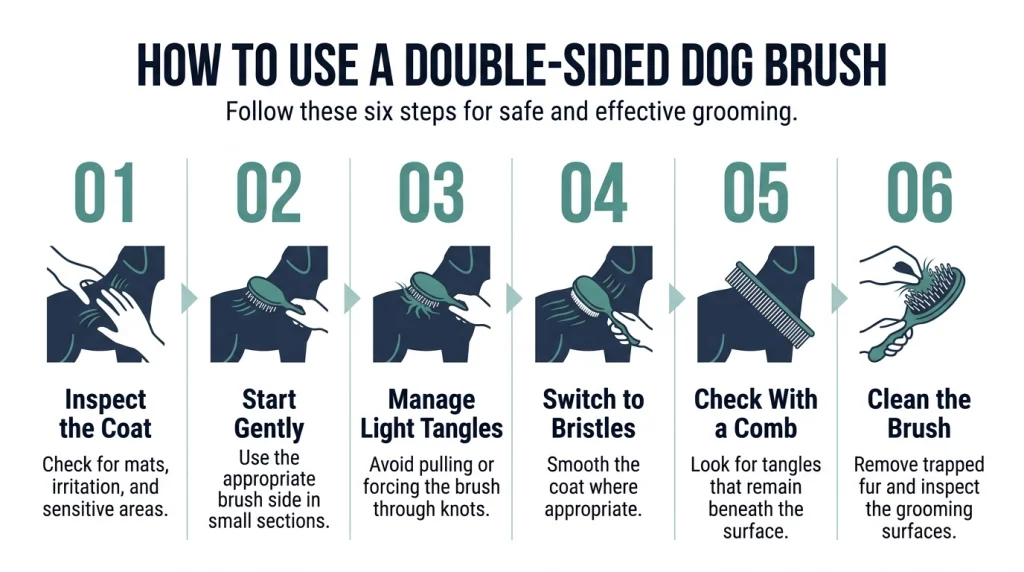
How Do You Use Each Side of a Double-Sided Dog Brush?
 Save
Use each side according to its design, not simply in the order shown on the handle. On a typical pin-and-bristle brush, the pin side helps separate suitable longer hair, while the bristle side provides surface grooming and finishing.
- Inspect the coat: Check for mats, skin irritation, wounds, and sensitive areas before brushing.
- Start gently: Use the pin side on appropriate coats, moving in small sections without pressing hard.
- Work through manageable tangles: Support the hair near the skin to reduce pulling, and never force the brush through a knot.
- Switch to the bristle side: Smooth the coat and collect loose surface hair where appropriate.
- Check your work: Use a suitable metal comb to check for remaining tangles, especially behind the ears, around the collar, and beneath the legs.
- Clean the brush: Remove trapped fur and inspect the pins or bristles for damage before storing it.
For dogs with curly or dense coats, section-by-section grooming is more useful than simply brushing over the surface. If the coat is badly matted, professional grooming may be safer than trying to remove every knot at home.
What Should You Check Before Buying a Dog Brush?
Don’t choose a brush based on its number of sides alone. Check the working surfaces, dimensions, comfort, and cleaning requirements to make sure the tool suits your dog and your routine.
- Pin length: Pins should suit the coat’s depth without repeatedly scraping the skin.
- Pin tips: Smooth tips may feel gentler, but rounded tips alone don’t guarantee safe brushing.
- Bristle stiffness: Choose a texture appropriate for the coat rather than assuming firmer bristles clean better.
- Brush-head size: A smaller head can improve control around legs and other small areas, while a larger head may cover more of a broad body.
- Handle comfort: A secure, comfortable grip makes controlled strokes easier.
- Cleaning access: Hair should be easy to remove without damaging the grooming surface.
- Construction: Check for loose pins, sharp edges, weak joints, and surfaces that could catch or pull hair.
As of 2026, the same basic selection principle still applies: match the tool to the coat and the task. Product labels such as “professional,” “premium,” or “2-in-1” cannot tell you whether the brush will work well for your particular dog.
Which Is Better for Shedding and Tangles?
For shedding, choose a brush designed to reach the type of loose hair you’re trying to remove. For tangles, choose a suitable pin brush or slicker, then use a comb to check the coat; a double-sided design isn’t automatically more effective at either task.
For Everyday Loose Hair
A double-sided brush can work well when one surface collects loose hair and the other smooths the coat. Short-coated dogs may need only a suitable bristle or rubber brush, while double-coated dogs often benefit from a tool designed specifically for loose undercoat.
Avoid treating every shedding tool as interchangeable. Some deshedding tools remove undercoat more aggressively than ordinary brushes, so the correct design and technique matter.
For Tangles and Mats
Light tangles may respond to a suitable pin brush or slicker used gently in small sections. A double-sided brush can be convenient if one side is designed for this purpose, but the bristle side usually serves a different role.
Never yank at a mat or pull a brush repeatedly through a knot. Tight mats, extensive tangling, or mats close to the skin may require a professional groomer.
Are Single-Sided Dog Brushes Easier to Clean?
Often, a single-sided brush is simpler to clean because it has only one grooming surface, but the actual difference depends on the design. A double-sided brush may need cleaning on both sides, particularly if hair collects around the pins and bristles.
- Remove loose hair after each grooming session.
- Follow the manufacturer’s cleaning instructions.
- Allow washable brushes to dry fully before storage.
- Replace brushes with broken, bent, sharp, or loose components.
Cleaning matters because trapped hair and debris can make grooming less effective. Regular inspection also helps you spot damage before it irritates your dog’s skin.
What Are the Most Common Dog Brush Buying Mistakes?
The biggest mistake is choosing a brush because it has more features instead of checking whether those features match the dog’s coat. Avoid these common problems when comparing single-sided and double-sided designs.
- Buying for appearance: A polished handle or attractive design doesn’t guarantee good grooming performance.
- Ignoring coat density: A brush that works on fine hair may not reach a thick undercoat.
- Expecting one brush to do everything: Some coats need a brush, a comb, and a specialized tool for different tasks.
- Using excessive pressure: More force doesn’t make grooming faster or more effective.
- Ignoring the dog’s reaction: Pain, skin redness, or repeated attempts to escape should never be treated as normal grooming behavior.
When in doubt, ask a qualified groomer to demonstrate a suitable tool and technique for your dog’s coat. A short demonstration can prevent discomfort and help you avoid buying equipment you don’t need.
Where Can You Learn More About Safe Dog Grooming?
Reliable grooming advice can help you select tools that fit your dog’s coat and recognize when home brushing isn’t enough. These established resources offer useful guidance on grooming and pet care.
- American Kennel Club’s guide to dog brushes explains common brush types and their uses.
- ASPCA dog care resources provide general information to support responsible pet care.
- VCA Animal Hospitals’ pet health library offers veterinary-reviewed educational information on animal health and care.
Use these resources alongside advice from a groomer or veterinarian when your dog has persistent skin problems, painful mats, or an unusual reaction to brushing.
Recommended Dog Brushes to Consider
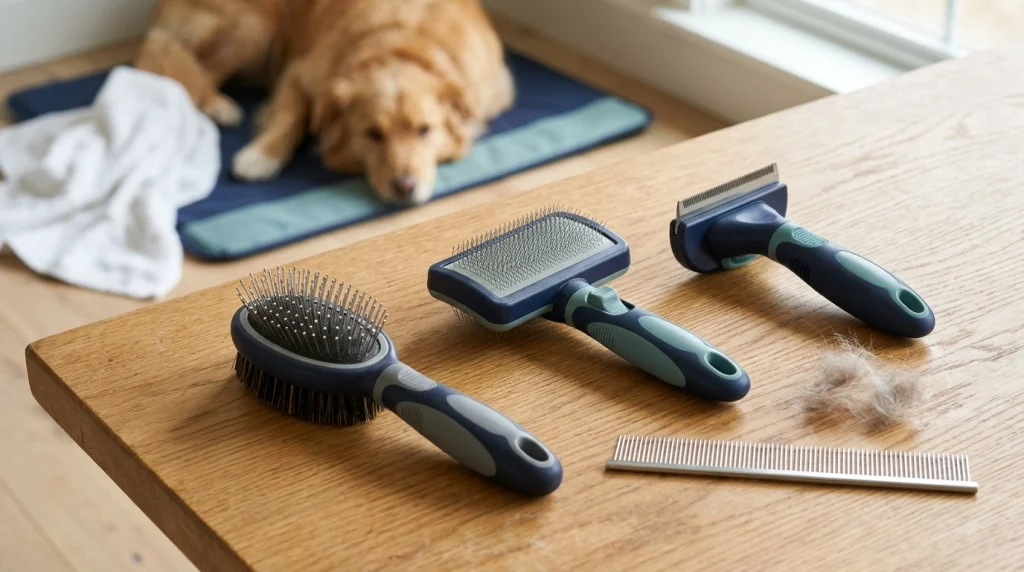 Save
If you’re ready to buy, I’d start by matching the brush design to your dog’s coat rather than looking for the most versatile product. The following options represent different grooming needs; check the current product specifications and reviews before choosing a model.
VERSATILE COMBINATION
Wahl Double-Sided Dog Brush
A combination-style brush is worth considering for routine grooming when its pin and bristle surfaces suit your dog’s coat. Check the specific model’s pin design, dimensions, and intended coat types before buying.
TARGETED DETANGLING
Hertzko Self-Cleaning Slicker Brush
A dedicated slicker brush is an alternative for suitable medium- and long-haired coats that need help with loose hair and manageable tangles. Use gentle strokes and check that the pins suit your dog’s coat and skin sensitivity.
DOUBLE-COAT CARE
FURminator Undercoat Deshedding Tool
Consider a correctly sized undercoat tool if your dog has a suitable double coat and sheds heavily. This is a specialized option rather than a substitute for every grooming brush, so follow the manufacturer’s breed, coat, and usage guidance.
These are category-based recommendations, not independently tested product rankings. I haven’t verified current prices, customer ratings, or stock availability, so compare the current listings before making a purchase.
Frequently Asked Questions
Is a single-sided or double-sided dog brush better?
A double-sided brush is more versatile when both surfaces suit your dog’s coat and serve useful, complementary purposes. A single-sided brush is often better for a specific task, such as undercoat removal or targeted detangling. Choose based on coat type, skin sensitivity, and grooming needs rather than the number of sides.
Can I use a double-sided brush on every dog breed?
No single brush suits every dog breed or coat type. A pin-and-bristle brush may help with some medium- and long-haired dogs, while short-coated dogs may benefit more from rubber or bristle brushes. Dogs with dense undercoats or curly coats may need specialized tools for effective grooming.
Does a double-sided dog brush reduce shedding more effectively?
Not necessarily. Shedding control depends on the brush surface, coat type, and the kind of loose hair being removed. A combination brush may collect surface hair, while a suitable undercoat rake targets loose undercoat. Choose a tool designed for your dog’s coat, and avoid excessive brushing or pressure.
Can a single-sided brush remove tangles and loose hair?
Yes, if you select the correct brush type. A suitable slicker or pin brush can help manage loose hair and light tangles in appropriate coats. A bristle brush is generally more useful for surface grooming, so it may not resolve deeper tangles. Use a suitable comb to check your work.
Should I buy both single-sided and double-sided dog brushes?
Not always. One suitable brush may be enough for a simple grooming routine, while dogs with long, curly, or double coats may benefit from multiple tools. Start with the main grooming need, then add a comb or specialized brush only if the coat requires it.
Final Takeaway: Which Dog Brush Should You Choose?
For many owners, a double-sided dog brush offers convenient everyday grooming by combining two surfaces in one tool. It’s a practical choice when both sides match your dog’s coat and you want to reduce the number of brushes you keep at home.
A single-sided brush is the better choice when you need a specific tool for a specific job. If your dog has a dense double coat, recurring tangles, or sensitive skin, prioritize the correct brush type and gentle technique over extra features.
Before buying, check the pin length, bristle texture, brush-head size, and cleaning requirements. The best dog brush is the one that helps you maintain your dog’s coat comfortably, safely, and consistently.

Thomas Cutter is a lifelong dog owner and the founder of FindOutAboutDogs.com. With over 10 years of hands-on experience owning multiple breeds, Thomas created this site to provide honest, research-based dog advice that real owners can actually trust.
