What Brush Is Best for a Border Collie? 2026 Grooming Guide
Quick Answer
The best everyday brush for most Border Collies is a quality pin brush that moves through the medium-length double coat without pulling too aggressively. For seasonal shedding, add an undercoat rake, while a long-pin slicker helps with loose hair and small tangles. If your dog has an especially dense coat, follow this thick-undercoat brushing method instead of relying on one brush.
Best Border Collie grooming tools
- Pin brush: My first choice for normal weekly coat maintenance and longer feathering.
- Undercoat rake: Best for loose undercoat during heavier seasonal shedding.
- Long-pin slicker: Useful for separating dense fur and working through small tangles.
- Steel comb: A simple finishing tool for finding tangles the brush missed.
- Gentle pressure: The right brush should move through hair without repeatedly scraping the skin.
My simple setup
- Use a pin brush for routine grooming, bring in an undercoat rake during shedding, then comb-check tangle-prone areas.
Border Collies can look deceptively easy to groom. Their coat often appears smooth on top while loose undercoat hides closer to the skin.
That is why I would choose tools by what part of the coat they reach, not by how much fur an advertisement shows on the floor.


What type of coat does a Border Collie have?
A Border Collie has a weather-resistant double coat. A softer insulating undercoat grows beneath protective outer guard hairs.
Border Collies commonly have either a rough coat with more feathering or a shorter smooth coat. Both varieties still need regular grooming.
- Outer coat: Protects the skin and helps repel dirt, moisture, and weather.
- Undercoat: Soft, dense hair that can loosen heavily during seasonal coat changes.
- Feathering: Longer hair around the chest, rear legs, belly, and tail on rough-coated dogs.
- Tangle zones: Behind the ears, under the collar, armpits, trousers, and tail.
The American Kennel Club’s Border Collie guidance recommends regular brushing for both coat varieties. It specifically suggests using a pin brush once or twice weekly and brushing more often during shedding periods.
That recommendation matches what I look for in a practical Border Collie routine: gentle weekly maintenance first, stronger shedding tools only when the coat calls for them.
What brush is best for a Border Collie for everyday grooming?
For normal grooming, I would start with a medium- or long-pin pin brush. It separates the coat, removes surface debris, and works through feathering without treating every grooming session like a full de-shedding job.
A pin brush also gives you better control around the chest, tail, and rear legs than a large undercoat tool.
Why I prefer a pin brush for routine use
- Gentler maintenance: Smooth, polished pins can pass through the outer coat without aggressive cutting.
- Useful on feathering: Longer hair around the tail and legs responds well to section-by-section pin brushing.
- Easy inspection: Brushing slowly makes hidden knots, burrs, bumps, or tender spots easier to find.
- Less over-grooming: You are not removing deep undercoat every time you tidy the coat.
For reference, Chris Christensen currently offers its Original Series Oval Pin Brush with 20 mm, 27 mm, and 35 mm pin options. I would look around the medium-length range for many Border Collies, then adjust for the individual coat.
Do Border Collies need a slicker brush or undercoat rake too?
 Save
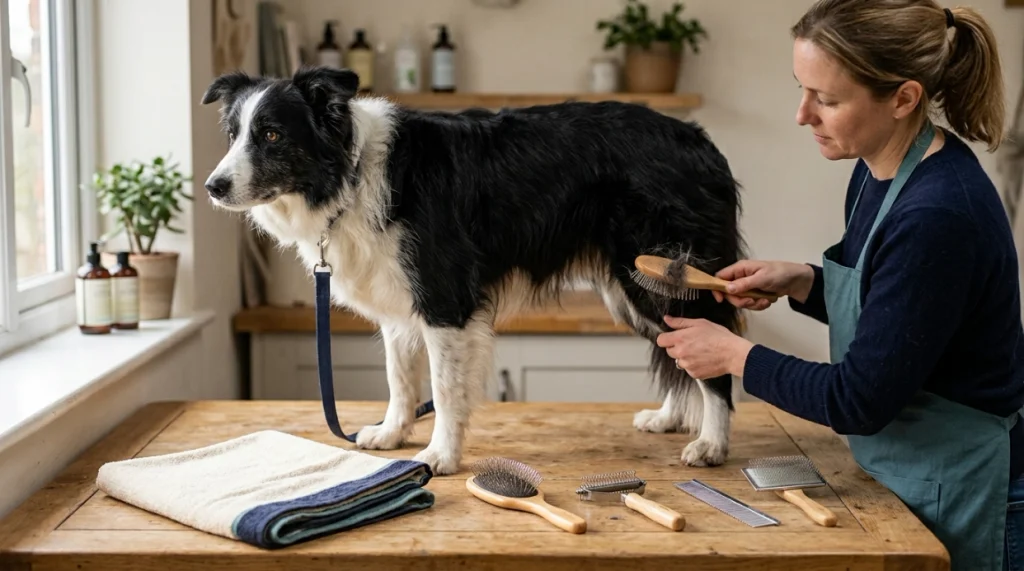
SaveYes, many Border Collies benefit from more than one brush. The pin brush handles routine maintenance, while slickers and rakes solve different coat problems.
This is normal for double-coated breeds. You can see the same tool-by-job principle in my Husky brush setup, although a Border Collie usually needs less aggressive undercoat work.
| Tool | Best Job | Undercoat Reach | Border Collie Use |
|---|---|---|---|
| Pin brush | Routine grooming and feathering | Medium | Best everyday starting tool |
| Long-pin slicker | Loose fur and small tangles | Medium to high | Useful on dense rough coats |
| Undercoat rake | Seasonal loose undercoat | High | Use mainly during heavier shedding |
| Steel comb | Finding hidden resistance | Medium | Excellent finishing check |
The AKC guide to dog brush types explains that undercoat rakes are designed to penetrate double coats and lift loose undercoat. That makes them especially useful when a Border Collie’s soft underlayer starts releasing heavily.
I would not automatically rake the coat every day. Deeper tools solve a specific problem and should not replace ordinary gentle brushing.
What is the best brush for a Border Collie during shedding season?
During heavy shedding, an undercoat rake becomes the most useful secondary tool. It reaches loose material beneath the outer coat that a pin brush may leave behind.
Finish with the pin brush or slicker instead of repeatedly raking the same area.
A simple shedding-season routine
- Inspect the coat. Find mats, burrs, wet areas, sores, or sensitive skin before using metal tools.
- Separate the hair. Work in small sections rather than dragging a rake across the whole dog.
- Rake loose undercoat. Follow the direction of hair growth and keep pressure light.
- Brush the outer coat. Follow with a pin brush or suitable slicker.
- Comb-check dense areas. Stop and rework any section where the comb catches.
If you want another example of seasonal double-coat management, compare this approach with my Golden Retriever shedding routine. The principle is similar even though coat texture and feathering differ.
As of 2026, I still prefer shorter, calm grooming sessions over marathon de-shedding. Comfort tells me more than the size of the fur pile.
How should you brush a Border Collie without hurting the skin?
 Save
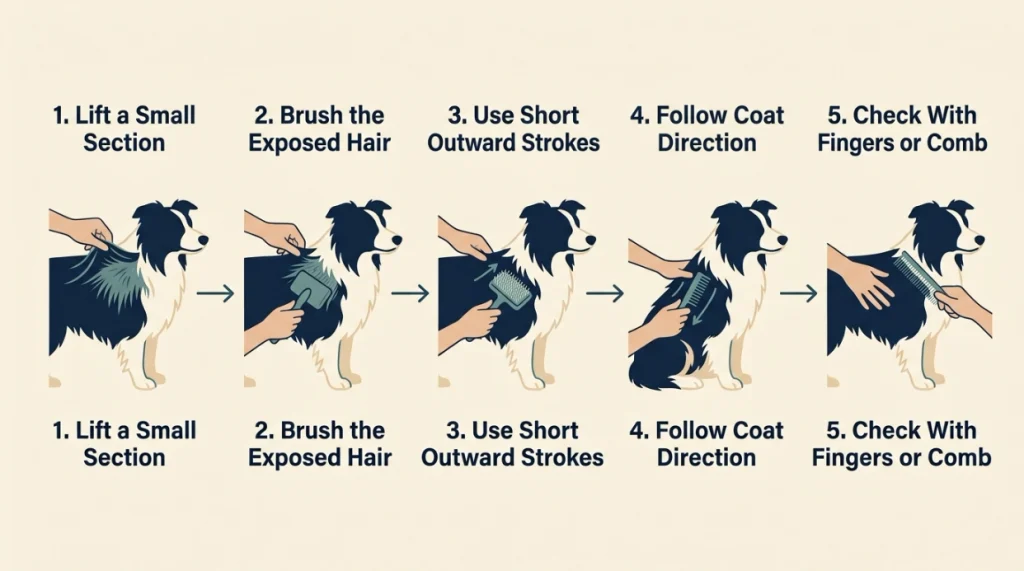
SaveUse light pressure, brush in sections, and stop when a tool catches instead of pulling harder. The goal is to separate hair, not scrape the skin.
VCA’s veterinary brush guide also emphasizes matching tools to coat type and using long-toothed options on longer coats such as Collies.
Try line brushing on dense areas
Line brushing means lifting a narrow section of hair and brushing the exposed layer underneath. Then you move the part slightly and repeat.
- Lift a small section with one hand.
- Place the brush into the exposed hair below it.
- Brush outward with short strokes.
- Keep the tool moving with the natural coat direction.
- Check the finished section with your fingers or comb.
I use the comb check as the simplest quality-control test. A coat can look smooth while a hidden knot remains underneath.
The same technique becomes useful on other dense double coats, which is why my guide to German Shepherd brushing tools also separates routine brushing from deeper undercoat removal.
Where does a Border Collie tangle most easily?
Rough-coated Border Collies often tangle where long hair experiences friction. Check these places before spending extra time brushing the easy part of the back.
- Behind the ears: Fine hair can knot close to the skin.
- Under the collar: Rubbing can compact loose fur.
- Armpits: Constant movement creates friction.
- Chest feathering: Long hair can hide small tangles.
- Rear legs: Dense trousers collect loose undercoat.
- Tail: Long hair needs careful section-by-section brushing.
Do not force a brush through a hard mat. Tight matting can pull painfully on skin.
If you find redness, an open sore, moisture, or repeated licking underneath the coat, stop grooming that spot. Cornell’s canine skin guidance on hot spots notes that long and double coats can require careful drying and mat removal when skin irritation develops.
How often should you brush a Border Collie?
For most Border Collies, start with one or two thorough brushing sessions each week. Increase frequency when the undercoat is actively shedding or feathering starts tangling faster.
- Normal weeks: Brush once or twice weekly.
- Heavy shedding: Use shorter sessions more frequently, sometimes daily.
- After hiking: Check for burrs, seeds, twigs, mud, and tangles.
- Before bathing: Remove obvious loose hair and knots first.
- Rough coats: Inspect feathering and friction areas between full grooming sessions.
Your individual dog matters more than a rigid calendar. A smooth-coated Border Collie living indoors may need less detangling than a rough-coated dog running through fields every day.
What should you look for when buying a Border Collie brush?
Choose a brush that matches coat depth and feels controllable in your hand. Bigger or sharper does not automatically mean better.
- Appropriate pin length: The brush needs enough reach to enter the coat instead of skating over it.
- Smooth pin tips: Roughly finished metal can make brushing unpleasant.
- Comfortable handle: Good grip matters during longer shedding sessions.
- Flexible cushion: Useful on pin and slicker brushes because it gives slightly under pressure.
- Suitable head size: A medium brush offers better control around a Border Collie’s curves and feathering.
I would skip a brush that promises to remove huge amounts of hair but gives you poor control. Grooming should preserve a healthy coat, not turn into a competition to remove the most fur.
Best brushes and grooming tools for a Border Collie
 Save
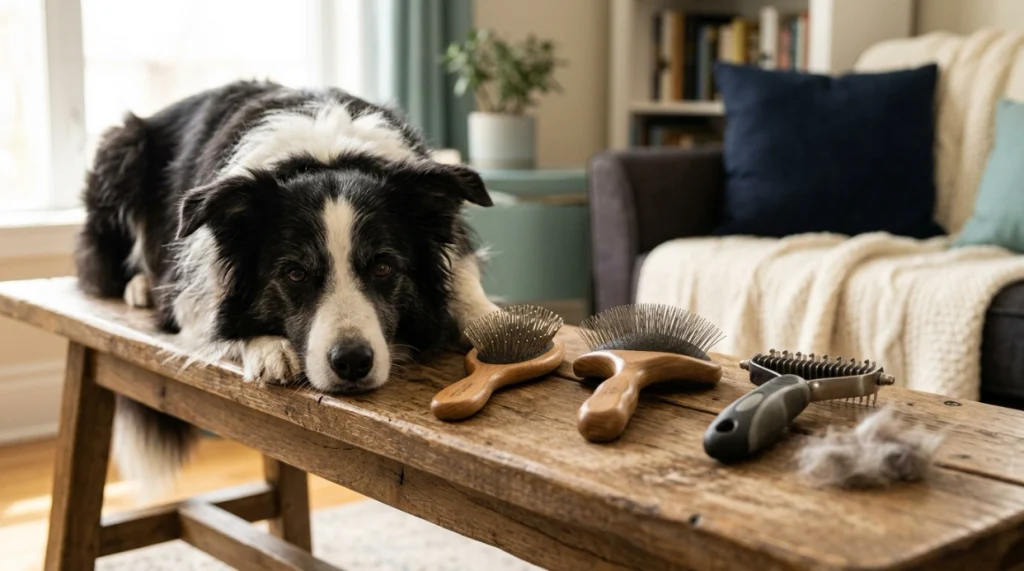
SaveIf you’re ready to choose your tools, these are the three options I would put at the top of a practical Border Collie grooming kit.
🏆 Best Everyday Brush
Chris Christensen Original Series Oval Pin Brush
★★★★½
Available with 20 mm, 27 mm, and 35 mm polished stainless-steel pins plus a cushioned backing. I like the 27 mm version as a sensible starting point for many medium-length Border Collie coats because it focuses on routine brushing instead of aggressive de-shedding.
✨ Best Premium Slicker
Chris Christensen Big G Slicker Brush
★★★★½
The Big G uses 27 mm stainless-steel pins, a flexible cushion, and a curved head designed for longer or dense coats. I would choose it for rough-coated Border Collies when a short slicker only skims the surface, although the premium price is unnecessary for every owner.
🐕 Best for Heavy Shedding
Maxpower Planet Original Pet Grooming Rake
★★★★☆
This dual-sided tool uses a 9-tooth side for tangles and a 17-tooth side for undercoat removal. I would reserve it for heavier shedding or problem areas rather than everyday brushing because its dematting design needs more careful handling than a simple pin brush.
Frequently Asked Questions
Is a slicker brush good for a Border Collie?
Yes. A slicker brush can work well for loose fur, light tangles, and dense sections of a Border Collie’s coat. I prefer a long-pin model for rough coats because short pins may only skim the surface. Use gentle strokes and avoid repeatedly brushing one skin area.
Is an undercoat rake good for Border Collies?
Yes, especially during seasonal shedding. An undercoat rake reaches the soft loose hair beneath the outer coat. It should be used with light pressure and mainly where loose undercoat is present. It does not need to replace your normal pin-brush routine.
Can I brush my Border Collie every day?
Gentle daily brushing can be useful during heavy shedding or when a rough coat tangles quickly. Daily deep raking is different. Use lighter routine tools most days and save intensive undercoat removal for areas that genuinely need it.
Should I use a FURminator on a Border Collie?
A de-shedding tool can remove loose undercoat, but use it carefully and according to its instructions. I would not make it my everyday Border Collie brush. A pin brush, appropriate slicker, rake, and steel comb give you more control over different coat-care jobs.
What is the best brush for a Border Collie puppy?
Start with a gentle pin brush or soft slicker that introduces grooming without uncomfortable pulling. Keep sessions short and reward calm behavior. The goal with a puppy is not maximum hair removal. It is building a grooming routine the dog will comfortably accept as an adult.
Final Takeaway: Which Border Collie Brush Should You Buy?
If you want one brush for normal Border Collie grooming, choose a quality pin brush. It suits the breed’s medium double coat and gives you useful control over feathering, debris, and everyday loose hair.
Then build around it. Add an undercoat rake for seasonal shedding and a long-pin slicker when dense fur or small tangles need more attention.
Keep the pressure light and check your work with a comb. The best grooming session ends with a comfortable dog and a separated coat, not necessarily an empty brush.
Start by checking your Border Collie’s coat today. Feel behind the ears, under the collar, and through the rear feathering, then choose the tool based on what the coat actually needs.

Thomas Cutter is a lifelong dog owner and the founder of FindOutAboutDogs.com. With over 10 years of hands-on experience owning multiple breeds, Thomas created this site to provide honest, research-based dog advice that real owners can actually trust.
