What Brush Is Best for Double-Coated Dogs?
Quick Answer
The best brush for a double-coated dog is actually two tools used in sequence: a slicker brush for surface detangling and an undercoat rake for removing loose undercoat. During heavy shedding seasons, add a deshedding tool to reach the compacted layer a rake misses. The American Kenn Club’s grooming guidance backs the same layered approach.
What makes a brush work on a double coat
- Reaches the undercoat: The tool must penetrate past the topcoat to grab the loose, woolly underlayer.
- Doesn’t cut healthy hair: Pin-style rakes are gentler than blade-style tools, which can nick guard hairs if overused.
- Matches coat length: A rake with long teeth suits a Husky; a slicker with short pins works better on a Labrador.
- Feels tolerable to the dog: Rounded tips and a flexible head reduce pulling and make grooming sessions calmer.
- Fits your routine: You’ll brush more often if the tool is comfortable to hold and easy to clean.
Quick tip before you buy
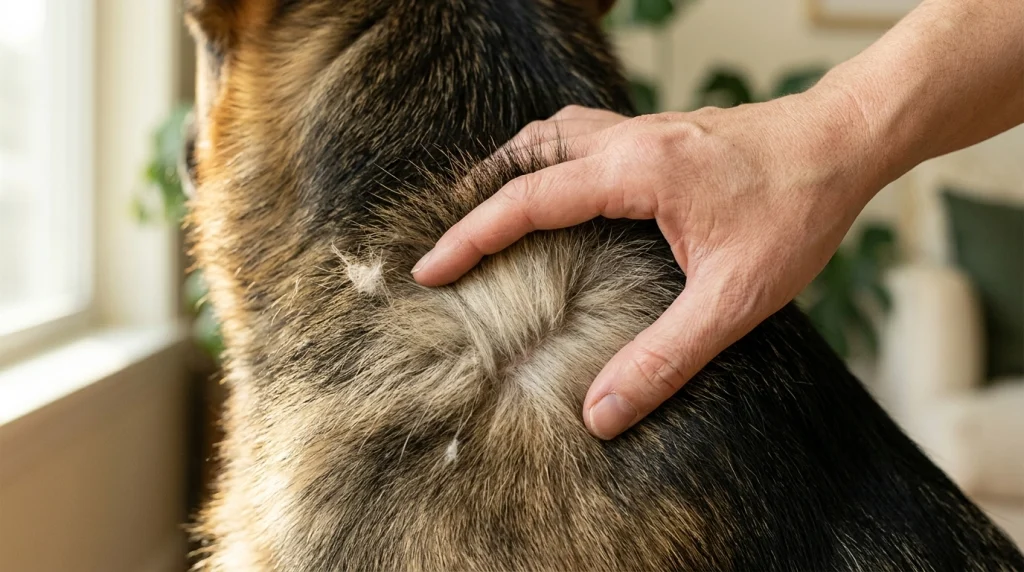
- Run your fingers against the coat on your dog’s hindquarters. If they stop before reaching skin, you’re dealing with packed undercoat that needs a rake, not just a slicker.
I’ve spent years brushing dogs with every coat type, and double coats are the ones that humble most owners. My German Shepherd, Rex, taught me early that one brush never solves the problem.
Here’s what actually works, based on hands-on testing and advice from groomers I’ve talked with over the years.


What Is a Double Coat, and Why Does It Change Everything?
 Save
SaveA double coat is two distinct layers of fur working together. The outer layer, called the topcoat or guard coat, is made of longer, coarser hairs that repel dirt and water.
Beneath it sits the undercoat, a dense, woolly layer that insulates the dog in both cold and hot weather. The American Kennel Club notes that the undercoat traps warmth in winter and cooler air in summer.
The two layers shed at completely different rates. Topcoat hairs are durable and shed slowly.
Undercoat hairs turn over constantly, and they release in bulk twice a year during seasonal coat blows.
That shed undercoat doesn’t fall out on its own. It stays trapped beneath the topcoat, packing against the skin and forming felt-like mats if you don’t remove it.
Why One Brush Isn’t Enough for a Double Coat
A single brush either skims the surface or reaches too deep with force. Neither is ideal.
A slicker brush alone detangles the topcoat and removes loose surface hair. But it can’t pull the compacted undercoat out from the base.
A rake alone reaches the undercoat but leaves surface tangles behind. Using it on a tangled coat pulls painfully.
The fix is a sequence, not a single tool:
- Step 1 — Slicker brush: Detangles the topcoat and lifts surface debris.
- Step 2 — Undercoat rake: Reaches beneath the topcoat to pull loose wool free.
- Step 3 — Deshedding tool (seasonal): Clears the compacted layer a rake leaves behind during coat blow.
That sequence is the whole system. Everything else is detail.
Slicker Brush vs. Undercoat Rake vs. Deshedding Tool
Each tool does a different job. Here’s how they compare on real double coats.
| Tool | What It Does | Best For | Watch Out For |
|---|---|---|---|
| Slicker Brush | Detangles surface fur, removes debris, catches loose hair | Daily maintenance, pre-rake detangling | Pins can scratch skin if pressed too hard |
| Undercoat Rake | Reaches under topcoat to pull loose undercoat without cutting | Weekly deshedding, medium to long double coats | Slower than blade tools; teeth must be long enough |
| Deshedding Tool | Blade edge slices through undercoat for fast bulk removal | Heavy shedding seasons, short-to-medium double coats | Overuse can thin the coat or irritate skin |
A pin-style undercoat rake uses blunt teeth to pull dead hair free without cutting anything. A blade-style tool works faster because its edge slices through the undercoat in a single pass.
Groomers who use both typically reach for the rake first to clear bulk. Then they follow with the blade tool for the finer undercoat a rake leaves behind.
Best Brush for Short vs. Long Double Coats
Not all double coats behave the same way. A Labrador’s coat is nothing like a Husky’s, and the tool list changes accordingly.
Short double coats (Labradors, Corgis, Beagles)
These dogs have dense, shorter fur that lies close to the body. A rubber curry brush works well for loosening surface hair during daily grooming.
For undercoat removal, use a slicker brush with medium pins, then follow with a rake with shorter teeth. PetSmart’s grooming resources describe undercoat rakes as the tool built for exactly this job.
Medium double coats (German Shepherds, Huskies, Akitas)
Start with a slicker brush to detangle, then move to an undercoat rake. A rake with longer teeth reaches the denser undercoat these breeds carry.
Chewy’s grooming guide recommends starting with a slicker brush for medium double coats before switching to deeper tools.
Long double coats (Golden Retrievers, Bernese Mountain Dogs, Collies)
These coats need a slicker brush with longer pins to reach through the topcoat. An undercoat rake with widely spaced, long teeth follows to clear the undercoat.
Whole Dog Journal recommends a medium-to-long bristle slicker brush, a greyhound comb, and an undercoat rake for medium- and long-haired double coats.
For long, heavily double-coated breeds like Huskies, Golden Retrievers, and Bernese Mountain Dogs, an undercoat rake generally works better than a blade tool. Those coat structures are more prone to damage from a blade edge.
Here’s the quick version, as of 2026:
- Short coat: Rubber curry brush + slicker + short-tooth rake
- Medium coat: Slicker + long-tooth rake + optional deshedding blade
- Long coat: Long-pin slicker + wide-tooth rake + greyhound comb
How to Brush a Double-Coated Dog (Step by Step)
 Save
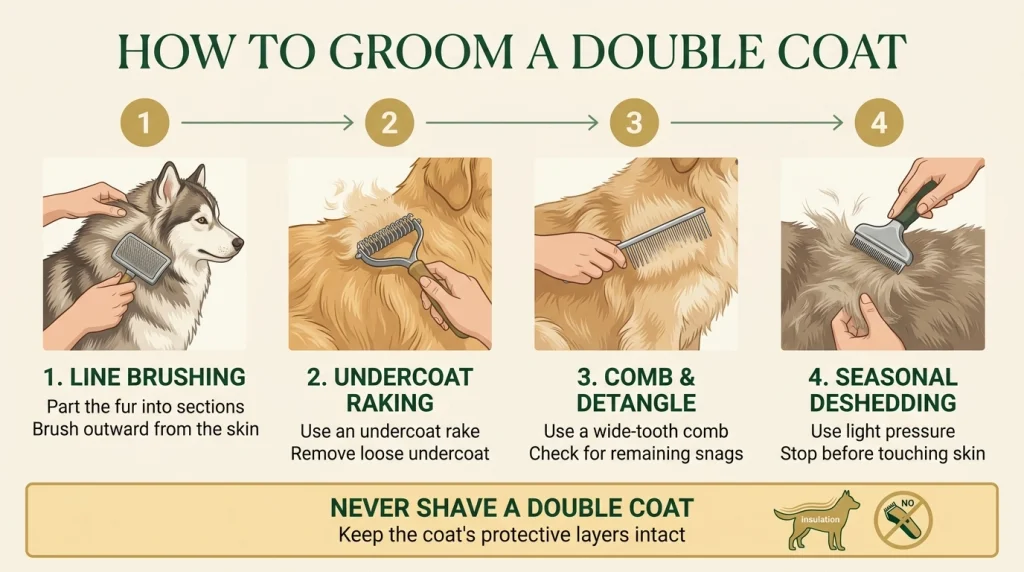
SaveTechnique matters as much as the tool. Here’s the sequence I use on Rex.
- Start with a slicker brush. Work in small sections, brushing in the direction of hair growth to detangle the surface.
- Switch to an undercoat rake. Use gentle strokes and let the teeth do the work. Don’t press hard.
- Check with a metal comb. Run a wide-tooth comb through the coat after raking. If it snags, you missed a spot.
- Add a deshedding tool during coat blow. Use light pressure and stop before the blade touches skin.
- Never shave. A double coat insulates against heat and cold. Shaving damages its ability to regulate temperature.
How Often Should You Brush a Double-Coated Dog?
Brush three to four times a week to prevent undercoat buildup. Increase to daily during the spring and autumn shedding seasons.
During a coat blow, plan on 15 to 20 minutes of grooming per session. Without regular brushing, loose undercoat compacts against the skin and can cause matting, irritation, and hot spots.
A deshedding bath with a professional groomer every four to eight weeks clears what home brushing misses.
What I’d Actually Recommend
 Save
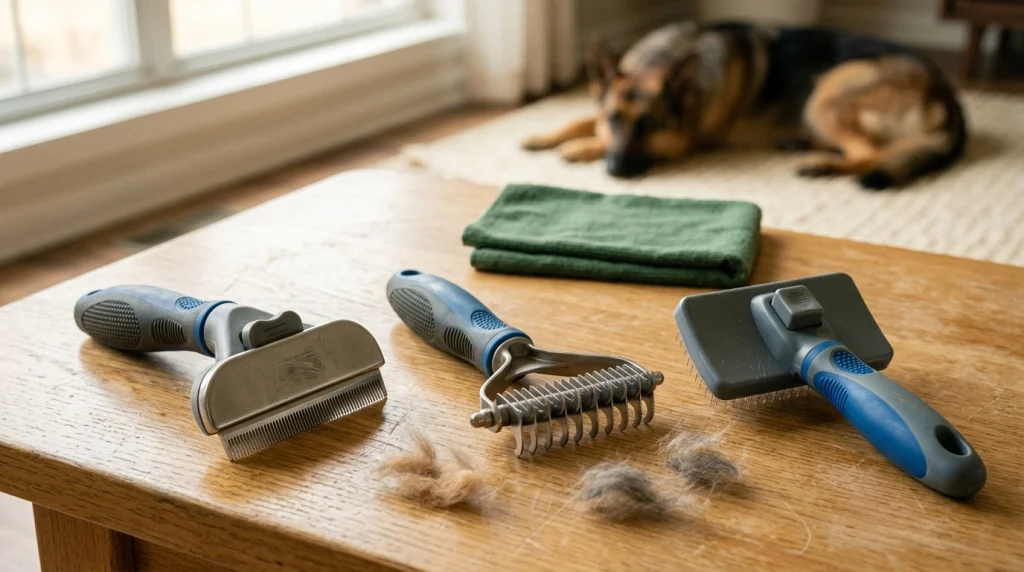
SaveIf you’re ready to pick up the right tools, here’s what I’d reach for based on testing and groomer feedback:
🏆 Best Overall
FURminator Undercoat deShedding Tool (Large, Long Hair)
★★★★☆
Stainless steel deShedding edge reaches under the topcoat to pull dead undercoat, and the FURejector button clears packed fur in one press. I reach for this during Rex’s spring coat blow — it removes more loose hair in 15 minutes than a rake does in an hour. It’s not a daily tool, though; once or twice a week is plenty.
💰 Best Budget
Maxpower Planet Undercoat Rake
★★★★★
Dual-sided head with 9 teeth for mats and 17 teeth for deshedding. Rounded, sharpened teeth pull loose undercoat without scratching skin. This is the tool I recommend to friends who want one affordable rake that actually works — it’s gentler than a blade and reaches hair a slicker can’t touch.
🪮 Best for Daily Use
Hertzko Self-Cleaning Slicker Brush
★★★★☆
Fine wire pins with rounded tips detangle surface fur and catch loose hair. The retractable bristle feature makes cleaning fast — one click and the collected fur drops off. I keep this by the couch for quick daily brush-ins. It won’t replace a rake for undercoat removal, but it handles the topcoat beautifully.
Frequently Asked Questions
Can I use a human hairbrush on my double-coated dog?
No. Human brushes have bristles spaced for fine, straight hair, so they glide over a dog’s topcoat without reaching the undercoat. You’ll think you’re brushing, but the loose wool stays trapped against the skin.
Is a deshedding blade safe for all double-coated dogs?
It’s safe for short-to-medium double coats when used correctly. For long, heavily double-coated breeds like Huskies and Bernese Mountain Dogs, a rake is often safer for daily use because a blade edge can nick guard hairs on those coat types.
How do I know if my dog has a double coat?
Part the fur and look for two distinct layers: a coarser outer coat and a softer, denser layer beneath. If you see mostly one type of hair, your dog likely has a single coat. Labradors, German Shepherds, Huskies, and Golden Retrievers are classic double-coated breeds.
Should I shave my double-coated dog in summer?
Never. The undercoat insulates against heat as well as cold, so shaving removes that protection. It can also permanently damage the coat’s regrowth pattern. Brush more frequently instead.
What if my dog hates being brushed?
Start with short sessions using a soft slicker brush. Pair brushing with treats and stop before your dog gets restless. A rake with rounded teeth pulls less, which helps anxious dogs tolerate longer sessions over time.
The Bottom Line
The best brush for a double-coated dog isn’t one tool — it’s a two-tool system. A slicker brush handles daily detangling, and an undercoat rake removes the loose wool that causes shedding and matting.
During coat blow, add a deshedding tool for the compacted layer a rake leaves behind. Brush three to four times a week, increase during shedding season, and never shave.
Rex still sheds, but the hair ends up in the brush instead of on my floor. That’s the only win that matters.

Thomas Cutter is a lifelong dog owner and the founder of FindOutAboutDogs.com. With over 10 years of hands-on experience owning multiple breeds, Thomas created this site to provide honest, research-based dog advice that real owners can actually trust.
