What Is a Flea Comb Used For? Dog Owner Guide
Quick Answer
A flea comb is used to find and physically remove adult fleas, flea dirt, loose debris, and some other tiny parasites from a dog’s coat. Its tightly spaced teeth make it especially useful when you’re checking an itchy dog for evidence of fleas, although a comb alone won’t solve an established infestation. For veterinary information about flea problems, see the Merck Veterinary Manual.
What a flea comb helps you do
- Find adult fleas: Closely spaced teeth can catch fleas that disappear quickly between hairs.
- Spot flea dirt: The comb collects dark specks that may be flea droppings rather than ordinary dirt.
- Check itchy dogs: Regular combing gives you a simple way to look for visible parasite evidence.
- Remove loose debris: Fine teeth can lift dandruff, loose hair, and small particles from the coat.
- Monitor treatment: Repeated checks can help you notice whether you’re still finding live fleas.
Remember
- Finding fleas means you should address both the dog and its environment rather than relying on combing alone.
I’ve always considered a flea comb one of the simplest useful tools in a dog-grooming kit. It doesn’t look impressive, but those closely packed teeth can reveal things your fingers and a normal brush miss.
In this 2026 guide, I’ll explain exactly what a flea comb does, how to use one correctly, and what its results can tell you about your dog’s coat and skin.


What Is a Flea Comb?
A flea comb is a grooming comb with very closely spaced teeth designed to trap fleas and tiny debris as it passes through an animal’s coat. The narrow spaces between the teeth are what separate it from an ordinary dog comb.
Most versions use fine metal teeth mounted in a plastic, rubber, or metal handle. Some have longer teeth for thicker coats, while others use a compact head for precise work around smaller areas.
- Fine tooth spacing: Helps catch fleas and small particles.
- Rigid teeth: Let you inspect a coat more precisely than a soft brush.
- Small working head: Makes it easier to check specific areas closely.
- Comfortable handle: Gives better control during slow, repeated passes.
A flea comb isn’t the same thing as a slicker brush, undercoat rake, or shedding tool. Those tools mainly manage loose coat, tangles, or undercoat rather than tiny parasites.
What Is a Flea Comb Used For on Dogs?
 Save
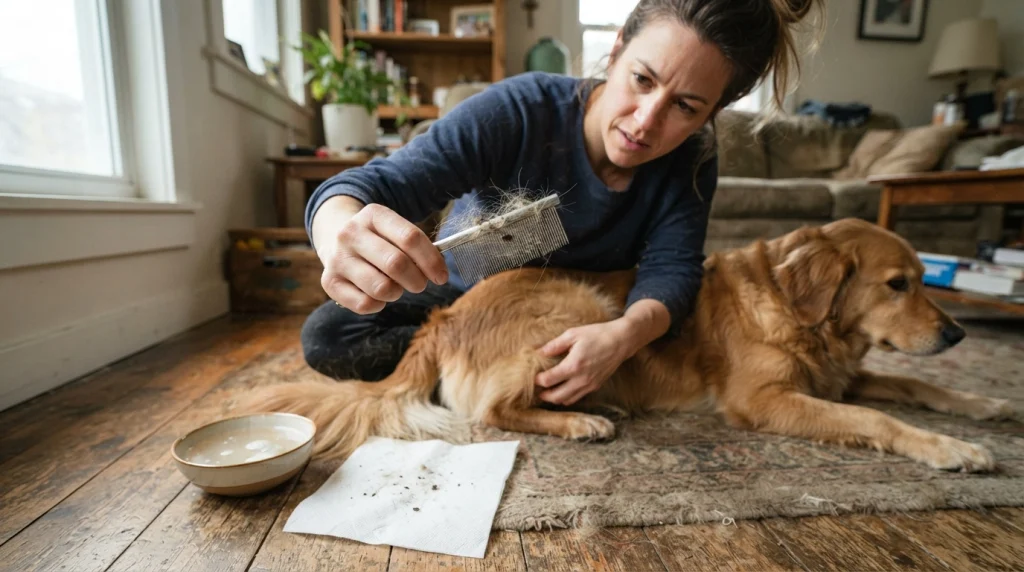
SaveThe main use of a flea comb is detecting and physically removing fleas and flea-related debris from a dog’s coat. I also find it useful as a close-inspection tool when something about the coat doesn’t look right.
Here are the jobs it handles best.
1. Finding Adult Fleas
Adult fleas can move quickly through fur, so simply parting the coat doesn’t always reveal them. Fine comb teeth give you a better chance of catching one during a pass.
I pay special attention to places where fleas commonly hide.
- Base of the tail
- Lower back
- Neck
- Behind and around the ears
- Abdomen
- Inside the rear legs
Work slowly. Fast combing can skip over the skin and miss the exact area you’re trying to inspect.
2. Checking for Flea Dirt
Flea dirt is flea fecal material containing digested blood. It often looks like tiny dark brown or black specks caught close to the skin.
A flea comb can collect those specks even when you don’t catch a live flea. That’s one reason I don’t stop checking just because I haven’t seen something moving.
You can place suspicious dark debris onto a damp white paper towel. Flea dirt may dissolve into a reddish-brown stain because of its blood content.
3. Physically Removing Fleas
The comb can pull live fleas out of the coat during grooming. Keep a bowl of warm soapy water nearby so you can immediately place anything you collect into it.
Don’t assume that removing the fleas you can see has ended the problem. Flea eggs, larvae, and pupae may be present elsewhere in the dog’s environment.
4. Collecting Loose Hair and Skin Debris
Fine combing often brings out more than fleas. You may also collect loose hairs, flakes, dried debris, or tiny particles trapped close to the skin.
That makes the tool useful when I want a clearer look at a small area of coat. However, I wouldn’t replace a dog’s normal brush with a flea comb.
5. Checking for Other External Parasites
A flea comb can sometimes help reveal lice and other small external parasites or parasite debris. Veterinary examination may still be needed to identify what you’ve found.
Don’t try to diagnose every speck based on appearance alone. Different skin conditions can produce similar flakes, crusts, or irritation.
6. Monitoring a Known Flea Problem
A flea comb gives you a repeatable way to inspect the coat while you’re managing a flea infestation. I like it because you can compare what you’re finding from one grooming session to another.
However, an empty comb doesn’t automatically prove the dog is flea-free. Some dogs may groom away fleas or carry only a small number at the moment you check.
Where Should You Use a Flea Comb on a Dog?
Start near the skin and focus on warm, protected areas where fleas are more likely to stay. The tail base, lower back, belly, neck, and areas around the ears deserve extra attention.
| Area to Check | Why Check It | How I Comb It |
|---|---|---|
| Base of tail | Common area for flea activity and flea dirt | Short, slow strokes close to the skin |
| Lower back | May show itching or debris associated with fleas | Part the coat before each pass |
| Neck and ears | Protected areas that can hide small parasites | Use gentle, controlled strokes |
| Belly | Thinner hair makes inspection easier | Comb lightly because skin is sensitive |
| Inside hind legs | Warm, protected skin can show flea activity | Use short strokes without pulling |
On long-haired dogs, separate the coat into small sections before combing. If you only skim across the surface, the teeth may never reach the area where fleas or flea dirt are sitting.
How Do You Use a Flea Comb Correctly?
Comb from the skin outward in small sections, inspecting and cleaning the teeth after every few passes. A careful five-minute check is more useful than rushing over the entire coat.
- Choose good lighting. Bright light makes fleas and dark debris easier to see.
- Prepare soapy water. Keep a small bowl beside you for anything the comb catches.
- Let your dog settle. Pick a position where the dog can stand or lie comfortably.
- Part the hair. Expose a small section near the skin.
- Comb slowly outward. Follow the natural direction of hair growth where practical.
- Inspect the teeth. Look for moving fleas, dark specks, flakes, or unusual debris.
- Clean the comb. Dip or wipe the teeth before moving to another area.
- Repeat systematically. Pay extra attention to the tail base, back, belly, neck, and ears.
Stop if the comb repeatedly snags. A flea comb isn’t designed to force its way through heavy tangles or mats.
For a tangled long coat, remove or loosen knots with an appropriate grooming tool first. Then use the flea comb for the close inspection.
How Can You Tell Flea Dirt From Ordinary Dirt?
Flea dirt often resembles black pepper, while a damp-paper test can help distinguish it from normal debris. Flea droppings contain blood and may create a rust-red or reddish-brown mark when moistened.
- Collect several dark specks from the comb.
- Place them on a white paper towel.
- Add a small amount of water.
- Wait briefly and watch the surrounding moisture.
A reddish-brown halo makes flea dirt more suspicious. Plain soil usually stays brown or gray without producing the same blood-colored diffusion.
This test is helpful, but it isn’t a substitute for veterinary evaluation when your dog has persistent itching, sores, hair loss, or inflamed skin.
Can a Flea Comb Get Rid of a Flea Infestation?
No. A flea comb can remove some adult fleas, but it doesn’t control all stages of the flea life cycle. Established flea problems usually require treatment of the pet plus attention to the home environment.
This distinction matters. I’ve seen owners keep combing every day while new fleas continue emerging from the surroundings.
- The comb: Finds and removes some fleas already on the dog.
- Veterinary flea control: Helps kill or prevent fleas according to the product used.
- Vacuuming: Helps mechanically remove environmental flea material.
- Washing bedding: Reduces contamination in areas the dog uses regularly.
- Treating household pets: Helps prevent untreated animals from maintaining the infestation.
The VCA Animal Hospitals and American Kennel Club health resources provide broader information about flea detection and parasite management.
If you’re unsure which preventive is appropriate, ask your veterinarian. Age, weight, health history, species, and other medications can affect the choice.
Flea Comb vs Regular Dog Comb: What’s the Difference?
 Save
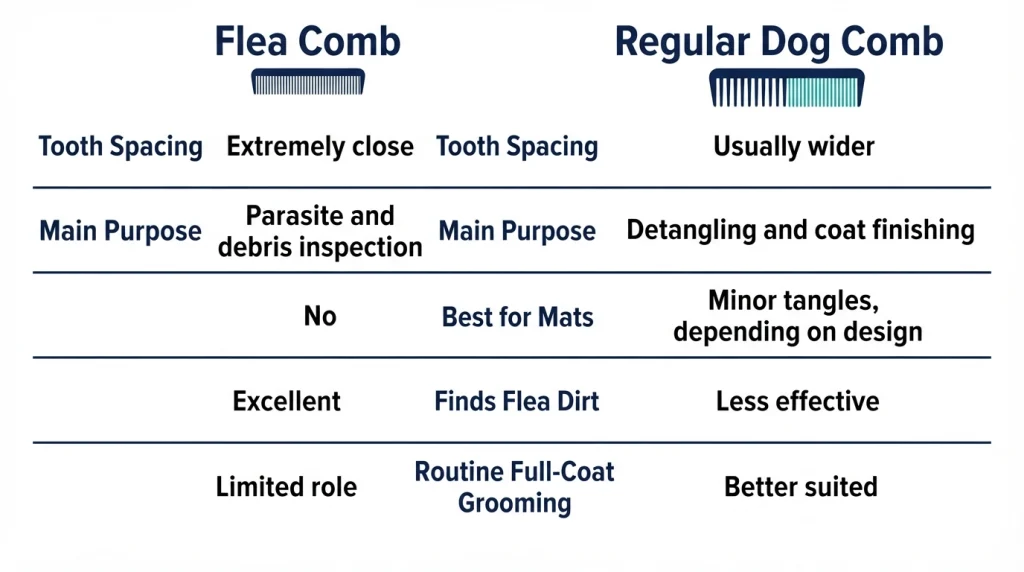
SaveA flea comb has much tighter tooth spacing than an everyday grooming comb. That design makes it better for catching tiny fleas but less suitable for routine detangling.
| Feature | Flea Comb | Regular Dog Comb |
|---|---|---|
| Tooth spacing | Extremely close | Usually wider |
| Main purpose | Parasite and debris inspection | Detangling and coat finishing |
| Best for mats | No | Minor tangles, depending on design |
| Finds flea dirt | Excellent | Less effective |
| Routine full-coat grooming | Limited role | Better suited |
In practice, I keep both. I use the normal grooming tool to prepare the coat and the flea comb when I want to inspect close to the skin.
When Should You Use a Flea Comb?
Use a flea comb whenever you suspect fleas, want to check a dog after exposure, or need to monitor an existing flea-control plan. You don’t need to wait until you see a flea jumping.
- Your dog suddenly starts scratching more often.
- You notice biting or chewing near the tail base.
- You see unexplained black specks in the coat.
- Your dog has recently been around unfamiliar animals.
- You found fleas elsewhere in the home.
- You’re checking progress during flea control.
Persistent scratching deserves more than repeated combing. Allergies, mites, infections, and other skin problems can produce similar signs.
What Should You Look for When Buying a Flea Comb?
 Save
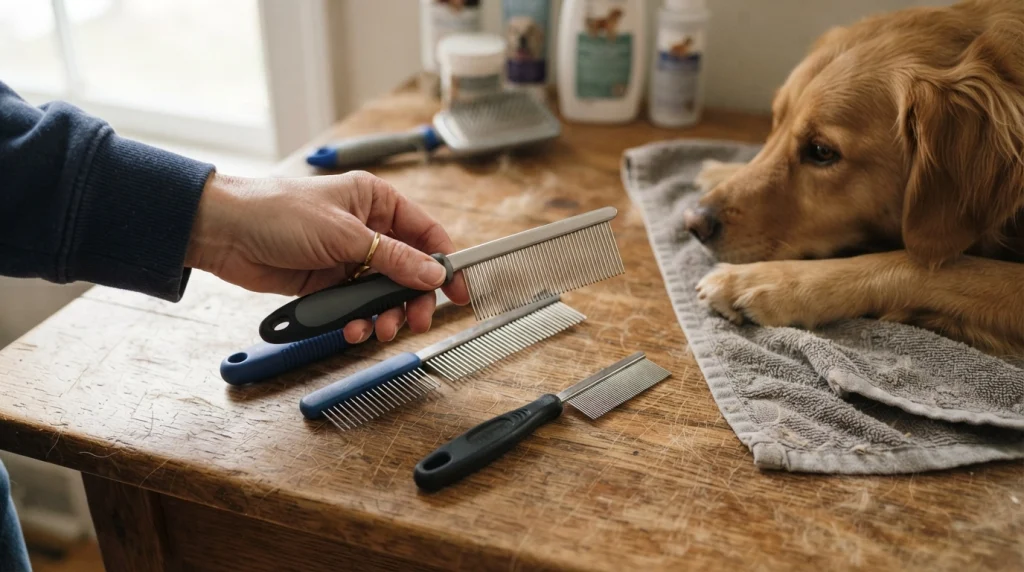
SavePrioritize close, even teeth and a handle you can control without pressing hard against the skin. Simple designs often work perfectly well.
- Metal teeth: Usually stay rigid during detailed coat checks.
- Fine spacing: Essential for catching tiny fleas and debris.
- Rounded tooth tips: Help make close-to-skin combing more comfortable.
- Secure handle: Improves control around delicate areas.
- Suitable tooth length: Longer or deeper teeth can help with thicker coats.
- Easy cleaning: A smooth comb is faster to rinse or wipe between passes.
I wouldn’t choose a comb just because it has extra gadgets. Tooth spacing, control, and suitability for your dog’s coat matter more.
If you’re ready to pick one, here are three practical flea comb styles I’d consider:
🏆 Best All-Purpose Pick
Hartz Groomer’s Best Flea Comb
★★★★★
This comb uses extra-fine stainless steel teeth and an ergonomic handle for close coat inspection. I like this style for owners who want one straightforward comb for routine flea checks on different coat types.
🎯 Best for Detailed Checks
Andis Flea Comb
★★★★☆
Andis uses fine, closely spaced teeth intended for removing fleas, dirt, and fine debris. I particularly like a controlled narrow comb like this around the neck, face, and other areas where precision matters.
🐕 Best for Regular Coat Checks
Safari Flea Comb for Dogs
★★★★☆
Safari’s flea-comb range is built around fine teeth for parasite checks and debris removal. I’d consider it when you want a simple grooming-kit comb for repeated inspections rather than a complicated multi-function tool.
Frequently Asked Questions
Does a flea comb kill fleas?
No. A flea comb mainly traps and removes fleas from the coat rather than killing them on contact. Drop captured fleas into soapy water or otherwise dispose of them safely, and use an appropriate flea-control plan for the dog and its environment.
Can you use a flea comb on a dog every day?
Yes, gentle daily flea-comb checks can be useful during an active flea problem or when monitoring a dog. Avoid scraping the skin, repeatedly pulling through tangles, or continuing if the dog’s skin becomes irritated.
Will a flea comb remove flea eggs?
A fine flea comb may collect some eggs and debris present in the coat, but it cannot remove every flea life stage from the dog and home. Flea eggs commonly fall into the environment, which is why combing alone doesn’t eliminate an infestation.
Can I use a human lice comb instead of a flea comb?
A fine human comb may catch some fleas, but a purpose-built pet flea comb is usually easier to control on a dog’s coat. Pet combs are designed around coat access, tooth spacing, and handling during animal grooming.
What does it mean if I find flea dirt but no fleas?
Flea dirt can indicate that fleas have been feeding on your dog even when you don’t catch a live adult during that particular check. Continue inspecting the coat and discuss parasite control with your veterinarian if flea evidence or itching continues.
Final Takeaway
A flea comb is mainly a detection and physical-removal tool. Its closely spaced teeth help you find adult fleas, collect flea dirt, inspect the skin, and monitor what’s happening in your dog’s coat.
I think every dog owner can benefit from keeping one nearby because it gives you immediate, visible information. Just remember that finding fleas is the start of flea control, not the end of it.
If your dog keeps scratching, develops sores, loses hair, or appears uncomfortable despite flea control, contact your veterinarian rather than relying on grooming tools alone.

Thomas Cutter is a lifelong dog owner and the founder of FindOutAboutDogs.com. With over 10 years of hands-on experience owning multiple breeds, Thomas created this site to provide honest, research-based dog advice that real owners can actually trust.
