What Brush Should You Use on a Labrador Retriever?
Quick Answer
For most Labrador Retrievers, I recommend a rubber curry brush as the main everyday grooming tool. It works well with a Lab’s short, dense double coat and removes loose surface hair without harsh metal pins. During heavier shedding, add a short-hair undercoat or deshedding tool, while following safe Labrador grooming practices.
Best brushes for a Labrador
- Best overall: Use a rubber curry brush for comfortable routine brushing and loose-hair removal.
- Heavy shedding: Add a short-hair deshedding tool to reach loose undercoat during shedding periods.
- Light finishing: A soft bristle brush can smooth the topcoat after removing loose fur.
- Slicker option: A gentle short-pin slicker can help, but use light pressure on a Lab’s short coat.
- Sensitive dogs: A rubber grooming mitt is a useful alternative for dogs that dislike traditional brushes.
One important rule
- Brush in the direction the coat grows and stop if you notice redness, discomfort, or irritated skin.
Labradors look like they should be simple dogs to brush. Their hair is short, there are no long tangles to manage, and they don’t need elaborate haircuts.
Then shedding season arrives. Suddenly, that short coat seems capable of covering every chair, shirt, and floor in your house.
The answer isn’t simply buying the most aggressive deshedding brush you can find. The better approach is matching the brush to the Labrador’s unusual short but dense double coat.


What brush should you use on a Labrador Retriever?
A rubber curry brush is my first choice for routine Labrador grooming. Its flexible rubber teeth loosen surface fur while remaining comfortable enough for frequent use.
When your Lab starts dropping more undercoat, add a deshedding tool designed specifically for short-haired dogs. You don’t need to use that tool aggressively every day.
- Routine grooming: Rubber curry brush or rubber grooming mitt.
- Seasonal shedding: Short-hair undercoat or deshedding tool.
- Finishing: Soft bristle brush.
- Occasional tangles or packed hair: Gentle short-pin slicker brush.
The ASPCA’s dog grooming guidance also recommends choosing brushes according to coat type. For short, dense retriever coats, regular brushing helps remove loose hair and debris.
What is a Labrador double coat?
A double coat has two layers. The Labrador’s outer coat consists of short protective hairs, while a softer, dense undercoat provides insulation beneath it. Grooming needs to remove loose hair without unnecessarily stripping or damaging the protective coat.
Why does a Labrador need a different type of brush?
Labradors have short hair, but their coat is much denser than a typical smooth single coat. A brush that only skims the surface may leave much of the loose undercoat behind.
According to Purina’s Labrador Retriever breed information, Labs have a dense, water-repellent double coat and are moderate to heavy shedders. That coat structure explains why short hair doesn’t equal low shedding.
A good Labrador brush should therefore do three things:
- Remove loose hair before it lands throughout your home.
- Reach dense areas without scratching or repeatedly scraping the skin.
- Keep grooming comfortable enough that you can maintain a regular routine.
That last point matters more than people expect. A highly aggressive tool isn’t useful if your dog starts avoiding you whenever the grooming kit appears.
Rubber curry vs slicker vs deshedding tool: which is best?
 Save
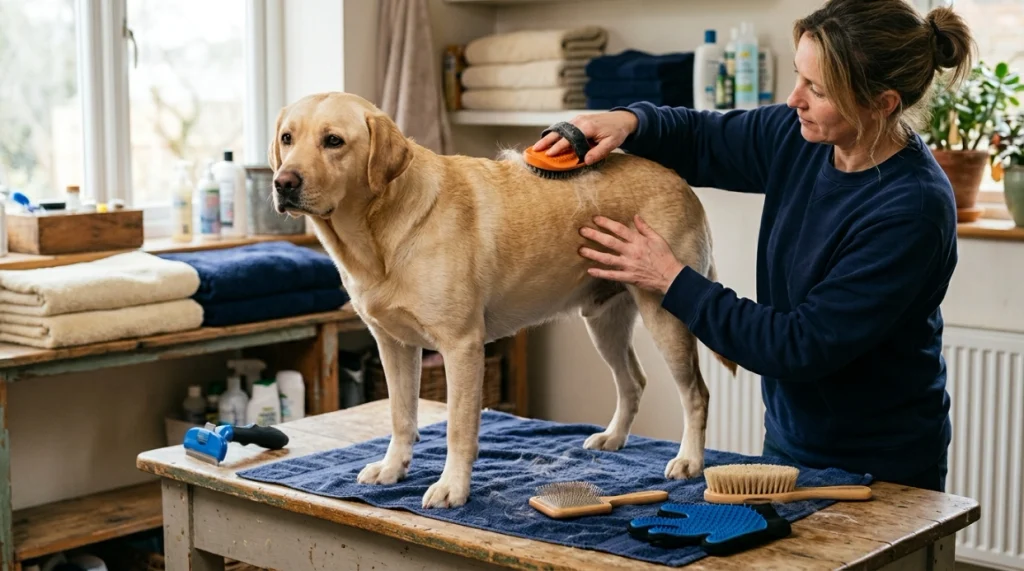
SaveThere isn’t one perfect Labrador brush for every situation. A rubber curry works best for routine maintenance, while a deshedding tool becomes more useful when the undercoat is releasing heavily.
| Brush type | Best use | Typical frequency | Pressure | My verdict |
|---|---|---|---|---|
| Rubber curry | Routine loose hair and bath-time grooming | Several times weekly as needed | Gentle to moderate | Best everyday choice |
| Deshedding tool | Loose undercoat during heavier shedding | Usually 1–2 times weekly when needed | Light | Best seasonal helper |
| Short-pin slicker | Loose hair and light finishing | About weekly or as needed | Very light | Useful but not essential |
| Soft bristle brush | Removing surface debris and smoothing | As needed | Gentle | Good finishing tool |
| Grooming mitt | Nervous dogs and quick maintenance | Several times weekly | Gentle | Best low-stress alternative |
Rubber curry brush
A rubber curry is simple, but that’s exactly why I like it for Labs. The flexible teeth can grab loose short hair while massaging rather than scraping the skin.
It’s also useful in the bath. Rubber fingers help work shampoo through a surprisingly dense Labrador coat.
Deshedding tool or undercoat rake
A deshedding tool becomes useful when normal brushing stops keeping up with loose undercoat. Choose one made for short hair rather than automatically buying the largest or longest-toothed model.
The goal is removing hair that’s already loose. You aren’t trying to pull healthy coat out.
Slicker brush
Slickers use many fine metal pins. They can collect loose hair effectively, but I don’t treat a stiff slicker as the automatic first choice for every Labrador.
Use a gentle model and light pressure. If the pins feel sharp against your palm, I’d be cautious about dragging them repeatedly across a short coat.
Bristle brush
A bristle brush works nicely after the heavier work is finished. It can lift surface debris and leave the short topcoat looking smooth.
The AKC’s guide to dog brush types notes that bristle brushes are useful for short-coated dogs and as finishing brushes on double coats.
How often should you brush a Labrador?
Start with at least one thorough brushing each week and increase the frequency when your Labrador is shedding heavily. Many Labs benefit from two or three short sessions rather than one long grooming marathon.
During obvious coat shedding, you may use a gentle rubber brush more frequently. A bladed or metal deshedding tool usually deserves a more conservative schedule.
- Normal weeks: Aim for one to three short brushing sessions.
- Heavy shedding: Use the gentle curry brush more frequently to collect released hair.
- Deshedding tool: Follow the manufacturer’s directions instead of using it automatically every day.
- After swimming: Let the coat dry properly and check for trapped dirt, irritation, or debris.
As of 2026, FURminator’s directions for its short-hair undercoat tool recommend roughly one to two sessions per week, usually for 10–20 minutes. Your Lab may need less time than that.
I prefer stopping while the skin still looks completely normal rather than chasing every last loose hair. More passes aren’t automatically better.
How do you brush a Labrador without irritating the skin?
 Save
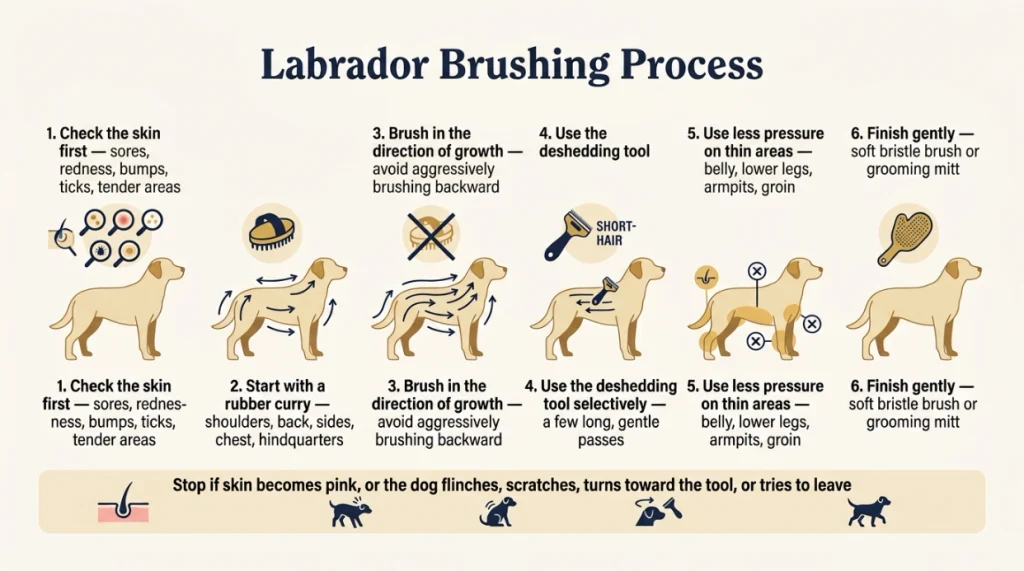
SaveBrush with the coat, use controlled pressure, and keep the tool moving. Repeatedly scraping the same patch is one of the easiest ways to turn productive grooming into irritation.
- Check the skin first. Look for sores, redness, bumps, ticks, or tender areas before using a metal tool.
- Start with a rubber curry. Work over the shoulders, back, sides, chest, and hindquarters.
- Brush in the direction of growth. Avoid aggressively brushing backward against the coat.
- Use the deshedding tool selectively. Make a few long, gentle passes instead of repeatedly scraping one spot.
- Use less pressure on thin areas. The belly, lower legs, armpits, and groin need extra care.
- Finish gently. A soft bristle brush or grooming mitt can collect remaining surface hair.
If the skin becomes pink or your dog starts flinching, scratching, turning toward the tool, or trying to leave, stop. Grooming should not require forcing your dog through obvious discomfort.
Can you use a FURminator on a Labrador?
Yes, a short-hair FURminator-style deshedding tool can suit a Labrador’s shedding double coat when used correctly. It should supplement normal brushing rather than replace every other grooming tool.
The manufacturer says its short-hair model reaches through the topcoat to collect loose undercoat. It also warns users to avoid excessive pressure and repeated strokes over one area.
For an adult Lab, choose the size according to the manufacturer’s weight guidance. More importantly, choose the short-hair version.
I wouldn’t make a metal deshedding edge my first tool for a puppy, irritated skin, or a dog that already dislikes grooming. Start with the gentler option.
What brushes should you avoid on a Labrador?
Avoid any brush that scratches the skin, pulls healthy coat, or encourages you to over-groom. The brand matters less than the way the tool interacts with your individual dog’s coat.
- Very sharp slickers: Fine pins can irritate short-coated areas if you press too hard.
- Long aggressive rakes: A tool built for a much longer coat may be unnecessary for a Lab.
- Damaged metal tools: Bent or rough teeth can catch the coat or scratch skin.
- Human hairbrushes: They generally aren’t designed to reach or manage a dense canine undercoat.
- Anything causing redness: Stop using a tool if your dog’s skin reacts poorly to it.
Don’t confuse shedding with a reason to clip the Labrador’s entire coat either. The Labrador’s short protective coat doesn’t need routine shaving or cosmetic trimming to manage normal shedding.
My simple Labrador brushing routine
 Save
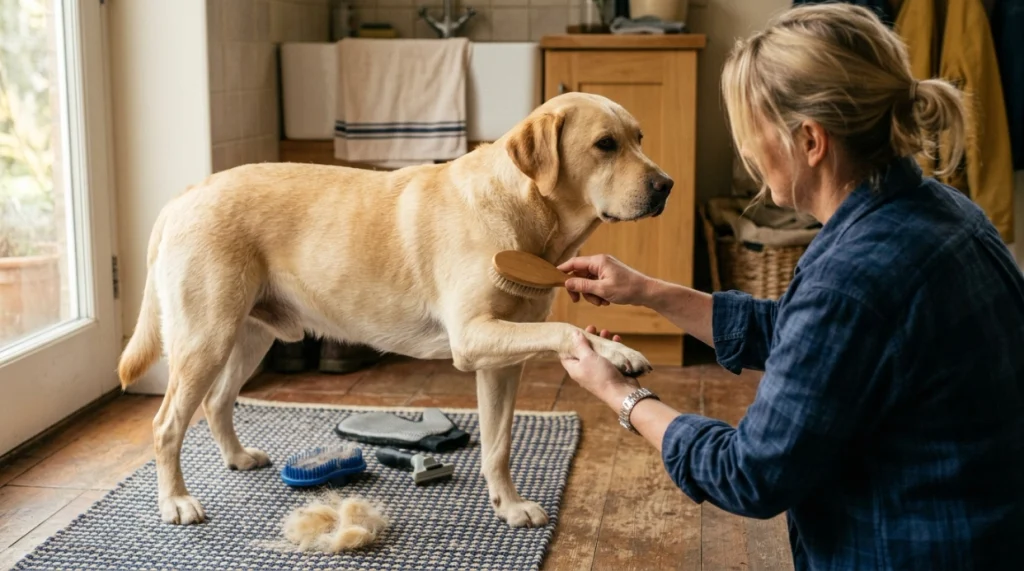
SaveYou don’t need a drawer full of grooming tools. For most pet Labradors, two carefully chosen brushes can handle nearly everything.
- Use a rubber curry brush for five to ten minutes over the main body.
- Check how much loose undercoat is coming away.
- During heavy shedding, add a few gentle passes with a short-hair deshedding tool.
- Use a soft brush or grooming mitt to finish the coat.
- Check the skin, ears, paws, and nails while your dog is already standing still.
My main rule is simple: use the least aggressive tool that gets the job done. Labrador grooming should feel routine, not like you’re trying to strip the coat.
Recommended brushes for Labrador Retrievers
If you’re ready to pick one, these are the three types and models I’d put at the top of the list for different Labrador grooming needs:
🏆 Best Everyday Pick
KONG ZoomGroom Dog Brush
★★★★★ 5/5 coat-fit rating
Its flexible rubber fingers work on wet or dry coats and are designed to collect loose hair while massaging the skin. This is the style I’d start with for routine Labrador grooming because it’s simple, gentle, and useful during baths too.
🐕 Best for Heavy Shedding
FURminator Undercoat deShedding Tool for Large Short-Hair Dogs
★★★★☆ 4/5 coat-fit rating
The stainless deshedding edge is designed to pass through the topcoat and collect loose undercoat. I’d reserve it for heavier shedding periods and use fewer, lighter strokes rather than treating it as a daily massage brush.
✨ Best Slicker Option
Safari by Coastal Self-Cleaning Slicker Dog Brush
★★★★☆ 4/5 coat-fit rating
This slicker uses retractable stainless-steel pins and comes in multiple sizes. I like it as a secondary option for loose hair and finishing, but I’d still use lighter pressure on a Labrador than on a long or curly coat.
Frequently asked questions
Is a slicker brush good for a Labrador?
Yes, a gentle slicker brush can remove loose fur from a Labrador, but it isn’t my first choice for every dog. Because Labs have short coats, use light pressure and avoid stiff or sharp pins that repeatedly scrape the skin.
Should I use an undercoat rake on my Labrador?
An undercoat or deshedding tool can help when your Labrador is releasing large amounts of undercoat. Choose a tool suited to a short coat and use it gently. Stop if you see redness or if the tool appears to pull healthy hair.
How do I stop my Labrador from shedding so much?
You can’t completely stop normal Labrador shedding. Regular brushing removes loose hair before it reaches your furniture, while bathing and proper coat care can help manage the mess. Sudden bald spots, severe itching, or abnormal hair loss deserve veterinary attention.
Can I brush my Labrador every day?
You can use a gentle rubber curry brush frequently if your dog’s skin tolerates it. However, don’t automatically use aggressive metal deshedding tools every day. Follow the tool’s instructions and adjust frequency to your dog’s coat and skin.
Should I brush my Labrador before or after a bath?
Brushing before bathing helps remove loose fur and debris. Once the coat is completely dry, another gentle brushing can collect hair loosened during washing. Avoid using metal deshedding tools aggressively on wet skin or tangled fur.
The bottom line
If you only buy one brush for your Labrador Retriever, I’d make it a rubber curry brush. It’s gentle enough for routine grooming but effective at collecting the short loose hair Labs constantly leave behind.
For heavier seasonal shedding, add a short-hair deshedding tool and use it carefully. With those two tools, a short weekly routine is usually far more useful than an overflowing grooming kit.
Start gently, watch your Lab’s skin, and make brushing something your dog can relax through. A comfortable dog is much easier to groom consistently.

Thomas Cutter is a lifelong dog owner and the founder of FindOutAboutDogs.com. With over 10 years of hands-on experience owning multiple breeds, Thomas created this site to provide honest, research-based dog advice that real owners can actually trust.
