Why Do Dogs Need Brushing? 7 Important Benefits for Your Dog
Quick Answer
Dogs need brushing because it removes loose hair and debris, helps prevent tangles and mats, and gives you a regular chance to check their skin and coat. The right routine depends on coat type, but regular brushing can make grooming more comfortable and help you spot problems earlier; a good starting point is to follow a dog brushing schedule based on your dog’s coat type.
Why brushing matters
- Loose hair: Brushing collects hair that has already shed before it ends up around your home.
- Tangle prevention: Regular brushing can catch knots before they tighten into painful mats.
- Cleaner coat: A suitable brush can lift dirt, plant material, and other surface debris.
- Skin checks: Parting the coat regularly makes changes such as redness, bumps, or parasites easier to notice.
- Better handling: Gentle routines can help many dogs become more comfortable with regular grooming.
The key point
- Match the tool: A brush that suits one coat may be ineffective or uncomfortable on another.
When people ask me why dogs need brushing, the simplest answer is that brushing does much more than make a dog look tidy.
A few calm minutes with the right tool can remove loose coat, prevent grooming problems, and help you notice changes you might otherwise miss.


Why is brushing important for dogs?
Brushing is an important part of basic coat care because dog hair does not behave the same way on every breed or coat type.
Some dogs shed loose hair directly onto furniture, while other dogs trap that loose hair inside a dense or curly coat.
That difference matters.
On a smooth-coated dog, brushing may mainly remove loose surface hair and dirt. On a long, curly, or dense coat, brushing can also help separate hairs before they twist together into tangles.
Regular grooming also creates a useful inspection routine. You naturally spend time looking at areas that are often hidden beneath the coat.
- Behind the ears: A common area for tangles in many longer-haired dogs.
- Under the collar: Friction can compact hair and create knots.
- Under the legs: Movement and rubbing can encourage tangling.
- Along the belly: Dirt and moisture may collect in some coats.
- Across the back: Changes in skin or shedding patterns can become easier to notice.
Brushing is not a substitute for veterinary care. However, it can help you notice something unusual sooner.
The American Kennel Club also treats regular grooming as part of routine coat and skin care.
What does brushing do for a dog’s coat?
A dog brush works by moving through or across the coat to collect loose material and separate the hair.
The exact result depends on the brush design and the dog’s coat.
For example, a rubber grooming tool can work well on many short, smooth coats because it lifts loose surface hair without needing to penetrate a deep coat.
A slicker brush, pin brush, or comb may be more useful when the coat is longer or more likely to tangle.
1. Brushing removes loose hair
Dogs naturally shed as part of their normal hair-growth cycle. Brushing does not stop that cycle.
What it can do is collect hair that is already loose before it spreads around the house or becomes trapped in the remaining coat.
This is especially noticeable with heavy seasonal shedders. Double-coated dogs may release large amounts of loose undercoat during seasonal shedding periods.
One long grooming session is not always the answer.
I usually find that shorter, regular sessions are easier on both the dog and the owner than waiting until loose hair has built up everywhere.
2. Brushing helps prevent tangles
Long hair can cross over itself, especially where a dog’s body creates repeated friction.
Brushing separates those hairs before a small knot becomes harder to remove.
Prevention is important because tight mats can pull against the skin. Once a mat becomes severe, ordinary home brushing may no longer be appropriate.
Never assume more force will solve the problem.
If a brush repeatedly catches and pulls, stop and assess the tangle rather than dragging the tool through it.
3. Brushing removes surface debris
Dogs can collect grass, dried mud, burrs, and other debris during normal outdoor activity.
A suitable brush can remove some of that material before it works deeper into the coat.
This is one reason I prefer regular short checks after walks for dogs with longer or denser fur.
You often catch the small problem before it becomes tomorrow’s bigger grooming job.
Do all dogs need to be brushed?
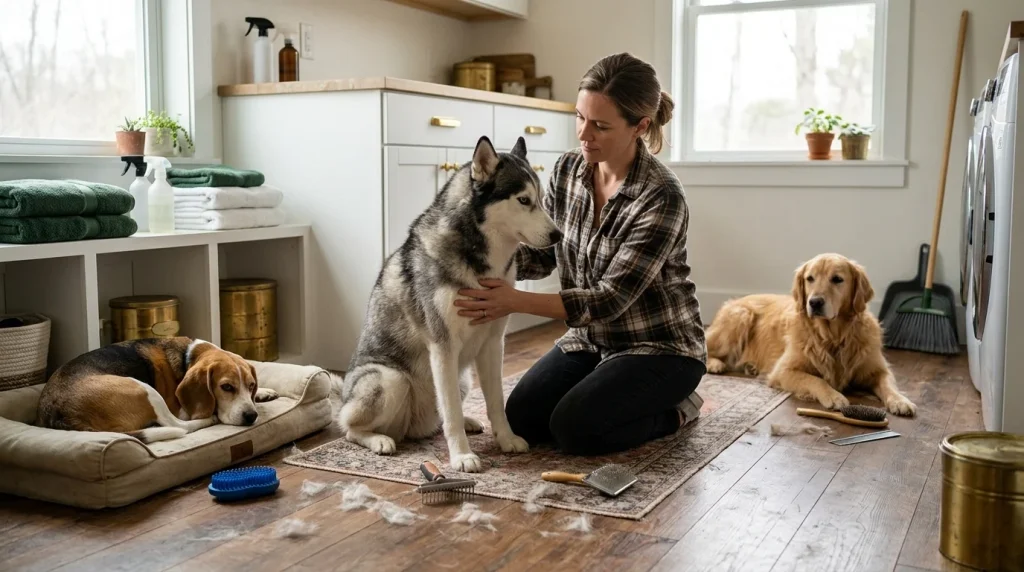 Save
Most dogs benefit from some form of regular coat care, but not every dog needs the same brush or the same frequency.
A short-haired Whippet and a thick-coated Husky should not follow identical grooming routines.
| Coat type | Typical brushing need | Useful starting tools | Main reason to brush |
|---|---|---|---|
| Short and smooth | Often about 1–2 times weekly | Rubber brush or soft bristle brush | Loose hair and surface debris |
| Medium shedding coat | Often several times weekly | Bristle, pin, or suitable slicker brush | Loose hair and minor tangles |
| Long or silky | Several times weekly to daily | Pin brush and metal comb | Tangle and mat prevention |
| Curly or wool-like | Frequent, often daily | Slicker brush and metal comb | Removing trapped hair and preventing mats |
| Dense double coat | Several times weekly; more during shedding | Suitable slicker, undercoat tool, and comb | Loose undercoat management |
These frequencies are starting points rather than strict rules. Coat condition, activity, season, and individual skin sensitivity can change what a dog needs.
For a more detailed breakdown, see how dog breed and coat type affect grooming frequency.
Can brushing help you find skin or coat problems?
Yes. One of the less obvious benefits of brushing is that it gives you a regular opportunity to inspect your dog closely.
As you part the hair, you may notice changes that would otherwise remain hidden.
- Redness: Skin irritation can be easier to see once the coat is separated.
- Bumps: Regular handling may help you notice a new lump or swelling.
- Parasites: Fleas, ticks, or flea dirt may become easier to spot.
- Scratches: Small cuts can hide beneath longer fur.
- Coat changes: Sudden thinning, bald patches, or unusual shedding deserve attention.
Finding something during brushing does not tell you what caused it. If you notice a persistent or concerning change, contact your veterinarian.
The value is in noticing that something has changed.
Does brushing make dogs feel better?
Gentle brushing can feel comfortable for many dogs, especially when the tool matches the coat and does not pull.
However, brushing should never be treated as automatically pleasant just because humans think it looks relaxing.
Watch the dog.
A comfortable dog may stand calmly, remain loose, or willingly return for more grooming. A dog experiencing discomfort may flinch, freeze, pull away, repeatedly turn toward the brush, or try to leave.
If your dog suddenly dislikes brushing, don’t simply assume the dog is being stubborn.
The problem could involve the brush, your pressure, tangled hair, sensitive skin, pain, or a previous unpleasant experience.
You can learn more about those warning signs in this guide on how to tell whether a brush is causing discomfort.
A simple comfort check
Try a few light strokes on an easy, untangled area and watch your dog’s response. If tension increases with each stroke, stop instead of pushing through to finish the coat.
Why does the right dog brush matter?
 Save
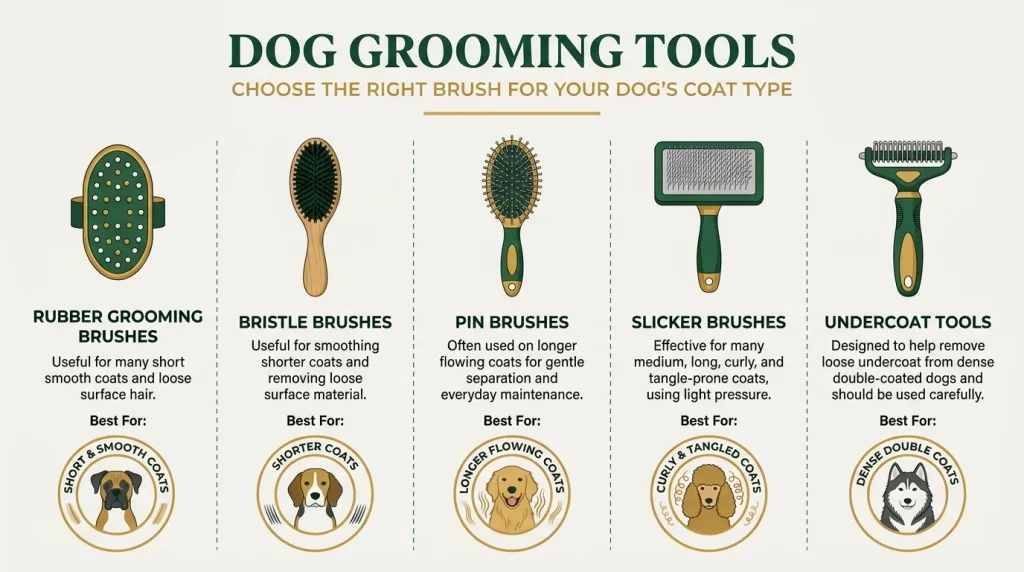
The wrong brush can make a useful grooming routine ineffective or uncomfortable.
That is why I recommend choosing the tool according to coat structure instead of buying one brush and expecting it to work for every dog.
Rubber grooming brushes
Rubber brushes are commonly useful for short, smooth coats and loose surface hair.
They can also be a gentle option for dogs that dislike sharper pins moving through the coat.
Bristle brushes
Bristle brushes are useful for smoothing shorter coats and removing loose surface material.
They usually do not provide enough reach for a dense undercoat or deeply tangled long hair.
Pin brushes
Pin brushes are often used on longer, flowing coats where gentle separation and everyday maintenance are needed.
They may not replace a comb when you need to check whether the coat is truly free of tangles.
Slicker brushes
Slicker brushes can be effective for many medium, long, curly, and tangle-prone coats.
Because the fine pins can be uncomfortable when overused, light pressure and controlled strokes matter.
Undercoat tools
Dense double-coated dogs may need a tool designed to help remove loose undercoat.
Use these tools carefully and avoid repeatedly scraping the same patch of skin.
For a deeper comparison, this guide explains what different dog brushes are designed to do.
Can regular brushing prevent mats?
Regular brushing can help prevent many mats by finding loose tangles before they tighten.
It cannot guarantee that every dog will remain mat-free without a routine matched to the coat.
Dogs with long, curly, dense, or heavily feathered coats often need particular attention around high-friction areas.
- Behind the ears: Hair can tangle where movement and rubbing occur.
- Under harness straps: Repeated friction may compact the coat.
- Under the collar: Hair can become tangled if the area is never checked.
- Between the legs: Fine hair often experiences repeated movement and friction.
- Near the tail: Dense or longer coats can hide developing tangles.
The most useful habit is checking these areas before you see a major problem.
Once a mat becomes tight against the skin, forcing a brush through it can cause pain and increase the risk of injury.
How often should you brush your dog?
As of 2026, there is still no single brushing schedule that fits every dog.
The coat should guide your routine.
Short, smooth coats may only need occasional brushing. Long, curly, or mat-prone coats can require daily attention.
Double-coated dogs may need extra sessions during periods of heavy shedding.
Instead of asking, “How many times should every dog be brushed?” I prefer a more useful question.
“How quickly does this particular coat collect loose hair or develop tangles?”
That approach gives you a routine based on the dog in front of you.
How should you brush a dog without hurting it?
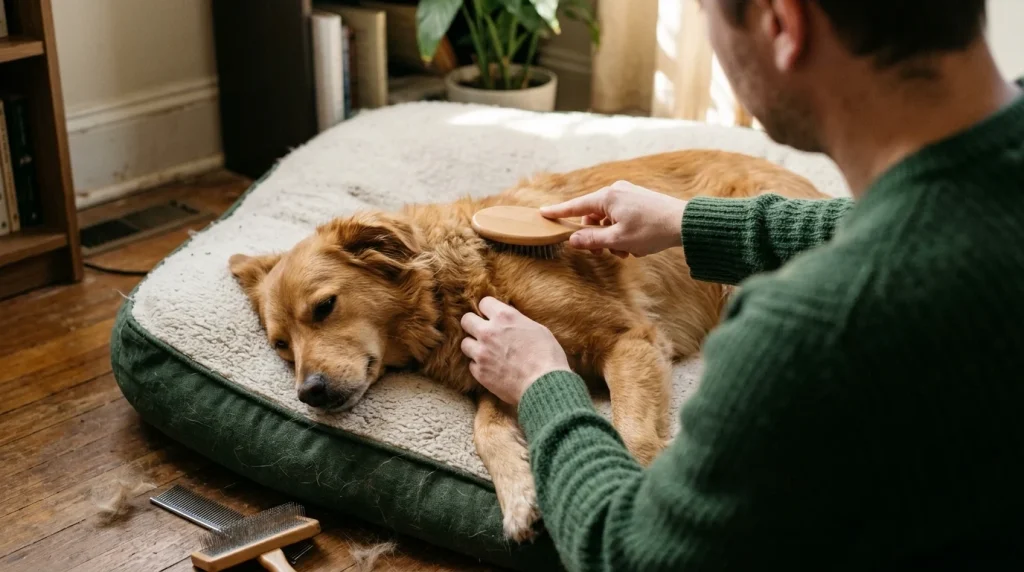 Save
Start gently and let the brush move through the coat rather than pushing it into the skin.
Harder brushing does not make grooming more effective.
- Inspect first: Look for mats, burrs, irritated skin, and tender areas.
- Choose an easy starting area: The shoulder or upper back is often easier than sensitive areas.
- Use light pressure: Let the tool contact the coat without scraping the skin.
- Work in small sections: Avoid dragging through a large tangled area.
- Watch your dog: Pause if the dog flinches, freezes, or repeatedly moves away.
- Check your work: Use a suitable comb where needed to find hidden tangles.
If your dog has never accepted grooming, introduce brushing gradually instead of attempting a complete session immediately.
A useful step-by-step approach is explained in this guide on how to brush a dog that has never been groomed.
Does brushing help build a better grooming routine?
Yes, especially when brushing is predictable and comfortable.
Dogs can learn that seeing the brush does not mean being restrained or pulled through a painful grooming session.
Keep early sessions short. Stop while the dog is still comfortable.
For nervous dogs, gradual exposure and rewards can make a major difference.
Don’t chase the goal of finishing every inch of the coat on day one.
One relaxed minute can be more valuable than ten stressful minutes.
Resources from organizations such as ASPCA and guidance from veterinary professionals can also help owners build safer grooming habits.
Dog brush recommendations
If you’re ready to choose a tool, I would start with your dog’s coat rather than the most popular brush on the shelf.
Best for short coats
KONG ZoomGroom
★★★★★
A flexible rubber grooming tool suited to many short-coated dogs and useful for collecting loose surface hair. I like this type of brush when the goal is gentle, simple maintenance rather than deep detangling.
Best for tangles
Chris Christensen Big G Slicker Brush
★★★★☆
A slicker-style option for owners managing longer, denser, or more demanding coats. I would still use light pressure and follow up with a comb rather than repeatedly brushing the same area.
Best for finishing checks
Andis Steel Pet Comb
★★★★☆
A steel comb can help check whether longer hair is actually detangled after brushing. I consider a comb especially useful because a brush can sometimes glide over a hidden knot without removing it.
Frequently asked questions
Why do dogs need brushing if they have short hair?
Short-haired dogs can still shed loose hair and collect dirt or debris on their coats. A gentle rubber or bristle brush can remove loose surface material while giving you a chance to inspect the skin and coat.
Can you brush a dog too much?
Yes. Excessive or aggressive brushing can irritate the skin or damage the coat. The goal is not to keep brushing until no hair comes out, but to use an appropriate tool and frequency for your dog’s coat.
Does brushing reduce dog shedding?
Brushing does not stop the normal shedding cycle. It does help collect hair that is already loose, which can reduce the amount of fur that ends up on furniture, clothing, and floors.
Should you brush a dog before or after bathing?
Removing loose tangles before bathing is often helpful because water can make existing knots harder to manage in some coats. After the dog is completely dry, a gentle finishing brush or comb can help check the coat again.
What happens if you never brush a long-haired dog?
Loose hair and small tangles can build up and eventually form mats. Tight mats may pull on the skin and become difficult or unsafe to remove at home, making regular preventive grooming especially important.
The bottom line: brushing is basic preventive coat care
Dogs need brushing because regular coat care helps remove loose hair, manage debris, prevent many tangles, and give owners a closer look at the skin.
The biggest mistake is treating every dog as though the same brush and schedule will work.
Start with your dog’s coat type, choose a suitable tool, and keep the sessions gentle.
For most dogs, consistency beats an occasional marathon grooming session.
A few comfortable minutes on a sensible schedule can keep brushing from becoming a stressful rescue job later.

Thomas Cutter is a lifelong dog owner and the founder of FindOutAboutDogs.com. With over 10 years of hands-on experience owning multiple breeds, Thomas created this site to provide honest, research-based dog advice that real owners can actually trust.
