10 Best Dog Breeds for First-Time Owners With Kids (2026 Guide)
Quick Answer
The best dog breed depends on your kids’ ages, your home size, and how much time you have. For most first-time families, Golden Retrievers, Labrador Retrievers, Beagles, Cavalier King Charles Spaniels, and Bichon Frises offer the easiest mix of patience, trainability, and low risk around children. There is no single “best” breed — only the best match for your specific household.
Top picks at a glance:
- Golden Retriever — most patient large breed for active families
- Labrador Retriever — sturdiest, most forgiving of rough play
- Beagle — best small-to-medium dog for school-age kids
- Cavalier King Charles Spaniel — best gentle lap dog for small homes
- Bichon Frise — best low-shedding option for allergy-prone families
You picture it already. A dog curled up next to your kid on the living room floor. Muddy paw prints by the back door. A small voice yelling “he’s HOME!” through the screen door every afternoon.
Then the doubt creeps in. You’ve never owned a dog. You have a 6-year-old who pulls tails before she thinks. What if you pick wrong?
I’m Thomas Cutter, and I’ve spent years researching dog breeds, training behavior, and family-dog matching for first-time owners. Here’s the truth: most “best family dog” lists just repeat the same five breeds without explaining why — or what could go wrong. This guide breaks down exactly which breeds handle kids well, which ones need more from you than you might expect, and how to pick the right one for your actual life, not someone else’s Instagram feed.
- Temperament and trainability matter more than size for families with kids.
- No breed is “kid-proof.” Every dog needs supervision around young children.
- Energy level should match your daily routine, not your dream routine.
- Grooming and shedding needs vary hugely between breeds — factor this in early.
- Mixed-breed shelter dogs can match or beat purebreds for family temperament.


What Makes a Dog Breed Good for Kids and First-Time Owners?
A good first family dog combines three things: patience under chaos, quick trainability, and a body sturdy enough to handle hugs that are a little too tight. It’s not really about size. A calm, well-bred Labrador often does better with toddlers than a high-strung toy breed half its size.
Most experts agree that early socialization matters as much as breed. The American Kennel Club and certified trainers consistently point to the same traits: low aggression history, high tolerance for noise and touch, and a strong eagerness to please. The AKC’s family dog guidance backs this up — breed temperament predicts kid-compatibility better than coat color, size, or cuteness ever will.
You might be thinking a bigger dog is automatically riskier around small kids. Here’s why that’s not quite right: a well-socialized 70-pound Golden Retriever is statistically calmer under stress than many small terrier breeds, which were originally bred to be feisty and reactive.
What Most People Get Wrong About Family Dog Breeds
Here’s the thing. A lot of “cute” dog content skips the hard parts. People read that Golden Retrievers are “great with kids” and assume that means zero training needed. It doesn’t.
Three common misconceptions trip up first-time owners:
- “Hypoallergenic” doesn’t mean allergy-free. No breed is 100% allergen-free, including Poodles and Bichons. Spend time with the actual dog before committing.
- Friendly breeds still need training. A Labrador’s good temperament won’t stop it from jumping on a toddler unless you teach otherwise.
- Small dogs aren’t automatically easier. Many toy breeds are more fragile around rough toddler play and less tolerant of being startled than larger, steadier breeds.
So what does that mean for you? Don’t pick a breed off a “cutest dogs” list. Pick one whose real temperament — not just its reputation — fits your household.
Never leave any dog, regardless of breed reputation, alone and unsupervised with a child under 6. Even the gentlest breeds can react unpredictably to ear-pulling, sudden grabs, or being startled.
The 10 Best Dog Breeds for First-Time Owners With Kids — Ranked and Reviewed
Golden Retriever — “The Patient Playmate”
 Save
Save| Weight | 55–75 lbs |
| Height | 21.5–24 in |
| Lifespan | 10–12 years |
| Energy Level | High |
| Grooming Need | Weekly brushing, more in shedding season |
| Shedding | Heavy, twice yearly |
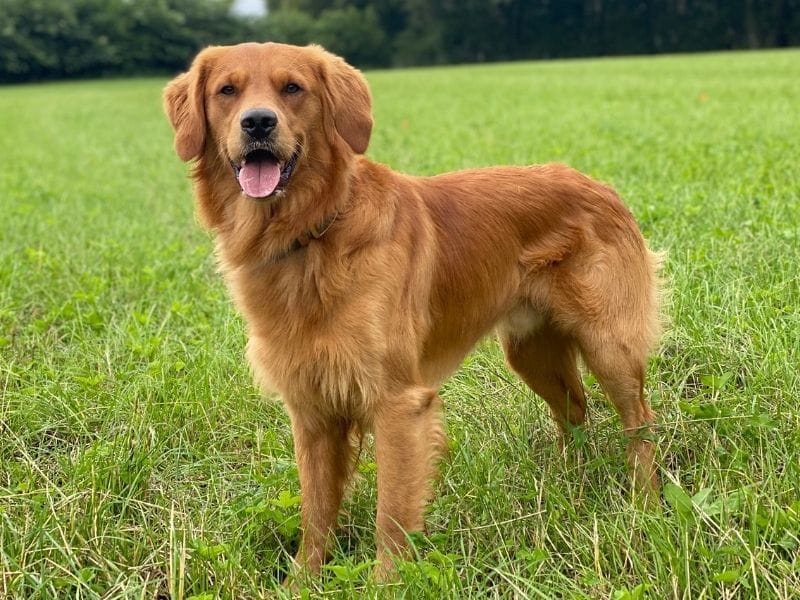
The Golden Retriever is a large sporting breed known for steady patience with kids. Males weigh 65 to 75 pounds and stand up to 24 inches tall. They’re playful, eager to please, and easy to train. Goldens suit active families with yard space and time for daily exercise.
Their thick, golden double coat sheds in waves, especially twice a year. Underneath that coat is a broad head and deep chest built for swimming and retrieving.
Goldens greet strangers like long-lost friends — that’s the expected part. What’s less known: they often “smile,” pulling back their lips when happy. The genuinely surprising part? Goldens were originally bred to gently carry downed birds in their mouths without damaging them — that same soft-mouth instinct is why they rarely bite down hard, even during rough toddler play.
- Extremely patient with toddlers
- Learns commands in 5 to 15 reps
- Rarely shows aggression when socialized
- Heavy shedder, year-round vacuuming
- Needs 60+ minutes of exercise daily
- Prone to hip dysplasia and cancer risk
Best for: Families with a yard · Toddlers through teens · Active households
Best dog breeds for families with toddlers
Labrador Retriever — “The Unshakeable Family Dog”
| Weight | 55–80 lbs |
| Height | 21.5–24.5 in |
| Lifespan | 10–12 years |
| Energy Level | High |
| Grooming Need | Weekly brushing |
| Shedding | Heavy, year-round |
The Labrador Retriever is America’s most popular breed and a top pick for families. Labs weigh 55 to 80 pounds and have a short, dense coat. They’re sturdy, playful, and quick learners. Labs handle rowdy play well, making them ideal for school-age kids who want an active playmate.
Labs have a thick “otter tail” and a short, weather-resistant coat in black, yellow, or chocolate. Their broad chest gives them the strength to keep up with backyard games for hours.
You’d expect a Lab to be food-motivated — that part’s true, and it makes training treats highly effective. What you might not expect: Labs were bred to retrieve game from icy water, so many genuinely love being soaked, making bath time far easier than with most breeds.
- Sturdy build tolerates rough play
- Highly food-motivated, easy to train
- Low grooming compared to Goldens
- Prone to overeating and weight gain
- Needs daily vigorous exercise
- Strong puppy chewing phase
Best for: Active school-age kids · Backyard space · First-time large-dog owners
Best dog breeds for 9 to 12 year olds
Beagle — “The Curious Companion”
| Weight | 20–30 lbs |
| Height | Up to 15 in |
| Lifespan | 10–15 years |
| Energy Level | Moderate to high |
| Grooming Need | Low, occasional brushing |
| Shedding | Moderate |
The Beagle is a compact scent hound known for being friendly and sturdy with kids. They weigh 20 to 30 pounds and stand under 15 inches tall. Beagles are curious, playful, and rarely aggressive. They suit active families who enjoy walks and don’t mind some vocal habits.
Beagles have short, weatherproof coats in tricolor or two-tone patterns, with long, soft, droopy ears framing an expressive face.
Most people know Beagles as friendly and food-driven — true on both counts. Here’s the part that surprises new owners: Beagles follow scent trails so single-mindedly that their nose can override their hearing, including your calls. As a result, if you let a Beagle off-leash in an unfenced area, expect them to wander.
- Compact size fits smaller homes
- Rarely shows aggression
- Low grooming upkeep
- Loud baying bark, not apartment-ideal
- Will bolt after scents if off-leash
- Prone to begging and weight gain
Best for: School-age kids · Fenced yards · Families wanting low-grooming dogs
Best dog breeds for 5 to 8 year olds
Cavalier King Charles Spaniel — “The Gentle Lap Dog”
| Weight | 13–18 lbs |
| Height | 12–13 in |
| Lifespan | 12–15 years |
| Energy Level | Moderate |
| Grooming Need | 2 to 3 brushings weekly |
| Shedding | Moderate |
The Cavalier King Charles Spaniel is a small, affectionate breed built for companionship. They weigh 13 to 18 pounds with a silky coat and soulful eyes. Cavaliers are gentle, adaptable, and rarely snap. They suit apartment families and first-time owners who want a calmer, smaller dog.
Their coat is medium-length and silky, often feathered at the ears, chest, and legs, in chestnut-and-white or solid ruby tones.
Cavaliers are known as cuddly lap dogs — that reputation holds up. The part fewer people mention: this breed was bred for centuries to sit on royal laps, so Cavaliers can struggle badly with separation anxiety if left alone too often. Even better, that same bonding instinct makes them unusually attentive to a child’s mood, often nudging in close when a kid is upset.
- Calm, gentle temperament
- Adapts well to apartments
- Bonds closely with children
- Prone to heart and ear conditions
- Separation anxiety if left alone often
- Small frame can be hurt by rough toddlers
Best for: Apartments · Calmer households · Families with older, gentler kids
Best small dog breeds for families
Bichon Frise — “The Hypoallergenic Cloud”
 Save
Save| Weight | 12–18 lbs |
| Height | 9.5–11.5 in |
| Lifespan | 14–15 years |
| Energy Level | Moderate |
| Grooming Need | High, professional grooming every 4 to 6 weeks |
| Shedding | Very low |
The Bichon Frise is a small, fluffy breed known for its cheerful personality and low-shedding coat. They weigh 12 to 18 pounds with a curly white coat. Bichons are playful, sociable, and well suited to city living. They fit families with mild allergies and limited outdoor space.
Their dense, curly white coat looks like a soft cloud, but underneath lies a sturdy, compact frame built for play, not just decoration.
Bichons are widely marketed as “hypoallergenic” — that’s true only in the sense that they shed far less dander into the air than most breeds. What surprises new owners is the cost: that gorgeous coat mats fast without near-weekly brushing and regular professional grooming, which adds up over a 14-year lifespan.
- Low shedding, good for allergy-prone kids
- Friendly with strangers and other pets
- Long 14 to 15 year lifespan
- Frequent professional grooming costs
- Can develop small-dog separation anxiety
- Fragile frame around very young toddlers
Best for: Allergy-sensitive families · Apartments · Calm, older kids
Best dog breeds for families with allergies
Standard Poodle — “The Genius in Disguise”
| Weight | 45–70 lbs |
| Height | Over 15 in |
| Lifespan | 10–13 years |
| Energy Level | High |
| Grooming Need | High, every 4 to 6 weeks |
| Shedding | Very low |
The Standard Poodle is a large, low-shedding breed ranked among the smartest dogs alive. They stand over 15 inches and weigh 45 to 70 pounds. Poodles are athletic, trainable, and gentle once exercised. They suit active families dealing with allergies who still want a big, capable dog.
Underneath the show-ring image, Poodles have a dense, curly, single-layer coat that comes in solid colors and needs regular clipping to stay manageable.
People expect Poodles to be smart — that’s well documented, with the breed regularly ranked in the top tier for working intelligence. What surprises most owners: that fancy show clip wasn’t about looks originally. It kept hair off their joints while they swam to retrieve waterfowl in cold European lakes.
- Low shedding, allergy-friendlier
- Extremely fast learner
- Gentle with kids once exercised
- High grooming cost and frequency
- Needs mental stimulation, not just walks
- Can become anxious if under-exercised
Best for: Allergy-prone families · Active households · Families wanting a trainable large dog
Soft Coated Wheaten Terrier — “The Bouncy Optimist”
| Weight | 30–40 lbs |
| Height | 17–19 in |
| Lifespan | 12–14 years |
| Energy Level | Moderate to high |
| Grooming Need | High, regular brushing |
| Shedding | Low |
The Soft Coated Wheaten Terrier is a medium, low-shedding breed with a cheerful, loving disposition. They weigh 30 to 40 pounds with a soft, wavy wheat-colored coat. Wheatens are sturdy, playful, and good with kids. They suit families wanting a medium dog with low allergy impact.
Their silky, wavy coat lies close to the body in shades of pale wheat to gold, requiring regular brushing to prevent the classic terrier matting.
People expect terriers to be a bit stubborn, and Wheatens carry some of that independent streak. The lesser-known trait is their signature “Wheaten greeting” — bouncing straight up on their back legs like a pogo stick when excited, a habit that delights most kids but can startle very young toddlers.
- Low-shedding, allergy-friendlier coat
- Cheerful, rarely aggressive
- Sturdy enough for active play
- Independent streak needs consistent training
- Frequent brushing required
- Can jump excitedly on small kids
Best for: School-age kids · Allergy-sensitive homes · Active medium-size dog seekers
Bernese Mountain Dog — “The Gentle Giant”
| Weight | 70–115 lbs |
| Height | 23–27.5 in |
| Lifespan | 7–10 years |
| Energy Level | Moderate |
| Grooming Need | 2 to 3 brushings weekly |
| Shedding | Heavy |
The Bernese Mountain Dog is a giant, calm breed known for gentle patience with children. They weigh 70 to 115 pounds with a thick tricolor coat. Bernese dogs are affectionate and slow to anger. They suit families with space who accept a shorter lifespan for a larger, steadier dog.
Their thick, silky tricolor coat in jet black, rust, and white makes them instantly recognizable, built originally for cold Swiss mountain winters.
People expect a dog this large to need constant exercise — Bernese actually need only moderate activity, lower than most sporting breeds. The harder truth new owners should know upfront: giant breeds like this one have notably shorter lifespans, often 7 to 10 years, so be ready for that earlier goodbye.
- Calm, patient temperament
- Lower exercise needs than most large breeds
- Deeply bonds with the whole family
- Shorter 7 to 10 year lifespan
- Heavy shedder, large mess
- Needs significant indoor and outdoor space
Best for: Large homes with yards · Gentle, calm households · Families wanting a giant breed
Best giant dog breeds for families
Vizsla — “The Velcro Athlete”
| Weight | 45–65 lbs |
| Height | 21–24 in |
| Lifespan | 12–14 years |
| Energy Level | Very high |
| Grooming Need | Low, weekly wipe-down |
| Shedding | Low to moderate |
The Vizsla is a lean, athletic breed with a deep need for human closeness. They weigh 45 to 65 pounds with a sleek, russet-gold coat. Vizslas are loyal, energetic, and very affectionate. They suit highly active families who can give hours of daily exercise.
Their short, smooth coat in a single rust-gold tone covers a lean, muscular frame built for endurance hunting across open fields.
Vizslas are nicknamed “velcro dogs” for sticking close to their people — that part is accurate and charming. The catch many first-timers miss: this is not a moderate-energy breed. Without 60 to 90 minutes of real exercise daily, Vizslas can become anxious and destructive indoors.
- Deep, loyal bond with family
- Minimal grooming or shedding
- Gentle and affectionate with kids
- Needs 60+ minutes exercise daily
- Severe separation anxiety if left alone
- Not suited to low-activity households
Best for: Very active families · Runners and hikers · Homes where someone is usually present
Shih Tzu — “The Easygoing Companion”
 Save
Save| Weight | 9–16 lbs |
| Height | 9–10.5 in |
| Lifespan | 10–16 years |
| Energy Level | Low to moderate |
| Grooming Need | Daily brushing or short clip |
| Shedding | Low |
The Shih Tzu is a small companion breed built for indoor family life. They weigh 9 to 16 pounds with a long, flowing coat. Shih Tzus are affectionate, calm, and require little exercise. They suit apartment families wanting a small, easygoing dog for kids.
Their long, double coat flows to the floor in show condition, though most pet owners keep it trimmed short in a simple “puppy cut” for easier care.
Shih Tzus are known for being lap dogs that don’t need much exercise — true, and a relief for less active households. What’s less known: this breed has a short, flat muzzle, which means it overheats fast in summer and shouldn’t be over-exercised even if it wanted to be.
- Minimal exercise requirements
- Calm, affectionate with kids
- Long 10 to 16 year lifespan
- Overheats easily, flat-faced breed risk
- Daily coat care or regular grooming trims
- Fragile around rough toddler handling
Best for: Apartments · Low-activity households · Calmer, gentler kids
Mixed-Breed Shelter Dog — “The Wild Card Worth Considering”
| Weight | Varies widely by parentage |
| Height | Varies widely by parentage |
| Lifespan | 10–15 years on average |
| Energy Level | Varies, assessed at shelter |
| Grooming Need | Varies by coat type |
| Shedding | Varies by coat type |
A mixed-breed shelter dog can match or beat a purebred for family temperament, especially as an adult with a known behavior history. Shelters assess energy, kid-friendliness, and trigger behaviors before adoption. Mixed breeds often carry fewer breed-specific health risks. They suit families open to a less predictable but well-vetted match.
Coat, size, and build vary completely from dog to dog, which is exactly the point — a good shelter can match traits to your specific home instead of forcing you into one breed’s fixed profile.
People assume shelter dogs come with more behavior risk than purebreds — but reputable shelters now run temperament tests specifically for kid interactions before adoption. The genuinely underrated advantage: adopting an adult dog (not a puppy) means you already know its real personality, not a guess based on breed averages.
- Often lower cost than breeders
- Known adult temperament, fewer surprises
- Frequently fewer breed-specific health issues
- Adult size and traits less predictable in puppies
- Limited history on some rescues
- Availability of kid-friendly matches varies
Best for: Budget-conscious families · Open-minded first-timers · Households wanting a known-temperament adult dog
Comparison Table: 10 Best Family Dog Breeds at a Glance
Here’s how all 10 breeds stack up side by side. Use this to quickly compare weight, energy, and grooming needs before you commit.
| Breed | Weight | Energy | Shedding | Best For |
|---|---|---|---|---|
| Golden Retriever | 55–75 lbs | High | Heavy | Active families with yards |
| Labrador Retriever | 55–80 lbs | High | Heavy | Rowdy school-age kids |
| Beagle | 20–30 lbs | Moderate-high | Moderate | Fenced-yard families |
| Cavalier King Charles Spaniel | 13–18 lbs | Moderate | Moderate | Apartments, gentle kids |
| Bichon Frise | 12–18 lbs | Moderate | Very low | Allergy-prone homes |
| Standard Poodle | 45–70 lbs | High | Very low | Allergy-prone, active homes |
| Soft Coated Wheaten Terrier | 30–40 lbs | Moderate-high | Low | School-age kids |
| Bernese Mountain Dog | 70–115 lbs | Moderate | Heavy | Large homes with yards |
| Vizsla | 45–65 lbs | Very high | Low-moderate | Very active families |
| Shih Tzu | 9–16 lbs | Low-moderate | Low | Apartments, calm kids |
Which Dog Breed Is Right for Your Family?
The right breed depends on three things: your kids’ ages, your living space, and your real daily schedule — not your weekend plans. Use this decision guide to skip the guesswork and land on a breed that fits your actual life right now.
- If you have toddlers under 5 → choose a Golden Retriever, Labrador, or Bernese Mountain Dog. Their size and patience tolerate clumsy, unpredictable handling better than fragile small breeds.
- If you live in an apartment → choose a Cavalier King Charles Spaniel, Bichon Frise, or Shih Tzu. All three adapt well to lower-space living and need less daily exercise.
- If someone in the family has allergies → choose a Bichon Frise, Standard Poodle, or Soft Coated Wheaten Terrier. Meet the specific dog first, since no breed is fully allergen-free.
- If your family is very active outdoors → choose a Labrador, Vizsla, or Golden Retriever. These breeds need real daily exercise and reward you with steady, happy behavior.
Family Dog Care Essentials: What Every New Owner Must Know
Before you bring any dog home, plan for three ongoing costs: food, veterinary care, and training. Most experts agree budgeting $1,000 to $3,000 a year covers food, routine vet visits, and basic supplies for an average dog. Add more for breeds needing frequent professional grooming.
Training should start in week one, not after problems appear. Enroll in a puppy class or work with a certified trainer for basic commands: sit, stay, come, and leave it. This is also the easiest window to teach a dog gentle behavior around kids.
- Puppy-proof one room before the dog arrives home.
- Book a vet visit within the first week for a health check.
- Start basic obedience training within the first few days.
- Teach kids how to approach, pet, and give the dog space.
- Set a consistent feeding and walking schedule from day one.
Even the calmest breed needs a routine. So if your family thrives on structure already, you’ll find the transition to dog ownership much smoother than expected.
Mistakes New Family Dog Owners Make (And How to Avoid Them)
Most first-time problems come down to mismatched expectations, not bad luck. The good news is that nearly all of these mistakes are preventable with a bit of planning before the dog comes home.
- Choosing by looks, not temperament. Research actual breed behavior before falling for a photo.
- Skipping training because the breed seems “easy.” Even gentle breeds need consistent commands.
- Leaving young kids unsupervised with any dog. Always supervise interactions, regardless of breed reputation.
- Underestimating grooming costs. Some “low-maintenance” looking breeds need expensive, frequent grooming.
- Ignoring exercise needs. An under-exercised high-energy dog often becomes a destructive one.
Meet the specific dog or puppy in person before committing, even with a “kid-friendly” breed. Individual temperament always varies within a breed.
Is a Purebred or Mixed-Breed Dog Better for First-Time Families?
Both purebred and mixed-breed dogs can make excellent first family dogs. Purebreds offer more predictable size, coat, and temperament. Mixed breeds, especially adult shelter dogs, offer known behavior and often fewer breed-specific health issues. Your decision should depend on whether predictability or adoption cost matters more to your family.
This guide covers breed-level temperament and care needs for first-time families with kids. If your situation involves a dog with documented aggression history, a child under 2, or a household with multiple pets already in conflict, you’ll need guidance from a certified animal behaviorist beyond what a breed list can offer.
Frequently Asked Questions
What is the best dog breed for first-time owners with kids?
Golden Retrievers and Labrador Retrievers are widely considered the best overall choices. Both combine patience, trainability, and sturdy builds that tolerate active, sometimes clumsy play from young children well.
Are small dogs safer for kids than large dogs?
Not necessarily. Many small breeds are more fragile around rough handling and can react defensively if startled. Larger, calmer breeds like Golden Retrievers often tolerate toddler play better than small terriers do.
Which dog breeds are best for kids with allergies?
Bichon Frise, Standard Poodle, and Soft Coated Wheaten Terrier are common low-shedding choices. No breed is fully allergen-free, so spend time with the specific dog before adopting if allergies are a concern.
How much exercise does a family dog need each day?
Most active breeds, including Labradors and Golden Retrievers, need 45 to 60 minutes of exercise daily. Lower-energy breeds like Cavaliers or Shih Tzus need closer to 20 to 30 minutes split across the day.
Should first-time owners adopt a puppy or an adult dog?
Adult shelter dogs often suit first-time families better. Their temperament is already known, while puppies require more unpredictable training time and energy before settling into adult behavior.
One Thing to Do Right Now
Pick your top two breeds from this list based on your kids’ ages and your living space. Then visit a local shelter or breeder this week to meet a dog from each, in person, before deciding anything else. I’m Thomas Cutter, and that one visit will tell you more than any list ever could.

Thomas Cutter is a lifelong dog owner and the founder of FindOutAboutDogs.com. With over 10 years of hands-on experience owning multiple breeds, Thomas created this site to provide honest, research-based dog advice that real owners can actually trust.
