10 Dog Breeds Without Separation Anxiety (Best for Busy Owners in 2026)
Quick Answer
The Basset Hound, Greyhound, Chow Chow, Shiba Inu, French Bulldog, Bullmastiff, Great Dane, Chinese Shar-Pei, Boston Terrier, and Lhasa Apso are widely considered the calmest breeds for owners who can’t be home all day. Each one was bred to work, hunt, or guard on its own, which built genuine independence into the breed. No dog is truly anxiety-proof, but these breeds start with a real head start.
- Basset Hound, Greyhound, and Chow Chow top most vets’ lists for calm alone time
- Independent breeds still need daily exercise and mental stimulation
- No dog, regardless of breed, should be alone for more than 6 to 8 hours regularly
You grab your keys and your dog’s ears drop. Your stomach twists a little, too. If you’ve ever paused at the front door, bracing for whining or a trashed living room, you already know how much breed choice matters.
I’m a longtime dog owner and breed researcher, and I’ve spent years watching how different dogs handle being left alone. Some breeds panic the second the door clicks shut. Others just sigh and go back to sleep. This guide covers the ten breeds that fall into that second group, plus how to set any dog up for calmer alone time in 2026.
This article covers breed-level tendencies toward independence and calm alone time. If your dog already shows signs of true separation anxiety, you’ll need a trainer or vet behaviorist, not just a breed guide.
- Independence is a bred trait, not a personality flaw — hounds, guard dogs, and ancient breeds tend to have it built in
- Breed only predicts a tendency. Training, exercise, and age still shape the outcome
- Adult rescues often handle alone time better than puppies of the same breed
- Even the calmest breed still needs a walk and a puzzle toy before you leave


What Makes a Dog Breed Prone to (or Free From) Separation Anxiety?
A dog is less likely to develop separation anxiety when its breed was originally built for independent work. Hounds that tracked scent alone, guard dogs that watched property without constant direction, and ancient companion breeds bred for centuries all learned to make decisions without a human standing over them. That history shows up today as calmer alone time.
Separation anxiety isn’t only about breed, though. Research on canine behavior points to early socialization, past trauma, and sudden routine changes as major triggers, right alongside genetics. The American Veterinary Medical Association notes that any dog can develop the condition, but some breeds are simply less prone to it from the start.
So what does that mean for you? A independent breed gives you better odds, not a guarantee. You might be thinking a “low-anxiety breed” means zero training is needed. Here’s why that’s not quite right: even the most self-sufficient hound still needs a gradual, positive introduction to being alone.
What Most People Get Wrong About Independent Dog Breeds
Most people assume an independent dog is a low-affection dog. That’s not accurate. Chow Chows and Shar-Peis, for example, bond closely with their own family — they just don’t need constant physical closeness to feel secure. Independence and affection are separate traits entirely.
The second mistake is assuming breed alone solves the problem. A Basset Hound puppy left alone for 9 hours on day one will still struggle. Independent breeds need the same gradual alone-time training as any other dog; they just tend to reach comfort faster and need fewer repetitions to get there.
The third misconception: people think “independent” means “doesn’t need exercise.” The opposite is often true. A bored Shiba Inu or Boston Terrier with pent-up energy is far more likely to bark, dig, or chew than one that got a real walk that morning.
The 10 Best Dog Breeds Without Separation Anxiety, Ranked and Reviewed
Every breed below is well documented by the American Kennel Club and veterinary behaviorists as naturally independent. None of them are anxiety-proof — but each one gives you a real advantage if your schedule keeps you out of the house for long stretches.
1. Basset Hound — “The Nose That Doesn’t Need You Around”
| Weight | 40–65 lbs |
| Height | Up to 15 inches |
| Lifespan | 12–13 years |
| Energy Level | Low to moderate |
| Grooming Need | Low, weekly brushing |
| Shedding | Moderate, year-round |
The Basset Hound is a low-slung scent hound bred to track game alone for hours. It weighs 40 to 65 lbs and has a mellow, stubborn streak. Its low energy and thoughtful independence make it one of the calmest breeds for owners who work full days.
Its long ears and droopy eyes give it an instantly recognizable, almost mournful look. That sad expression, though, hides a genuinely relaxed dog underneath.
Basset Hounds were bred to trail scent far from the hunter, making decisions on their own the whole way. They’ll happily nap on the couch for hours. Most owners describe them as stubborn but never clingy.
Best for: First-time owners · Apartment dwellers · Owners who work full-time
See more calm breed picks for first-time dog owners
2. Greyhound — “The 45-MPH Couch Potato”
| Weight | 60–70 lbs |
| Height | 27–30 inches |
| Lifespan | 10–14 years |
| Energy Level | High in bursts, low at rest |
| Grooming Need | Very low |
| Shedding | Low |
The Greyhound is the world’s fastest dog breed, but spends most of its day sleeping. It weighs 60 to 70 lbs and has a lean, aerodynamic build. After a short sprint, it settles into a calm, undemanding companion — ideal for owners with long workdays.
Their narrow chests and long legs look built for speed even standing still. Retired racing Greyhounds often surprise new owners with how still they can stay.
Despite the reputation for speed, Greyhounds are famously low-key indoors. Many rescue groups call them “40-mph couch potatoes.” They rarely bark and settle into naps fast.
Best for: Apartment dwellers · Working professionals · Owners wanting a quiet housemate
Explore more calm dog breeds built for apartment living
3. Chow Chow — “The Cat in a Dog’s Body”
| Weight | 45–70 lbs |
| Height | 17–20 inches |
| Lifespan | 9–15 years |
| Energy Level | Low to moderate |
| Grooming Need | High, thick double coat |
| Shedding | Heavy, seasonal |
The Chow Chow is a fluffy, lion-maned guard breed from China, weighing 45 to 70 lbs. It’s famously aloof and doesn’t crave physical closeness. That reserved, watchful nature makes it one of the calmest breeds to leave home alone.
The thick double coat forms a mane around the neck and shoulders, and its tongue carries a striking blue-black color found in almost no other breed.
Chow Chows were bred as guard dogs, watching property without needing constant direction. They rarely bark for attention. Most will greet you calmly instead of jumping or whining.
Best for: Owners wanting a low-affection-demand dog · Homes without small children · Experienced dog owners
Compare guard-dog breeds that also do well in apartments
4. Shiba Inu — “Confident, Curious, Content Alone”
| Weight | 17–23 lbs |
| Height | 13–17 inches |
| Lifespan | 13–16 years |
| Energy Level | Moderate to high |
| Grooming Need | Moderate |
| Shedding | Heavy, twice yearly |
The Shiba Inu is a small, fox-faced breed from Japan, weighing 17 to 23 lbs. It’s alert, spirited, and famously self-reliant. With enough daily exercise, its independent streak turns into calm, contented alone time rather than restlessness.
Its curled tail and pricked ears give it a fox-like silhouette. The breed’s confident stance makes it look far bigger than its actual size.
Shiba Inus were bred to flush small game in mountain terrain, working without much human guidance. They’re famous for near-total indifference to being watched. A tired Shiba will nap for hours undisturbed.
Best for: Active owners · Experienced dog handlers · Single professionals with a workout routine
Read about independent breeds that suit busy couples
5. French Bulldog — “Low Energy, Low Drama”
 Save
Save| Weight | 16–28 lbs |
| Height | 11–13 inches |
| Lifespan | 10–14 years |
| Energy Level | Low to moderate |
| Grooming Need | Low |
| Shedding | Low to moderate |
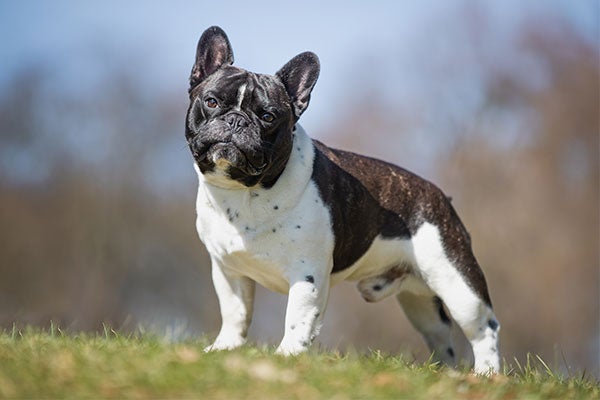
The French Bulldog is a compact, muscular companion breed weighing 16 to 28 lbs. It adapts well to apartments and small spaces. Its laid-back, low-exercise nature makes it a genuinely relaxed dog to leave home for a workday.
Its bat-shaped ears and stocky, muscular frame give the Frenchie an unmistakable silhouette. The short coat comes in a wide range of colors.
Frenchies were bred as companion dogs, not workers, which shaped a calm, adaptable temperament. They rarely need long walks. Most are content curled up on a couch cushion until you get home.
Best for: Small apartments · First-time owners · Owners without a yard
See our full list of small dog breeds for compact apartments
6. Bullmastiff — “The Gentle Giant Guardian”
| Weight | 100–130 lbs |
| Height | 24–27 inches |
| Lifespan | 7–9 years |
| Energy Level | Low to moderate |
| Grooming Need | Low |
| Shedding | Moderate |
The Bullmastiff is a large guardian breed weighing 100 to 130 lbs, originally bred to patrol English estates alone at night. It’s calm, watchful, and rarely destructive. That working history gives it real comfort with solitary time.
Its broad head and dense, muscular frame give the Bullmastiff a serious, powerful look, softened by a wrinkled brow that reads almost thoughtful.
Bullmastiffs were bred to silently watch a property and only act if truly needed. They’re famously quiet indoors. Most spend the day sleeping rather than pacing or barking.
Best for: Homes with yards · Experienced large-breed owners · Owners wanting a natural watchdog
Check which big dog breeds actually work in apartments
7. Great Dane — “Too Big to Bother Pacing”
| Weight | 110–175 lbs |
| Height | 28–32 inches |
| Lifespan | 8–10 years |
| Energy Level | Low to moderate indoors |
| Grooming Need | Very low |
| Shedding | Moderate |
The Great Dane is a giant breed reaching up to 175 lbs, known as a gentle giant. Despite its size, it’s a famous couch dog indoors. Its calm, low-key temperament makes it surprisingly easy to leave alone for a workday.
Standing nearly as tall as a small pony, the Great Dane’s sheer size is softened by a gentle, expressive face.
Great Danes were bred to hunt boar but evolved into calm household companions. Most move slowly and deliberately indoors. They’re famous for napping through an entire afternoon without stirring.
Best for: Homes with space · Owners wanting a calm, low-maintenance giant breed · Families with older kids
See more large, easygoing breeds recommended for retirees
8. Chinese Shar-Pei — “Reserved, Watchful, Unbothered”
| Weight | 45–60 lbs |
| Height | 18–20 inches |
| Lifespan | 9–11 years |
| Energy Level | Low to moderate |
| Grooming Need | Low |
| Shedding | Low to moderate |
The Chinese Shar-Pei is a wrinkled, sturdy guard breed weighing 45 to 60 lbs. Bred to protect and hunt with little supervision, it developed a reserved, cat-like independence. It tends to settle calmly when its owner leaves for the day.
The deep wrinkles and blue-black tongue give the Shar-Pei one of the most distinctive looks in the dog world.
Shar-Peis bond closely with their family but stay aloof with strangers. They rarely seek constant attention. Once properly socialized, they’re known for calm, quiet solo time at home.
Best for: Experienced owners · Quiet households · Owners wanting a low-bark breed
Browse other guard-instinct breeds that suit family life
9. Boston Terrier — “The Independent Tuxedo Dog”
| Weight | 12–25 lbs |
| Height | 15–17 inches |
| Lifespan | 11–13 years |
| Energy Level | Moderate |
| Grooming Need | Low |
| Shedding | Low |
The Boston Terrier is a small, tuxedo-patterned breed weighing 12 to 25 lbs. It’s one of the few terrier-type breeds not prone to clinginess. Intelligent and independent, it handles moderate alone time better than most small dogs.
Its black-and-white coat pattern really does resemble a tiny tuxedo, paired with large, expressive eyes.
Bred down from fighting stock into a companion breed, the Boston Terrier kept its confidence but lost the aggression. They’re playful but rarely needy. Most settle down for a nap within minutes of you leaving.
Best for: Apartment living · Seniors · Owners wanting a small, low-drama dog
Compare small, easygoing breeds recommended for seniors
10. Lhasa Apso — “The Tiny Royal Watchdog”
 Save
Save| Weight | 12–18 lbs |
| Height | 10–11 inches |
| Lifespan | 12–15 years |
| Energy Level | Moderate |
| Grooming Need | High, long coat |
| Shedding | Low |
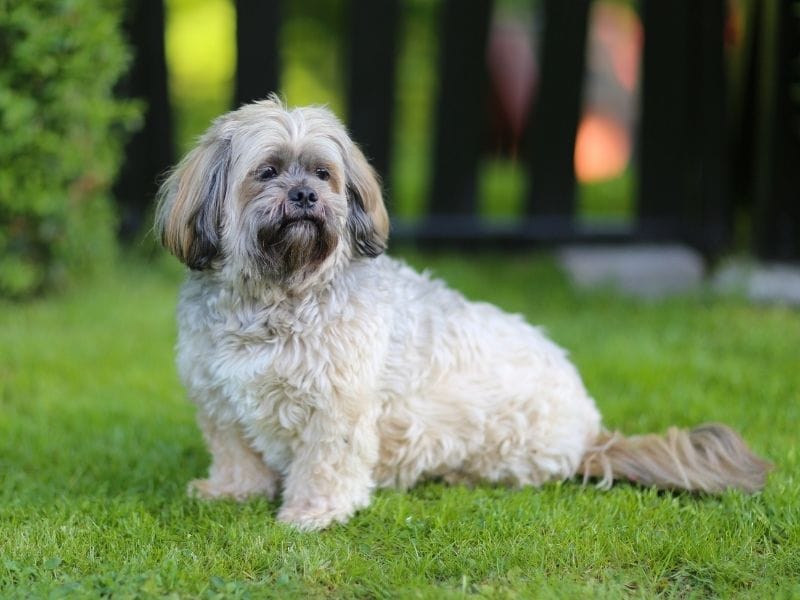
The Lhasa Apso is a small breed weighing 12 to 18 lbs, bred as a watchdog for Tibetan monasteries. It’s confident and self-assured despite its size. That centuries-old independence makes it far calmer alone than most toy breeds.
Its long, flowing double coat gives the Lhasa Apso a regal, lion-like appearance, especially around the head and shoulders.
Lhasa Apsos were bred to watch monastery halls alone, alert but self-directed. They’re famously stubborn and independent. Most will see you out the door, then simply go about their own day.
Best for: Small apartments · Owners wanting a low-shedding companion · Owners who work irregular hours
See low-shedding breeds that also handle apartment life well
How Do These 10 Breeds Compare Side by Side?
Here’s the quick comparison if you’re deciding between breeds. Size, energy, and grooming needs vary a lot even within this “calm and independent” group, so match the breed to your actual living situation, not just the anxiety trait alone.
| Breed | Size | Energy | Grooming | Best Living Setup |
|---|---|---|---|---|
| Basset Hound | Medium | Low | Low | Apartment or house |
| Greyhound | Large | Low at rest | Very low | Apartment or house |
| Chow Chow | Medium-large | Low | High | House with yard |
| Shiba Inu | Small | Moderate-high | Moderate | Apartment with exercise |
| French Bulldog | Small | Low | Low | Apartment |
| Bullmastiff | Giant | Low | Low | House with yard |
| Great Dane | Giant | Low-moderate | Very low | House with space |
| Chinese Shar-Pei | Medium | Low-moderate | Low | Apartment or house |
| Boston Terrier | Small | Moderate | Low | Apartment |
| Lhasa Apso | Small | Moderate | High | Apartment |
Which of These Breeds Is Right for You?
Picking the right breed comes down to your space, your schedule, and how much grooming or exercise you can realistically commit to. Here’s a quick way to narrow it down.
- If you live in a small apartment and want low upkeep → the French Bulldog or Boston Terrier fits best.
- If you have a yard and want a natural watchdog → the Bullmastiff or Chow Chow will feel right at home.
- If you’re active and want a dog that matches your energy → the Shiba Inu or Greyhound is a strong fit.
- If you want a calm, low-drama giant breed → the Great Dane is hard to beat.
- If you’re a first-time owner who wants an easy, mellow dog → the Basset Hound is one of the most forgiving choices on this list.
Care Essentials: How to Keep Any Independent Dog Calm and Happy Alone
Breed gives you a head start, but daily habits are what actually keep a dog calm home alone. Give your dog real exercise, a predictable routine, and a task to focus on, and even a moderately independent breed will settle faster than a high-energy dog with no outlet.
Give your dog a 20 to 30 minute walk before you leave. A tired dog settles faster than a restless one.
A predictable departure routine also matters more than most owners expect. Dogs read patterns. If you grab your keys, put on shoes, and leave the same way every day, your dog learns to expect a calm, short absence rather than something to fear.
Puzzle feeders and slow-release treats give your dog a job to do in the first 20 minutes after you leave, which is usually when anxiety peaks. So if your dog tends to bark right after the door closes, a frozen treat toy can bridge that gap.
Mistakes New Owners Make With “Independent” Breeds
The most common mistake is skipping alone-time training because the breed has a calm reputation. Even a Basset Hound needs short, gradual practice sessions before a full workday alone.
Don’t jump straight to an 8-hour workday for a new dog. Build up gradually, starting with 20 to 30 minutes.
Second, owners often under-exercise these breeds because they assume “independent” means “low needs.” Most of the breeds on this list still need a real daily walk. Skip it, and boredom can look a lot like anxiety.
Third, people adopt an independent-breed puppy expecting adult-level calm right away. Puppies of every breed need more supervision, more bathroom breaks, and more patience before they settle into the mellow adult temperament the breed is known for.
Frequently Asked Questions
Which dog breed has the least separation anxiety?
The Basset Hound and Greyhound are often named the calmest breeds for alone time. Both were bred for independent, low-supervision work, giving them a natural head start over clingier companion breeds.
Can any dog breed still develop separation anxiety?
Yes. Even the most independent breed can develop anxiety after trauma, a sudden routine change, or poor early socialization. Breed lowers the risk, but it never fully removes it.
How many hours can an independent dog breed be left alone?
Most vets recommend no more than 6 to 8 hours, even for the calmest breeds. Puppies and senior dogs need much shorter stretches, with breaks for bathroom and water.
Do independent dog breeds still need daily exercise?
Yes, and skipping it often backfires. A bored, under-exercised dog is far more likely to bark, dig, or chew, even from a naturally calm breed.
Are small dog breeds always more prone to separation anxiety?
Not always. The Boston Terrier and Lhasa Apso are small but genuinely independent. Size matters less than the breed’s original working history and how it was socialized as a puppy.
The Bottom Line
Breed really does matter here. The Basset Hound, Greyhound, Chow Chow, and the rest of this list carry generations of independent work in their genes, and that shows up as calmer alone time today. But no breed removes the need for a real walk, a predictable routine, and a gradual introduction to being alone.
One thing to do right now: if you already have a dog, try a 30-minute test absence this week, with a puzzle toy and no big goodbye. Watch how they settle. It’ll tell you more than any breed list can.

Thomas Cutter is a lifelong dog owner and the founder of FindOutAboutDogs.com. With over 10 years of hands-on experience owning multiple breeds, Thomas created this site to provide honest, research-based dog advice that real owners can actually trust.
