Why Poodles Need Regular Brushing: 7 Reasons It Matters
Quick Answer
Poodles need regular brushing because their dense, curly hair can trap loose strands and quickly form tangles near the skin. Consistent brushing helps prevent painful mats, removes debris, keeps the coat manageable, and lets you spot skin problems earlier. For the full technique, follow this step-by-step Poodle brushing guide.
Why regular brushing matters
- Stops mats early: Small tangles are easier and more comfortable to remove before they tighten.
- Reaches trapped hair: Loose hairs can stay caught inside Poodle curls instead of falling onto the floor.
- Protects comfort: Tight mats can pull on the skin whenever your dog walks, stretches, or lies down.
- Finds hidden problems: Brushing gives you regular chances to notice redness, sores, bumps, parasites, or tender areas.
- Makes grooming easier: A maintained coat is much simpler to bathe, dry, clip, and style.
- Builds a routine: Calm, frequent sessions help a Poodle become comfortable with handling and grooming tools.
Simple rule
- Brush in small sections, then use a metal comb to check that you reached from near the skin through the ends.
Poodle curls look beautiful, but they are not a low-maintenance coat. A fluffy surface can hide tight knots underneath, which is why brushing needs to reach farther than the hair you can easily see.
I use one simple standard when thinking about Poodle coat care: the coat is not finished just because it looks fluffy. If an appropriate steel comb still catches, there is more work to do.


Why Do Poodles Need Regular Brushing?
Poodles need regular brushing mainly because their dense, curly coat can hold loose hair and twist it around neighboring strands. That makes small tangles more likely to turn into compact mats.
The American Kennel Club recommends building good grooming habits early and specifically discusses using a slicker brush to reach through a Poodle’s coat without scraping the skin. Its Standard Poodle grooming guidance is a useful reference for owners learning the routine.
Definition: A coat mat is a compact mass of tangled hair that no longer separates easily with gentle finger work or normal brushing. Mats often tighten near the skin, where they may be hard to see beneath Poodle curls.
The Poodle Club of America also describes regular clipping and grooming as part of normal Poodle ownership. That applies whether you have a Toy, Miniature, or Standard Poodle.
7 reasons Poodles need consistent coat care
- Curly hair traps loose strands instead of letting all of them fall freely away.
- Small tangles can become mats as movement and friction tighten the coat.
- Mats pull on the skin and can make normal movement uncomfortable.
- Brushing removes dirt and debris before it becomes trapped deeper in the curls.
- Regular handling reveals skin changes that a thick coat can otherwise hide.
- A maintained coat is easier to clip during professional or home grooming.
- Frequent gentle sessions build tolerance so grooming does not become one long stressful event.
What Happens If You Don’t Brush a Poodle Regularly?
If brushing is skipped, loose strands and small knots remain inside the curls. Friction from walking, sleeping, collars, harnesses, and normal play can tighten those hairs together.
The result is often matting rather than a little harmless mess. A badly tangled coat may eventually need to be clipped short instead of painfully pulled apart.
Mats become harder to remove
An early tangle may separate with careful finger work and a slicker brush. A tight mat near the skin behaves more like felt and can be difficult to remove without causing discomfort.
If you suspect knots are hiding beneath a fluffy surface, use this guide for checking a dog coat for hidden mats before you start pulling at the area.
- Soft snag: Usually still movable and may loosen with gentle grooming.
- Firm knot: Needs slower work because several hairs are already bound together.
- Dense felted mat: Often safer for an experienced groomer to assess.
- Painful or irritated area: Stop brushing and have the skin evaluated when needed.
Skin problems can stay hidden
A thick Poodle coat can conceal redness, bumps, sores, debris, or parasites. Regular grooming gives you repeated opportunities to look and feel beneath the curls.
The AKC’s broader home dog grooming guidance recommends using grooming sessions to check the coat and body for unusual changes.
Professional grooming becomes harder
Professional clipping does not replace maintenance brushing between appointments. A groomer still has to work with the coat that arrives at the salon.
AKC guidance notes that Poodles may be bathed and trimmed roughly every four to eight weeks depending on coat length and routine. Regular home brushing helps keep the coat manageable between those visits.
How Often Should You Brush a Poodle?
There is no perfect schedule for every Poodle. Coat length, curl density, swimming, outdoor activity, collars, clothing, and the individual dog’s tendency to mat all change the answer.
As a practical 2026 starting point, fuller coats usually need attention much more often than a short pet clip. VCA’s Standard Poodle care guidance recommends brushing and combing every other day to help prevent matting.
| Coat Situation | Useful Starting Routine | Areas to Watch |
|---|---|---|
| Short pet clip | Thorough brushing several times weekly, adjusted to your dog’s coat | Ears, armpits, collar area, tail |
| Medium fluffy coat | Every day or two is a practical starting point | Legs, chest, ears, harness areas |
| Long or growing coat | Daily checks and frequent full section brushing | Entire coat from roots to tips |
| After swimming or wet outdoor play | Inspect once the coat is safely dried and manageable | Friction zones and areas holding debris |
The calendar should guide you, not control you. If your comb finds tangles before the next planned session, increase your brushing frequency.
You can also compare different coats in this dog brushing schedule by coat type.
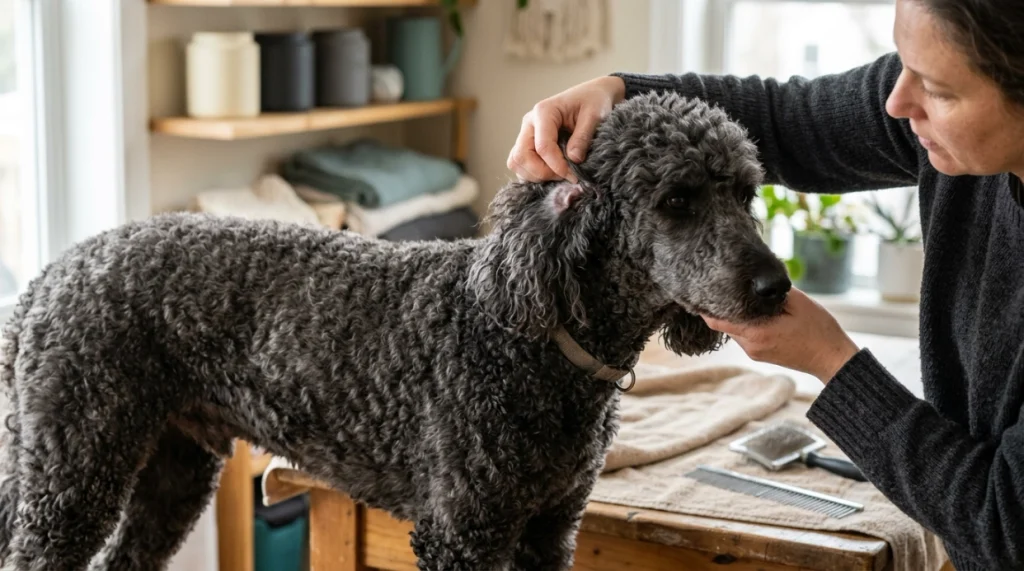
Where Do Poodles Mat Most Often?
 Save
SavePoodles tend to mat fastest where curls experience repeated friction, pressure, or moisture. These areas deserve attention even when the back and sides still feel perfectly soft.
- Behind the ears: Fine hair rubs and twists whenever the ears move.
- Armpits: Every step creates friction between the legs and body.
- Collar area: A collar repeatedly presses and moves across the same hair.
- Harness areas: Chest and shoulder straps can encourage knots.
- Legs: Long leg coat can hide tangles close to the skin.
- Groin and belly: Soft hair and movement make these sensitive areas easy to miss.
- Tail and tail base: Dense hair can look fluffy while remaining tangled beneath.
I would check these friction zones first on any day when you do not have time for a complete grooming session. Five careful minutes in the right places can catch problems early.
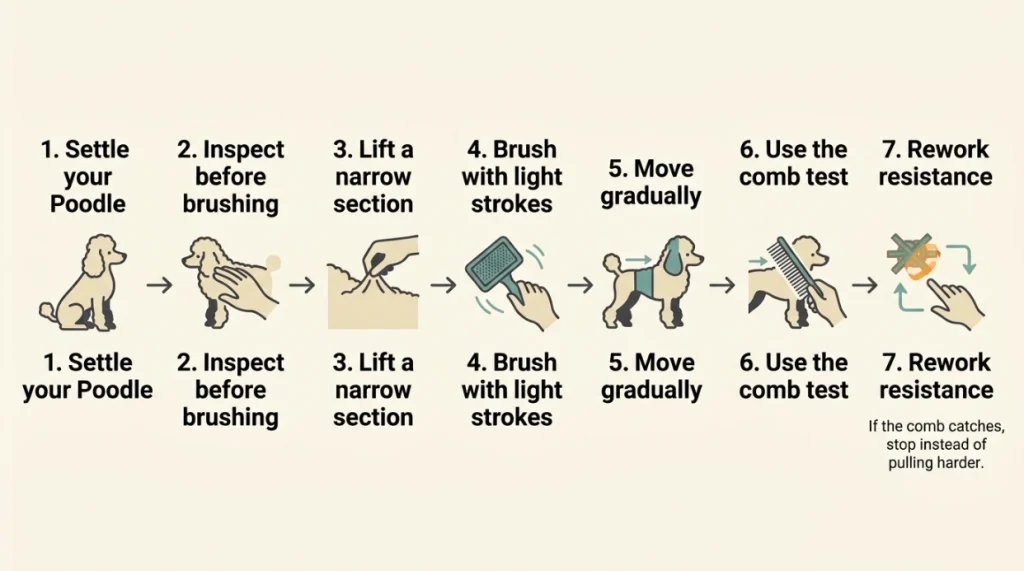
What Is the Best Way to Brush a Poodle?
 Save
SaveThe best method is to work in small sections rather than dragging a brush randomly over the visible surface. This approach is commonly called line brushing.
Pairing a suitable brush with a final comb check is especially useful on curly coats. This guide explains why a dog brush and comb work better together.
- Settle your Poodle. Use a stable, non-slip surface and begin when your dog is calm.
- Inspect before brushing. Feel for tight mats, irritated skin, burrs, or tender spots.
- Lift a narrow section. Separate the curls until you can see or feel near the skin.
- Brush with light strokes. Work through the section without scraping the skin.
- Move gradually. Drop another thin layer of coat and repeat.
- Use the comb test. Run a metal comb through the finished section from near the roots toward the tips.
- Rework resistance. If the comb catches, stop instead of pulling harder.
My practical rule: If the comb cannot travel comfortably through the section, I do not count that section as fully brushed.
Choosing the right brush also matters. My detailed guide to the best brush for a Poodle explains why long-pin slickers are usually the most useful starting tool for medium and longer curls.
The AKC’s dog brush guide also explains how slicker, pin, bristle, and other brush types serve different coat-care jobs.
Does Regular Brushing Help a Poodle’s Skin and Coat?
Regular brushing does more than prevent ugly knots. It removes dirt, loose material, and dead hair while giving you a better view of the skin underneath.
That inspection matters because thick curls can hide changes you would notice immediately on a short-haired dog. Look for redness, unusual odor, sores, swelling, parasites, or areas that suddenly become sensitive.
- Normal coat: Hair separates comfortably and the skin looks calm.
- Developing problem: Repeated scratching, flakes, redness, or new sensitivity deserves closer attention.
- Veterinary concern: Open sores, significant swelling, discharge, painful skin, or worsening irritation should not be treated as a brushing problem.
Do not keep brushing over painful skin to finish the coat. Grooming should help you find problems, not force you to work through them.
Can Regular Brushing Make Grooming Less Stressful?
Yes, especially when brushing starts early and stays gentle. Short routine sessions teach a Poodle that handling, standing still, paw contact, and grooming tools are normal parts of life.
If your Poodle runs away when the brush appears, forcing a long session can make the problem worse. The AKC offers useful guidance on helping dogs that dislike brushing.
- Start easy: Brush an area your dog already tolerates.
- Keep sessions short: Stop before your dog becomes frustrated.
- Use light pressure: More force does not remove tangles more safely.
- Reward calm behavior: Food, praise, or a short play break can build a positive routine.
- Never punish avoidance: First check whether the brush is pulling or touching a painful area.
Do Toy, Miniature, and Standard Poodles Need the Same Brushing?
All three Poodle varieties need regular coat maintenance because they share the same basic curly coat type. The main practical difference is how much coat you have to work through.
The Poodle Club of America recognizes Toy, Miniature, and Standard size varieties and notes that Poodles require regular clipping and grooming.
| Poodle Size | Brushing Challenge | Practical Tip |
|---|---|---|
| Toy | Small body with delicate, tight areas | Use a smaller brush head for better control |
| Miniature | More coat area but still many tight grooming zones | Work systematically so legs and armpits are not skipped |
| Standard | Large amount of coat can make full sessions longer | Divide the dog into sections instead of rushing the whole coat |
The same principle applies to every size. Brush according to coat length and condition, not just the dog’s height.
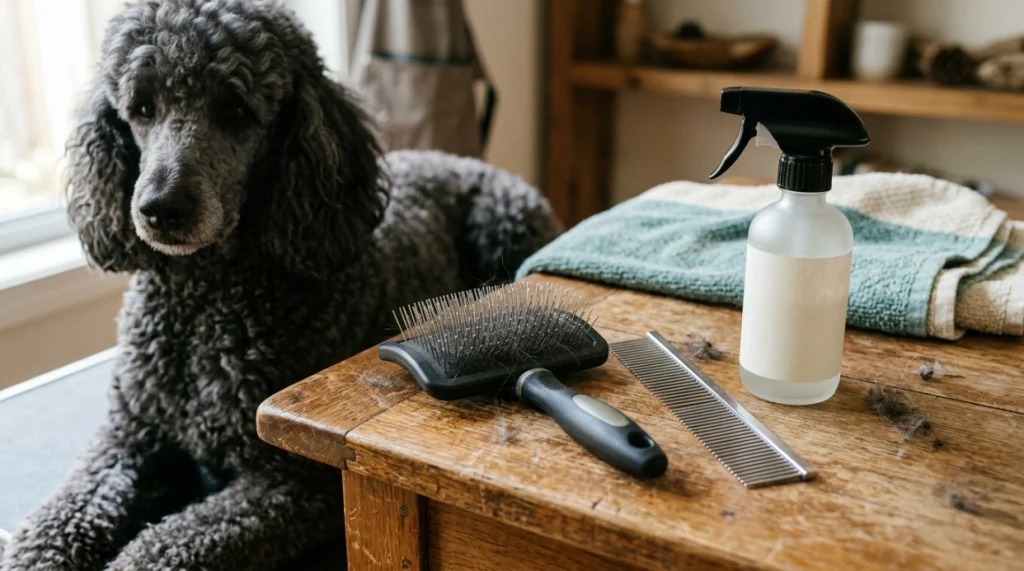
Which Poodle Brushing Tools Are Worth Having?
 Save
SaveYou do not need a huge grooming cabinet to keep a Poodle coat under control. For most owners, one suitable slicker brush and one dependable steel comb form the most useful basic kit.
If minor tangles are common, a dog-safe detangling spray can add slip. It should make careful brushing easier rather than becoming an excuse to pull through a tight mat.
If you’re ready to put together a simple Poodle grooming kit, these are the three tools I would consider first:
🏆 Best Overall Slicker
Chris Christensen Big G Slicker Brush
★★★★★ 4.8/5 Editorial Fit
The Big G uses long 27 mm stainless-steel pins, a flexible cushion, and a curved brush head designed for dense and curly coats. I like this type of brush most for medium or longer Poodle coats where shallow pins can skim across the surface.
🔎 Best Finishing Check
Andis 7-1/2-Inch Steel Comb
★★★★★ 4.7/5
This steel comb has coarse and fine tooth spacing for detangling, checking, and finishing. I consider a comb like this essential because resistance tells you when the slicker has left a hidden snag behind.
✨ Best Detangling Helper
Chris Christensen Ice on Ice Ultra Dematting Spray
★★★★☆ 4.5/5 Editorial Fit
This conditioning spray is made to add slip and help loosen tangles on manageable coats. I would use it as a brushing aid for minor knots, not as a reason to force apart dense matting that is already tight against the skin.
Frequently Asked Questions
Do Poodles need to be brushed every day?
Poodles with long, full, or mat-prone coats may benefit from daily brushing or at least daily checks of high-friction areas. A short pet clip can require less work, but regular comb checks are still important because ears, legs, tails, and armpits can remain longer.
Why does my Poodle get mats even though I brush regularly?
Surface brushing is a common reason. A slicker can make the visible curls look fluffy while knots remain near the skin, so work in small sections and finish with a metal comb that can pass comfortably from near the roots through the ends.
Can I use a normal human hairbrush on my Poodle?
A human hairbrush is usually not the best primary tool for a dense Poodle coat. A suitable slicker reaches and separates curls more effectively, while a metal grooming comb gives you a better way to detect hidden resistance after brushing.
Should I brush a Poodle before or after a bath?
Check for obvious knots and matting before bathing because tightly tangled areas may become harder to manage when wet. After the coat is properly dried, brush and comb again using the technique recommended for your Poodle’s coat and grooming products.
What should I do if my Poodle’s mat is too tight to brush out?
Stop pulling if the mat is dense, painful, or tight against the skin. An experienced professional groomer can often clip severe matting more safely, while redness, sores, swelling, odor, or significant pain may require veterinary attention.
Final Takeaway
Poodles need regular brushing because their curly coat can hide loose hair, tangles, and tight mats long before the problem looks serious from the outside. Consistent grooming keeps those small problems small.
Use a suitable slicker, work through the coat in sections, and let a steel comb be your final test. Keep the sessions calm and frequent, because preventing one hidden mat is much easier than trying to rescue an entire neglected coat later.

Thomas Cutter is a lifelong dog owner and the founder of FindOutAboutDogs.com. With over 10 years of hands-on experience owning multiple breeds, Thomas created this site to provide honest, research-based dog advice that real owners can actually trust.
