Can You Use a Deshedding Tool on a Double Coat?
Quick Answer
Yes, you can use a suitable deshedding tool on many double-coated dogs, but the tool design and your technique matter. An undercoat rake is often a sensible starting point, while blade-style deshedding tools require extra care to avoid damaging healthy guard hairs or irritating the skin. Read the American Kennel Club’s double-coat grooming advice for additional guidance.
How to deshed a double coat safely
- Choose the right tool: Match the tool to your dog’s coat length, density, and skin sensitivity.
- Inspect the coat: Check for mats, sores, redness, and sensitive areas before brushing.
- Brush gently: Follow the direction of hair growth without pressing the tool into the skin.
- Limit repeated passes: Move to another section instead of repeatedly brushing the same patch.
- Watch for discomfort: Stop if your dog flinches, pulls away, or develops skin irritation.
- Preserve the coat: Remove loose undercoat rather than trying to strip away every hair.
When should you avoid a deshedding tool?
- Avoid blade-style tools on irritated skin, painful tangles, or matted fur.
- Check the manufacturer’s instructions before using a tool on your dog’s particular coat type.
- Seek professional advice for severe mats, bald patches, or unexplained hair loss.
If your double-coated dog leaves fur on the sofa, clothes, and almost every corner of your home, a deshedding tool can seem like an easy solution. However, removing loose hair safely takes more than choosing the tool that collects the biggest pile of fur.
In this guide, you’ll learn when a deshedding tool makes sense, which alternatives work well, and how to groom a double coat without unnecessarily damaging its protective outer layer. The goal is less loose hair around your home and a comfortable, healthy coat for your dog.


What Is a Double Coat in Dogs?
 Save
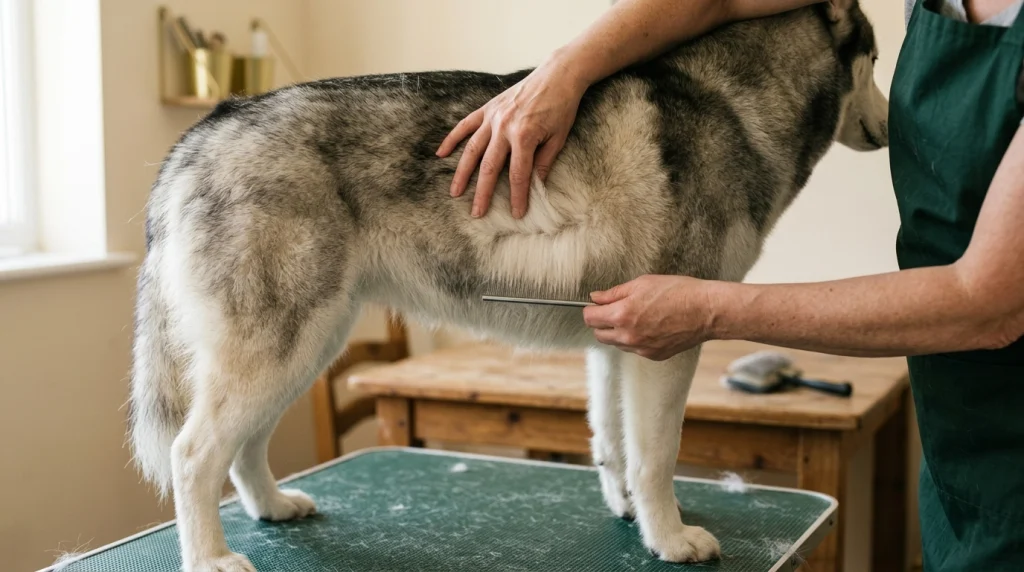
SaveA double coat consists of two layers: a protective outer coat and a softer, denser undercoat. These layers work together to protect the skin and help regulate the dog’s temperature.
The outer layer contains guard hairs that help repel moisture and shield the skin from dirt and environmental exposure. Beneath it, the undercoat provides insulation and commonly sheds more heavily during seasonal coat changes.
Many familiar dog breeds have double coats, including:
- Siberian Huskies: Dense undercoats and protective outer hairs.
- German Shepherds: Coats that can release substantial amounts of undercoat.
- Golden Retrievers: Medium-to-long coats with feathering and an insulating undercoat.
- Australian Shepherds: Medium-length double coats that need regular brushing.
- Pomeranians: Plush coats with a particularly dense undercoat.
- Corgis: Shorter outer coats over a substantial undercoat.
Coat length and density vary considerably, even among double-coated breeds. A tool suitable for a short-coated Corgi may not work equally well on a long-haired Collie or a heavily coated Husky.
How Does a Deshedding Tool Work on a Double Coat?
A deshedding tool removes loose hair from the coat, particularly undercoat that ordinary surface brushing may leave behind. Depending on its design, it may use spaced teeth, a comb-like edge, or a blade-style edge to collect loose hair.
These tools aren’t all interchangeable. An undercoat rake uses spaced teeth to reach deeper into the coat, while some blade-style tools have a finer edge that can catch or cut hair when used incorrectly.
That distinction matters. You want to remove hair that’s ready to come loose, not damage healthy guard hairs or scrape the skin.
What Happens When You Remove Too Much Undercoat?
Removing loose undercoat can make brushing easier and reduce the amount of fur left around your home. Aggressive grooming, however, can break hairs, irritate the skin, and create uneven patches in the coat.
The aim isn’t to make the coat as thin as possible. A healthy double coat performs useful protective and insulating functions, so preserve the hair that remains securely attached.
Is a FURminator Safe for Double-Coated Dogs?
A FURminator-style tool can be suitable for some double-coated dogs when you select the correct model and follow its instructions. However, its metal deshedding edge calls for more care than a basic grooming comb or a soft brush.
Before using one, check the manufacturer’s guidance for your dog’s coat length, size, and skin condition. Don’t assume that every model is appropriate for every breed simply because the product is marketed as a deshedding tool.
Use these checks before you start:
- Check coat compatibility: Confirm that the particular model suits your dog’s coat type and length.
- Inspect the skin: Look for sores, redness, scabs, and sensitive areas.
- Remove tangles first: Never force a deshedding edge through knots or packed mats.
- Follow the directions: Respect the recommended technique and frequency for the exact model.
- Stop when needed: Don’t continue if the tool pulls hair, causes discomfort, or leaves the skin irritated.
For many owners, an undercoat rake is a sensible first tool because it offers control over the removal of loose undercoat. A blade-style deshedder is an optional tool, not a requirement for every double-coated dog.
Which Brush Is Best for a Double-Coated Dog?
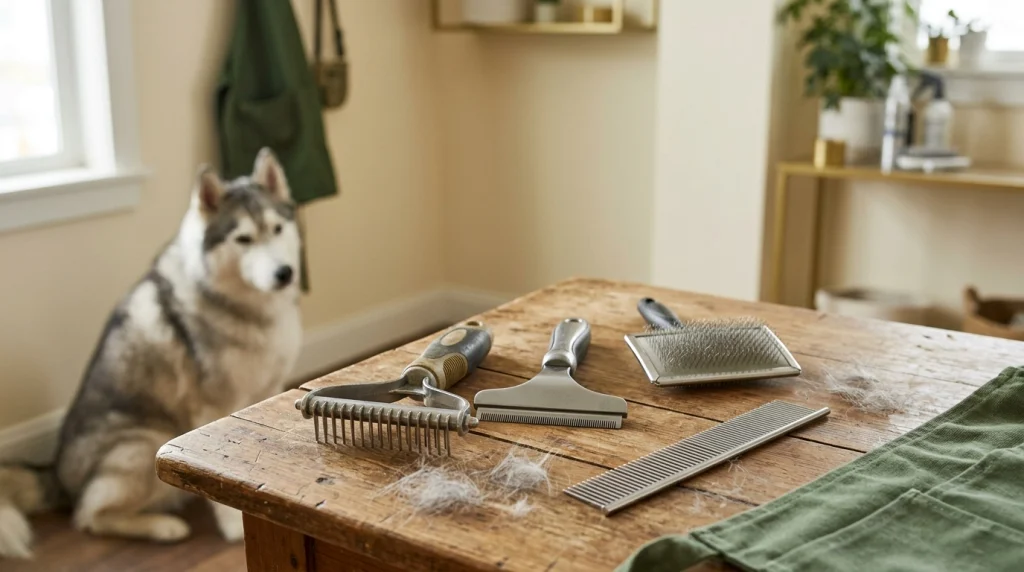
The best brush depends on what you’re trying to remove. An undercoat rake is useful for loose hair deeper in the coat, a slicker brush helps separate and tidy the fur, and a metal comb helps identify tangles that remain.
Rather than relying on one aggressive tool, consider building a small grooming kit with tools that perform different jobs.
| Grooming tool | Best use | Main caution |
|---|---|---|
| Undercoat rake | Loosening dead undercoat | Choose suitable tooth length and avoid digging into the skin. |
| Blade-style deshedding tool | Targeted removal of loose undercoat on compatible coats | Excessive pressure and repeated strokes can damage hair or irritate skin. |
| Slicker brush | Separating fur, light detangling, and finishing | Aggressive brushing can scratch skin or break hair. |
| Steel comb | Checking dense areas and finding tangles | Never yank it through a knot. |
| Rubber grooming brush | Collecting surface hair on suitable short coats | It may not reach a dense or long undercoat. |
The American Kennel Club’s guide to choosing dog brushes explains how different brush designs serve different coat types. Match your equipment to your dog’s coat instead of buying a tool solely because it promises dramatic shedding reduction.
How Do You Use a Deshedding Tool on a Double Coat?
 Save
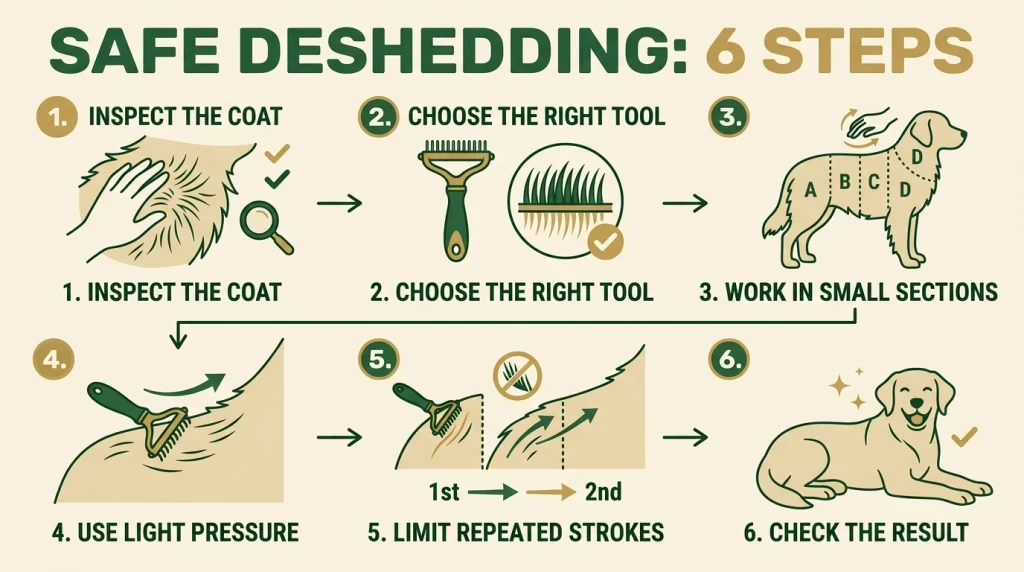
SaveSafe deshedding starts with coat inspection, gentle technique, and a willingness to stop before the skin becomes irritated. Follow the manufacturer’s instructions for the particular tool rather than treating every rake and deshedder the same way.
Step 1: Check the Coat Before Brushing
Run your hands gently over your dog’s coat and look for tangles, mats, redness, scabs, or tender areas. If the coat contains tight mats or the skin looks inflamed, postpone blade-style deshedding and seek appropriate grooming or veterinary advice.
Step 2: Choose a Compatible Tool
Use an undercoat rake or deshedding tool designed for your dog’s coat length and density. If you’re unsure whether a blade-style tool is suitable, ask a professional groomer which design is appropriate.
Step 3: Work in Small Sections
Part the coat gently so you can work on a manageable section instead of dragging the tool across the whole body. Keep your strokes controlled and follow the direction of hair growth.
Step 4: Apply Minimal Pressure
Let the tool collect loose hair without forcing it into the coat. If it catches, pulls, or repeatedly snags, stop and investigate rather than applying more pressure.
Step 5: Limit Repeated Strokes
Move between sections instead of repeatedly grooming the same patch. There’s no need to keep going until the tool stops collecting hair, because loose fur may continue to come away during a normal shedding period.
Step 6: Check the Result
Finish with a suitable slicker brush or metal comb if needed. The coat should remain comfortable to touch, without visible redness, broken patches, or signs that grooming has become painful.
Practical rule: Treat comfort as the stopping point, not the amount of fur in your brush. A smaller amount of safely removed hair is better than an irritated dog.
How Often Should You Deshed a Double-Coated Dog?
There’s no single schedule that suits every double-coated dog. Coat density, shedding cycles, skin sensitivity, the grooming tool, and the manufacturer’s directions all influence how frequently deshedding is appropriate.
Use regular brushing as the foundation of your routine, then adjust your approach when you notice more loose undercoat.
- During normal shedding: Brush regularly and inspect the coat for loose hair and tangles.
- During heavy shedding: Increase gentle grooming sessions as needed instead of using a blade-style tool more aggressively.
- For dense, long coats: Pay extra attention to areas behind the ears, around the collar, under the legs, and near the tail.
- For sensitive dogs: Use shorter sessions and stop immediately if brushing causes discomfort.
Some dogs benefit from brushing several times a week, while others need more attention during seasonal coat changes. If your dog develops unusual hair loss or persistent itching, consult a veterinarian instead of simply increasing the frequency of deshedding.
Can a Deshedding Tool Damage a Double Coat?
Yes. The wrong tool or overly aggressive technique can break healthy hairs, remove more coat than intended, and irritate the skin.
These problems are more likely when you press hard, repeatedly scrape the same area, force a tool through tangles, or use equipment that doesn’t suit your dog’s coat.
Watch for these warning signs:
- Redness: The skin appears more irritated after grooming.
- Flinching or pulling away: Your dog reacts as though the tool hurts.
- Broken hairs: You notice rough, snapped hair rather than only loose undercoat.
- Uneven patches: The coat looks noticeably thinner in areas you’ve groomed.
- Persistent itching: Your dog scratches or licks an area after the session.
Stop using the tool if these signs appear. Seek veterinary advice for bald spots, sores, ongoing irritation, or unexplained changes in the coat.
Should You Shave a Double-Coated Dog Instead?
No, shaving a healthy double coat is generally not the right way to control shedding. It removes the protective outer coat along with the undercoat and may interfere with the coat’s normal growth and protective functions.
The American Kennel Club explains that double-coated dogs generally benefit from brushing and appropriate coat maintenance rather than routine shaving. Exceptional cases, such as severe matting or veterinary treatment, may require professional clipping.
For everyday shedding control, focus on:
- Removing loose undercoat with a suitable grooming tool.
- Keeping the coat free from tangles and compacted fur.
- Bathing when appropriate and drying the coat thoroughly.
- Providing shade, fresh water, and a cool resting place during hot weather.
If you’re caring for a Husky, see our guide to managing shedding in a Siberian Husky for more breed-specific grooming advice.
What Should You Look for When Buying a Deshedding Tool?
 Save
SaveChoose a tool based on your dog’s coat, your control over the brushing process, and the manufacturer’s instructions. A high-priced product isn’t automatically safer or more effective for every dog.
- Coat compatibility: Check that the tool suits your dog’s coat length and undercoat density.
- Appropriate tooth length: Teeth should reach the intended layer without forcing their way through the coat.
- Smooth construction: Avoid damaged, rough, or poorly finished teeth that may snag hair or scratch skin.
- Comfortable handle: A secure grip makes controlled strokes easier.
- Clear instructions: Prefer products with specific guidance on technique, suitability, and limitations.
For a general double-coat brushing routine, read our guide to choosing the right brush for a Husky. Its tool-selection principles can help you understand why a rake, slicker, and comb perform different jobs.
Before ordering, compare the tool’s design with your dog’s needs rather than relying on claims about how much hair it removes. The safest choice is one you can use gently and correctly.
Which Deshedding Tools Are Worth Considering?
If you’re ready to choose a grooming tool, prioritize a compatible undercoat rake for routine loose-hair removal. Consider a blade-style deshedder only when your dog’s coat and skin can tolerate it.
🏆 BEST STARTING POINT
Safari Double Row Undercoat Rake
★★★★☆
A traditional rake designed to remove loose undercoat from suitable coats. Consider this style when you want a dedicated tool with direct control over each stroke.
🐾 TARGETED DESHEDDING
FURminator Undercoat deShedding Tool
★★★☆☆
This tool uses a metal deshedding edge to collect loose undercoat. Consider it for a compatible shedding coat, provided the model fits the dog’s size and coat length and the skin isn’t irritated.
✨ BEST FOR FINISHING
Chris Christensen Big G Slicker Brush
★★★★☆
This long-pin slicker is designed for dense coats and helps separate and finish the fur. Consider it as a companion to an undercoat rake for suitable longer coats that need careful section-by-section brushing.
Product note: These are editorial suitability assessments, not verified customer ratings or results from hands-on comparative testing. Product availability, sizes, prices, and specifications may change.
Frequently Asked Questions
Can You Use a Deshedding Tool on a Double-Coated Dog Every Day?
Not necessarily. Daily gentle brushing may help during heavy shedding, but a blade-style deshedding tool can cause hair breakage or skin irritation when used too frequently. Follow the instructions for your particular tool, and use a suitable rake or slicker for routine maintenance when appropriate.
Is an Undercoat Rake Better Than a Deshedding Blade?
An undercoat rake is often a good starting point because its teeth can loosen dead undercoat without relying on a blade-style edge. A deshedding blade may also suit some coats, but it requires careful technique. The right choice depends on your dog’s coat type, skin condition, and the tool’s design.
Can a Deshedding Tool Cause Bald Spots?
Yes, aggressive or inappropriate grooming can break hairs and contribute to uneven coat thinning or skin irritation. Stop if you notice bald patches, redness, or discomfort. Because hair loss can also have medical causes, consult your veterinarian if it persists or appears without an obvious grooming-related explanation.
Should I Use a Deshedding Tool on a Puppy With a Double Coat?
Start by getting your puppy comfortable with gentle handling and a soft, suitable brush. A puppy’s coat may differ from its adult coat, and a metal deshedding edge may be unnecessarily harsh. Ask your veterinarian or a professional groomer when your puppy’s coat is ready for a more specialized tool.
Does a Deshedding Tool Stop a Dog From Shedding?
No. A deshedding tool collects loose hair, but it doesn’t stop the natural hair-growth and shedding cycle. Regular grooming can help control loose fur around your home, especially during seasonal coat changes, but some shedding will continue.
Final Takeaway: Choose the Right Tool, Not the Most Aggressive One
Yes, you can use a deshedding tool on many double-coated dogs, provided the tool suits the coat and you use it carefully. For many owners, an undercoat rake paired with a slicker brush and metal comb offers a practical approach to removing loose hair while maintaining the coat’s protective layers.
Start gently, work in small sections, and stop when your dog shows discomfort. If you’re dealing with painful mats, persistent skin irritation, or unusual hair loss, get professional advice instead of trying to solve the problem with more aggressive brushing.
A healthy grooming routine isn’t about removing every loose hair in one session. It’s about keeping the coat manageable while protecting your dog’s comfort and natural coat function.
Affiliate disclosure: This article contains Amazon affiliate links. As an Amazon Associate, the publisher may earn from qualifying purchases at no additional cost to the buyer.

Thomas Cutter is a lifelong dog owner and the founder of FindOutAboutDogs.com. With over 10 years of hands-on experience owning multiple breeds, Thomas created this site to provide honest, research-based dog advice that real owners can actually trust.
